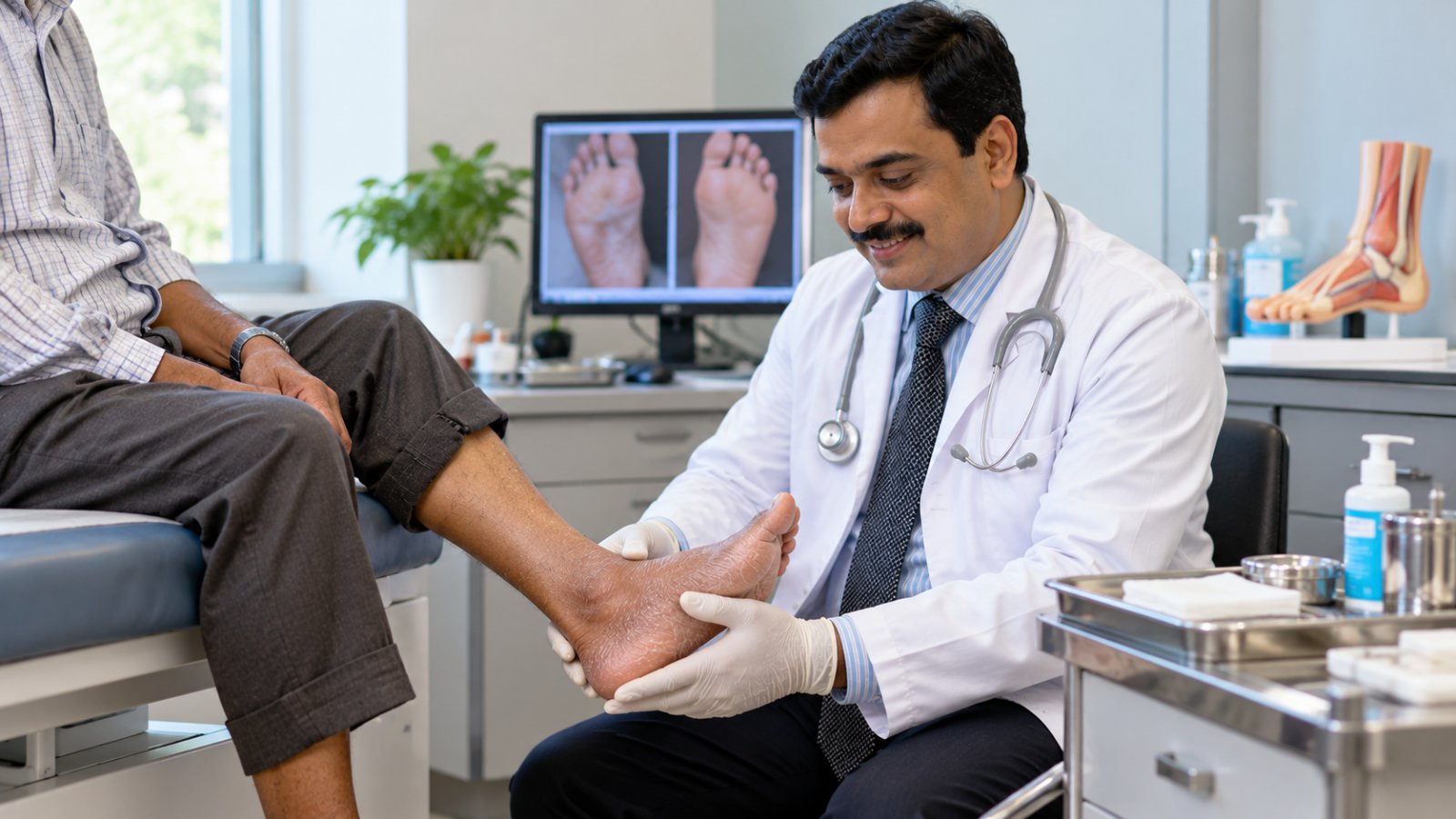

The ICMR-INDIAB study (Lancet Diabetes and Endocrinology, 2023) estimated 101 million people with diabetes and 136 million with prediabetes in India, with the highest prevalence in Goa, Puducherry and Kerala and fast-rising numbers in less developed states. For foot care, screening and trained staff are needed far beyond metro diabetes clinics.
Key Takeaways
-
Approximately 101 million adults in India were estimated to have diabetes in the ICMR-INDIAB 2023 study.
-
Another 136 million adults were estimated to have prediabetes.
-
Goa, Puducherry and Kerala reported particularly high diabetes prevalence.
-
Diabetes is a nationwide health challenge affecting both urban and rural communities.
-
Prediabetes indicates a need for early prevention, although it does not automatically mean someone needs specialist diabetic foot screening.
-
People with established diabetes should receive regular foot examinations.
-
Screening programmes should prioritise areas with high diabetes burden, limited healthcare access and large numbers of high-risk patients.
-
State-level prevalence alone cannot establish whether adequate foot-screening services are available.
What Did ICMR-INDIAB 2023 Find Nationally?
The Indian Council of Medical Research–India Diabetes (ICMR-INDIAB) study is one of India's most important population-based investigations of diabetes and other metabolic health conditions.
Published in The Lancet Diabetes & Endocrinology in 2023, the study examined the prevalence of diabetes, prediabetes and other cardiometabolic risk factors across Indian states and union territories.
Its findings highlighted the scale of the country's diabetes challenge.
Major National Findings
| Health Condition | Estimated Adults Affected | National Prevalence |
|---|---|---|
| Diabetes | 101 million | 11.4% |
| Prediabetes | 136 million | 15.3% |
| Hypertension | 315 million | 35.5% |
| Generalised obesity | 254 million | 28.6% |
| Abdominal obesity | 351 million | 39.5% |
These estimates refer to the adult population studied, rather than every person of every age in India.
The findings indicate that diabetes management cannot focus only on blood sugar control.
People with diabetes may also need assessment for cardiovascular disease, kidney disease, nerve damage and circulation problems.
Why Are These Numbers Important for Foot Health?
Diabetes can gradually damage nerves and blood vessels.
Nerve damage may reduce sensation in the feet, making injuries difficult to notice.
Poor circulation can delay healing when a wound develops.
When these problems occur together, even a small cut or blister can become a serious diabetic foot ulcer.
Therefore, understanding diabetes prevalence in India by state is useful for estimating where preventive foot-care services may be needed.
However, actual screening requirements must also consider the number of people with diabetes, complication rates and existing healthcare resources.
Which States Carry the Highest Diabetes and Prediabetes Burden?
The ICMR-INDIAB study identified substantial differences in diabetes prevalence across the country.
Some regions had a particularly high proportion of adults living with diabetes.
Others had lower diabetes prevalence but a substantial population with prediabetes.
States and Regions With High Diabetes Prevalence
Goa, Puducherry and Kerala were among the highest-prevalence regions reported in the study.
These findings highlight how diabetes has become common in several populations with different demographic and lifestyle characteristics.
High prevalence means that a larger proportion of adults in a region have diabetes.
However, the state with the highest prevalence is not necessarily the state with the largest absolute number of patients.
A populous state with a lower prevalence percentage may still have more people requiring diabetes care.
Why Do Prevalence and Patient Numbers Differ?
Consider two hypothetical states.
State A has a diabetes prevalence of 20% among one million adults.
State B has a prevalence of 10% among ten million adults.
State A has a higher prevalence percentage, but State B has substantially more adults with diabetes.
This distinction matters when planning diabetic foot services.
A high-prevalence region may require intensive screening coverage, while a populous region may require a larger overall screening workforce.
State-Wise Diabetes Burden: Planning Comparison
The table below identifies important regions from the content plan. Exact prevalence percentages, urban–rural differences and clinic-network status require verification before publication.
| State or UT | Diabetes Prevalence | Prediabetes Prevalence | Urban vs Rural Gap | EDFC Centre or Camp Presence |
|---|---|---|---|---|
| Goa | Among highest reported | Verify ICMR supplementary data | Verify | Not confirmed |
| Puducherry | Among highest reported | Verify ICMR supplementary data | Verify | Not confirmed |
| Kerala | Among highest reported | Verify ICMR supplementary data | Verify | Not confirmed |
| Gujarat | State-specific data required | State-specific data required | Verify | Check official network |
| Andhra Pradesh | State-specific data required | State-specific data required | Verify | Check official network |
Editorial note: This is a planning table, not a completed statistical dataset. Exact state-level values should be inserted only after checking the ICMR-INDIAB supplementary tables. EDFC locations and camps require separate confirmation.
Where Do Gujarat and Andhra Pradesh Stand?
Gujarat and Andhra Pradesh are important regions to consider when examining the geographic distribution of diabetes.
The ICMR-INDIAB study included state-level estimates, allowing comparisons between different populations.
However, a responsible interpretation requires more than comparing a single percentage.
Understanding the Diabetes Burden in Gujarat
The diabetes burden should be assessed using:
-
Adult diabetes prevalence
-
Prediabetes prevalence
-
Population size
-
Urban and rural differences
-
Existing diabetes-care services
-
Availability of trained foot-screening professionals
-
Access to specialist referral facilities
A region with substantial diabetes prevalence may require stronger preventive services even if its percentage is not the highest nationally.
Patients with diabetes also need practical guidance about daily foot care and when to seek medical assessment.
Understanding the Diabetes Burden in Andhra Pradesh
The same approach applies when evaluating diabetes prevalence and preventive healthcare requirements in Andhra Pradesh.
A state-wide average may hide differences between urban centres, smaller towns and rural communities.
Healthcare planning should therefore consider local population needs rather than relying only on state rankings.
For diabetic foot prevention, access to regular examinations, appropriate footwear advice and early wound treatment is especially important.
Why Urban and Rural Differences Matter
Urban populations may have easier access to specialist clinics but can still experience delayed diagnosis or poor preventive follow-up.
Rural populations may face additional challenges, including:
-
Longer travel distances
-
Limited specialist availability
-
Fewer trained foot-screening personnel
-
Delayed referral for complex wounds
-
Reduced access to vascular assessment
-
Difficulty attending repeated appointments
These are potential service barriers, not findings directly measured by the ICMR-INDIAB diabetes prevalence study.
Why Does Prediabetes in Low-Prevalence States Matter for Future Foot Ulcers?
Prediabetes occurs when blood glucose levels are above the normal range but do not meet the diagnostic criteria for diabetes.
It is associated with an increased risk of developing type 2 diabetes.
The ICMR-INDIAB study estimated that approximately 136 million adults had prediabetes.
This represents a substantial population that may benefit from preventive interventions.
Does Prediabetes Cause Diabetic Foot Ulcers?
Prediabetes does not automatically mean a person will develop a diabetic foot ulcer.
Diabetes-related foot ulcers are primarily associated with established diabetes and complications such as peripheral neuropathy and peripheral artery disease.
Some people with prediabetes may have neuropathic symptoms, but routine specialist diabetic foot surveillance is not indicated solely because someone has prediabetes.
The immediate priorities are identifying metabolic risk, supporting healthy habits and preventing progression to diabetes.
Why Early Diabetes Prevention Matters
Preventing or delaying type 2 diabetes can help reduce future exposure to complications associated with long-standing high blood glucose.
Preventive strategies may include:
-
Regular physical activity
-
Balanced nutrition
-
Weight management where appropriate
-
Blood glucose monitoring as advised
-
Blood pressure management
-
Smoking cessation
-
Regular medical follow-up
These measures support overall metabolic health.
For people who already have diabetes, preventive care should also include foot-risk assessment.
How Should Foot Screening Be Planned State by State?
Effective diabetic foot screening requires more than organising occasional health camps.
A sustainable programme should identify people at risk, examine their feet, educate them and provide referral pathways when abnormalities are detected.
The International Working Group on the Diabetic Foot (IWGDF) recommends risk-based screening for people with diabetes.
Recommended Foot-Screening Frequency
| Risk Category | Patient Characteristics | Suggested Screening Frequency |
|---|---|---|
| Very low risk | No loss of protective sensation or peripheral artery disease | Once a year |
| Low risk | Neuropathy or peripheral artery disease | Every 6–12 months |
| Moderate risk | Combination of neuropathy, circulation problems or foot deformity | Every 3–6 months |
| High risk | Relevant risk factors plus previous ulcer, amputation or end-stage kidney disease | Every 1–3 months |
These intervals are based on IWGDF guidance and should be adjusted to individual clinical circumstances.
What Should a Diabetic Foot Screening Include?
A comprehensive examination may involve:
1. Visual examination
Checking the feet for cracks, calluses, blisters, ulcers, swelling and skin changes.
2. Sensation testing
Using a 10-g monofilament or another appropriate method to assess protective sensation.
3. Circulation assessment
Checking foot pulses and evaluating signs of peripheral artery disease.
4. Foot deformity assessment
Looking for structural changes that increase pressure on particular areas.
5. Footwear assessment
Identifying shoes or slippers that may cause repeated friction or injury.
6. Patient education
Explaining daily inspection, skin care, appropriate footwear and warning signs.
Patients can read more about diabetic foot screening and its role in preventive care.
Where Should Screening Programmes Be Prioritised?
A practical planning model should consider several factors together:
-
Number of adults living with diabetes
-
Proportion of patients with previous ulcers or amputations
-
Availability of trained healthcare workers
-
Distance to specialist services
-
Access to vascular investigations
-
Referral delays
-
Existing screening coverage
-
Community awareness of diabetic foot complications
These indicators can help identify potential service gaps.
The diabetes prevalence in India by state provides one important input, but it cannot independently determine where screening is missing.
Diabetic Foot Screening Camp in Jamnagar: Why Early Detection Matters
Community screening can help identify people with diabetes who may have reduced foot sensation, poor circulation or early skin damage.
Patients looking for a diabetic foot screening camp in jamnagar should check whether the programme offers foot examination, neuropathy testing, circulation assessment and referral guidance.
At Elegance Diabetic Foot & Ulcer Clinic (EDFC), Dr. Ashutosh Shah is associated with diabetic foot assessment and management of foot complications. Screening initiatives can support earlier recognition of high-risk feet, but specific camp dates, locations and clinical findings should be confirmed through the clinic's official information.
Patients can check the EDFC screening camps page for programme information.
Who Should Attend a Diabetic Foot Screening?
Screening is especially important for people with diabetes who have:
-
Numbness or tingling in the feet
-
Previous foot ulcers
-
Previous toe or foot amputation
-
Foot deformities
-
Thick calluses
-
Poor circulation
-
Chronic kidney disease
-
Difficulty inspecting their feet
-
Recurrent blisters or minor injuries
A person with an active wound, spreading redness, black tissue or fever should seek prompt medical care rather than wait for a screening camp.
How Can Healthcare Networks Improve Screening Access?
A large diabetes burden requires collaboration between primary care professionals, diabetes specialists, foot-care teams and vascular services.
Community programmes can identify risk, but follow-up services are equally important.
Training Healthcare Professionals
Primary care teams can be trained to recognise:
-
Loss of protective sensation
-
Early foot ulcers
-
High-pressure calluses
-
Reduced foot pulses
-
Infection warning signs
-
When urgent referral is required
Standardised screening methods can improve consistency.
Developing Referral Pathways
A screening programme should clearly identify where patients can receive additional evaluation.
Patients with severe infection, suspected poor circulation or a non-healing wound may need urgent specialist care.
A reliable referral pathway can reduce unnecessary delays.
Expanding Preventive Care
Healthcare organisations may also evaluate opportunities to expand access through satellite clinics, partnerships and trained local teams.
Information about the EDFC OPD network can help patients check available consultation locations.
Healthcare professionals interested in network development can review the EDFC franchise programme.
The existence of these programmes should not be interpreted as evidence of coverage in every state.
How Many People With Diabetes Develop Foot Ulcers?
Diabetic foot ulcers are a major complication of diabetes.
A widely cited review by Armstrong, Boulton and Bus estimated that the lifetime risk of developing a diabetic foot ulcer among people with diabetes is approximately 19%–34%.
This is a lifetime estimate, not the percentage of patients who develop ulcers every year.
The risk differs according to:
-
Duration of diabetes
-
Peripheral neuropathy
-
Peripheral artery disease
-
Previous ulcer history
-
Kidney disease
-
Foot deformity
-
Footwear and pressure exposure
-
Access to preventive care
These findings underline why early foot-risk assessment is important.
However, the lifetime ulcer-risk estimate should not be multiplied directly by the ICMR-INDIAB national diabetes estimate to predict the current number of foot-ulcer patients.
Different populations, follow-up periods and risk profiles make such calculations unreliable.
Conclusion
The ICMR-INDIAB 2023 study highlighted the enormous scale of India's diabetes burden, estimating 101 million adults with diabetes and 136 million with prediabetes.
Understanding diabetes prevalence in India by state can help healthcare planners identify where diabetes prevention and complication screening need greater attention.
However, prevalence figures alone cannot establish which communities lack adequate diabetic foot services.
Effective planning also requires information about healthcare access, trained staff, existing screening programmes and the number of high-risk patients.
For people living with diabetes, regular foot examinations are an important part of preventing complications.
At Elegance Diabetic Foot & Ulcer Clinic, the clinical approach associated with Dr. Ashutosh Shah emphasises assessment of diabetic foot problems and appropriate treatment planning.
The long-term goal should be to identify foot risks earlier, improve access to trained healthcare professionals and reduce preventable diabetic foot complications.
quiz Frequently Asked Questions
This article is general education, not a diagnosis. If you have a diabetic foot wound, please have it assessed in person. Send a photo on WhatsApp or book a consultation.
About the Author

Dr. Ashutosh Shah, Plastic, Reconstructive & Diabetic Foot Surgeon, Elegance Diabetic Foot & Ulcer Clinic, Surat
Dr. Ashutosh Shah is a board certified plastic and reconstructive surgeon with over 22 years of experience and more than 10,000 limbs and feet saved. He founded Elegance Diabetic Foot & Ulcer Clinic, India's first chain of clinics dedicated to foot care, with centres in Surat and OPD partners across South Gujarat. He is known for a limb first approach, safe wound care and ethical, natural results.