
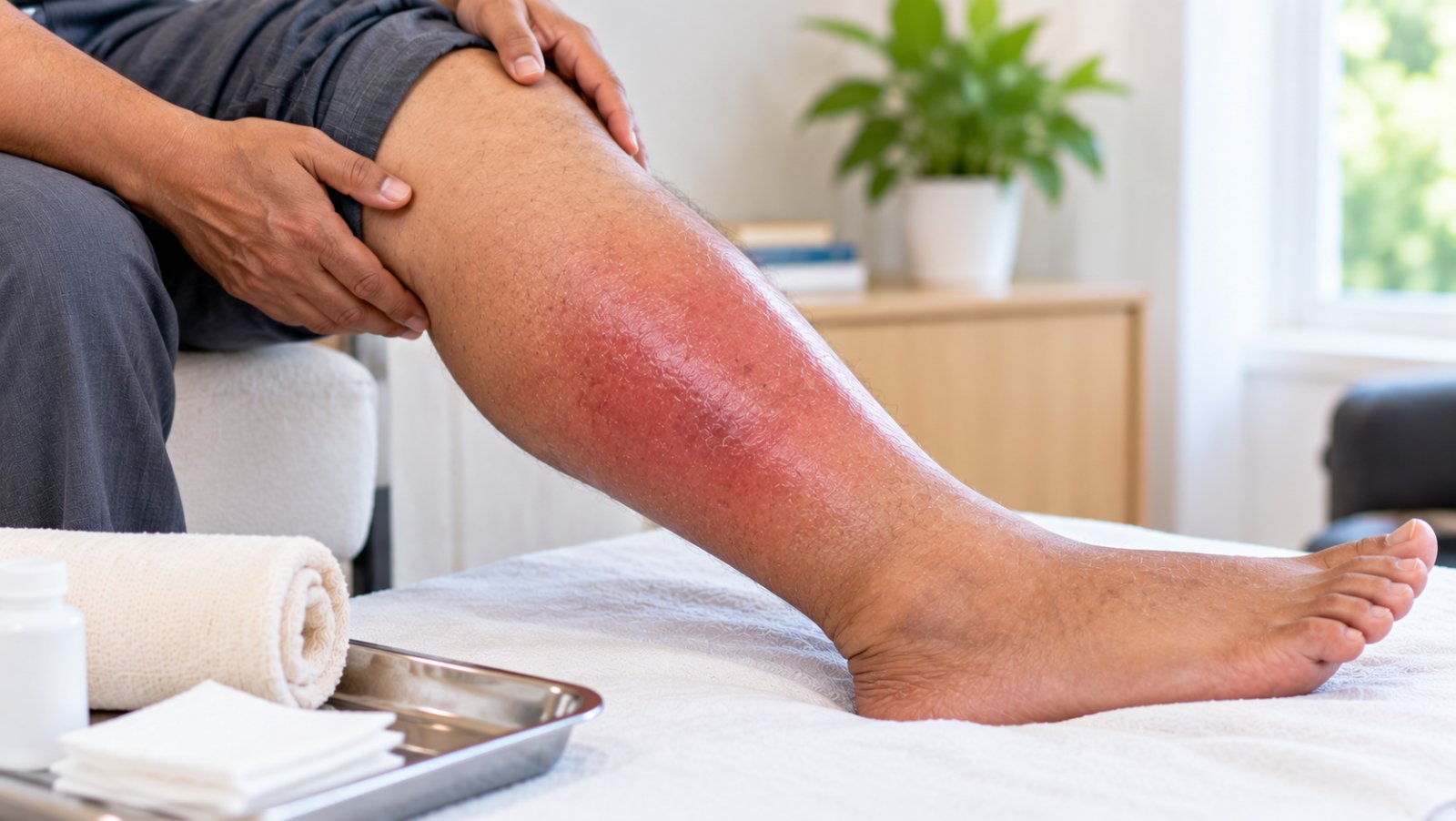
Cellulitis treatment in Jamnagar focuses on controlling bacterial skin infection, reducing inflammation and preventing complications. Cellulitis commonly causes redness, warmth, pain and swelling in the legs or feet. Treatment usually involves prescribed antibiotics, but severe infections may require hospital admission, intravenous medicines or surgery. Early medical assessment is especially important for people with diabetes.
What Is Cellulitis?
Cellulitis is a bacterial infection affecting the deeper layers of the skin and underlying soft tissues.
It commonly develops when bacteria enter through a break in the skin, such as a cut, crack, blister, ulcer or insect bite. Sometimes, the entry point is too small to notice.
Cellulitis can affect different parts of the body, but the lower legs and feet are common locations.
The infection may begin in a small area and spread into surrounding tissues.
Typical symptoms include:
-
Redness
-
Swelling
-
Warmth
-
Pain or tenderness
-
Tight or shiny skin
-
Fever in some patients
-
Increasing discomfort
Most uncomplicated cases respond to appropriate antibiotic treatment. However, delayed treatment can allow infection to spread.
For people with diabetes, cellulitis around a foot wound may be particularly concerning because neuropathy and circulation problems can complicate assessment and recovery.
What Causes Cellulitis in the Legs and Feet?
Cellulitis usually develops when bacteria enter through damaged skin.
Common causes and risk factors include:
1. Cuts and Scratches
Small injuries can create an opening for bacteria.
Even minor skin damage may become infected, particularly when the skin is already swollen or fragile.
2. Cracked Heel Skin
Dry heels can develop deep cracks that allow bacteria to enter.
Patients with diabetes may not notice these cracks if protective sensation is reduced.
3. Fungal Infections
Athlete's foot can cause peeling and cracks between the toes.
These skin breaks may increase the risk of bacterial cellulitis.
4. Diabetic Foot Ulcers
An open diabetic foot ulcer may become infected.
Infection can spread beyond the wound into surrounding skin and deeper tissues.
Patients with an open wound should seek appropriate diabetic foot ulcer treatment.
5. Chronic Leg Swelling
Persistent swelling caused by venous disease or lymphoedema can damage the skin barrier.
People with chronic swelling may experience recurrent cellulitis.
6. Previous Cellulitis
Having cellulitis previously increases the likelihood of another episode, particularly when underlying risk factors remain untreated.
What Are the Early Symptoms of Cellulitis?
Recognising symptoms early can help patients obtain timely treatment.
Redness
The affected area may appear red or darker than the surrounding skin.
Redness can spread as the infection progresses.
Warmth
Infected skin often feels warmer than nearby unaffected skin.
Swelling
Inflammation can cause noticeable swelling in the foot, ankle or lower leg.
Pain and Tenderness
The skin may become painful when touched or during movement.
However, patients with diabetic neuropathy may experience reduced pain despite significant infection.
Fever and Chills
Some patients develop fever, chills or general weakness.
These symptoms may indicate a more significant infection.
Blisters or Skin Changes
Severe infections may cause blistering, skin discolouration or tissue damage.
Rapidly worsening pain, purple or black skin, confusion, faintness or severe systemic illness requires emergency medical assessment.
When Should You Seek Cellulitis Treatment in Jamnagar?
Patients should arrange prompt medical evaluation when they notice spreading redness, warmth, tenderness or swelling that may indicate a skin infection.
Early cellulitis treatment in Jamnagar can help prevent complications and identify patients who need hospital care.
Seek urgent medical attention if you experience:
-
Rapidly spreading redness
-
Fever or chills
-
Increasing pain or swelling
-
Redness around a diabetic foot ulcer
-
Pus or discharge
-
Blistering or darkening skin
-
Difficulty walking due to worsening symptoms
-
Symptoms that worsen despite treatment
Go to an emergency department immediately for confusion, fainting, severe weakness, rapidly progressing skin changes or pain that is unusually severe compared with the visible skin findings.
These can be warning signs of serious infection.
Patients with severe symptoms should use the nearest appropriate emergency facility rather than delaying treatment for a distant appointment.
Why Is Cellulitis More Concerning in People With Diabetes?
Diabetes can increase the risk of complications from lower-limb infections.
Several factors contribute to this concern.
Reduced Protective Sensation
Diabetic neuropathy may reduce the ability to feel pain or detect injuries.
A patient may overlook a wound until the infection becomes more advanced.
Poor Blood Circulation
Peripheral artery disease can reduce blood supply to the feet.
This may interfere with wound healing and complicate infection management.
Existing Foot Ulcers
An open ulcer creates an entry point for bacteria.
Infections associated with diabetic foot ulcers can extend into deeper tissues.
Other Medical Conditions
Kidney disease, impaired mobility and other conditions may complicate treatment.
Not every person with diabetes develops severe cellulitis. However, a new foot infection deserves prompt assessment.
For related care information, visit the clinic's infection management page.
How Do Doctors Diagnose Cellulitis?
Cellulitis is usually diagnosed through medical history and physical examination.
Medical History
The doctor may ask about:
-
When symptoms began
-
Whether redness is spreading
-
Recent cuts or wounds
-
Fever or chills
-
Diabetes and other medical conditions
-
Previous cellulitis episodes
-
Current medicines
-
Recent antibiotic treatment
Skin Examination
The clinician examines the affected area for redness, warmth, swelling, tenderness and possible entry points.
The examination may also identify an ulcer, abscess or other source of infection.
Blood Tests
Blood tests are not necessary for every uncomplicated case.
They may be recommended when infection is severe, the patient is systemically unwell or other complications are suspected.
Wound Cultures
Routine surface swabs are not always useful for uncomplicated cellulitis.
When an infected wound or abscess is present, an appropriate specimen may be collected if clinically indicated.
Ultrasound or Other Imaging
Imaging may be recommended when doctors suspect:
-
An abscess
-
Deep infection
-
A blood clot
-
Bone infection
-
Another cause of swelling
What Are the Treatment Options for Cellulitis?
Treatment depends on infection severity, patient health and whether complications are present.
1. Oral Antibiotics
Many uncomplicated cases can be treated with prescribed oral antibiotics.
The choice depends on the likely bacteria, infection characteristics, allergies and local prescribing guidance.
Patients should take medicines as prescribed and attend follow-up when advised.
2. Intravenous Antibiotics
More severe infections may require intravenous antibiotics.
Hospital treatment may be recommended for patients with systemic illness, rapidly progressing infection or an inability to take oral medication.
3. Elevation of the Affected Limb
Elevating the affected leg when appropriate may help reduce swelling and discomfort.
4. Treatment of Skin Breaks
Cracks, wounds and fungal infections may need additional care.
Treating these entry points can help reduce the risk of recurrence.
5. Abscess Drainage
An abscess is a collection of pus.
When present, it may require drainage.
Antibiotics alone may not be sufficient for a significant abscess.
6. Surgical Treatment
Ordinary cellulitis usually does not require surgery.
However, deep abscesses, necrotising infections or extensive dead tissue may require urgent surgical intervention.
Patients with complex diabetic foot wounds may need assessment for diabetic foot surgery.
Oral vs IV Antibiotics for Cellulitis
The method of antibiotic treatment depends on the patient's condition.
| Feature | Oral antibiotics | IV antibiotics |
|---|---|---|
| Typical use | Many mild or uncomplicated cases | Severe or complicated infections |
| Setting | Usually outpatient | Hospital or supervised treatment |
| Monitoring | Clinical follow-up | Closer monitoring may be required |
| Duration | Based on response and clinical guidance | Based on severity and treatment response |
IV antibiotics are not automatically better for every patient.
The goal is to select the most appropriate treatment for the infection.
Do not start, stop or change antibiotics without medical guidance.
How Long Does Cellulitis Take to Heal?
Recovery varies with infection severity and underlying health.
Many patients begin to show clinical improvement within approximately 48–72 hours of appropriate treatment.
However, redness and swelling may take longer to resolve completely.
Some inflammation can remain even after the infection is improving.
Typical Recovery Pattern
First 24–48 hours: Treatment begins, and symptoms are monitored. Redness may not disappear immediately.
After 48–72 hours: Pain, fever and spreading inflammation should generally begin improving with effective treatment.
Following days: Redness and swelling gradually reduce.
Longer recovery: Patients with chronic swelling, diabetes-related complications or deeper infection may require additional care.
These timeframes are general and not guaranteed.
If symptoms worsen at any stage, seek reassessment promptly.
If there is no meaningful improvement within two to three days, contact the treating clinician.
Cellulitis vs Other Causes of Leg Redness and Swelling
Not every red or swollen leg has cellulitis.
Other conditions can produce similar symptoms.
| Condition | Common features |
|---|---|
| Cellulitis | Warmth, redness, tenderness and spreading inflammation |
| Venous stasis dermatitis | Chronic swelling, itching, pigmentation and skin changes |
| Deep vein thrombosis | Often one-sided swelling and pain; requires urgent evaluation |
| Contact dermatitis | Itching and irritation after contact with a trigger |
| Lymphoedema | Persistent swelling, sometimes with skin thickening |
| Gout | Sudden painful inflammation around a joint |
The correct diagnosis matters because these conditions require different treatments.
A swollen leg should not automatically be treated with antibiotics without clinical assessment.
Can Cellulitis Become a Diabetic Foot Infection?
Cellulitis affecting the foot can be part of a diabetic foot infection, particularly when bacteria spread from an existing ulcer.
A diabetic foot infection may involve:
-
Skin
-
Subcutaneous tissue
-
Tendons
-
Muscles
-
Joints
-
Bone
Deeper infection can require imaging, surgical assessment or hospital treatment.
Warning signs include increasing wound depth, spreading redness, discharge, swelling and systemic illness.
A foot ulcer with surrounding cellulitis needs careful evaluation of circulation, wound depth and infection severity.
When Does Cellulitis Require Hospital Admission?
Hospital admission may be necessary when infection is severe or the patient requires close monitoring.
Possible reasons include:
-
Sepsis or systemic illness
-
Rapidly spreading infection
-
Suspected necrotising soft tissue infection
-
Deep abscess
-
Significant diabetic foot infection
-
Inability to tolerate oral medicines
-
Failure of appropriate outpatient treatment
-
Serious associated medical conditions
The decision depends on clinical findings rather than redness or swelling alone.
Can Cellulitis Cause Gangrene?
Most cellulitis cases do not cause gangrene.
However, severe infections involving extensive tissue destruction can become limb-threatening.
People with severe peripheral artery disease may also develop tissue death because of inadequate circulation.
Blackening tissue, rapid deterioration or suspected gangrene requires emergency assessment.
How Can Recurrent Cellulitis Be Prevented?
Some patients experience repeated cellulitis episodes.
Preventive care focuses on reducing the underlying risk factors.
Maintain Skin Hygiene
Keep the skin clean and dry without excessive scrubbing.
Treat Cracked Skin
Use suitable moisturisers on dry skin and seek treatment for persistent cracks.
Manage Fungal Infections
Treat athlete's foot and other skin infections appropriately.
Address Chronic Swelling
Patients with venous disease or lymphoedema may benefit from an individualised swelling-management plan.
Compression may be appropriate for some patients after assessment of circulation and other contraindications.
Protect the Feet
Wear properly fitting footwear and avoid walking barefoot.
Manage Diabetes
Follow prescribed treatment and attend recommended diabetes reviews.
Attend Follow-Up Appointments
Repeated cellulitis may require evaluation of chronic oedema, skin disease or other underlying problems.
In selected patients with frequent recurrences, a specialist may consider preventive antibiotics after addressing modifiable risk factors.
Cellulitis and Diabetic Foot Infection Care at Elegance Diabetic Foot & Ulcer Clinic
At Elegance Diabetic Foot & Ulcer Clinic in Surat, Dr. Ashutosh Shah provides care associated with diabetic foot wounds, complex infections and lower-limb preservation concerns.
Patients with diabetic foot infections may require evaluation of:
-
Skin redness and swelling
-
Existing ulcers
-
Infection severity
-
Wound depth
-
Blood circulation
-
Nerve sensation
-
Abscess formation
-
Possible deeper tissue involvement
Treatment planning depends on the clinical findings.
Management may involve wound care, infection treatment, vascular evaluation or surgical assessment when appropriate.
The clinic is based in Surat. Patients considering consultation should contact the clinic to confirm appointment availability.
For clinic information, visit Elegance Diabetic Foot & Ulcer Clinic.
Patients with rapidly spreading infection, suspected sepsis or other emergency symptoms should seek immediate local hospital care rather than delaying treatment to travel.
What Should Patients Do While Waiting for Medical Assessment?
If you suspect cellulitis, arrange prompt medical care.
Until you are assessed:
-
Keep the affected area clean.
-
Avoid scratching or squeezing the skin.
-
Do not apply unprescribed chemicals or irritating products.
-
Avoid tight footwear over an inflamed foot.
-
Elevate the leg when comfortable and medically appropriate.
-
Do not massage a painful, swollen leg.
-
Do not take leftover antibiotics without a prescription.
Do not delay emergency assessment if symptoms are rapidly worsening.
Conclusion
Early cellulitis treatment in Jamnagar is important for controlling bacterial infection and reducing the risk of complications.
Most uncomplicated cases respond to appropriate antibiotics, but severe infections may require intravenous treatment, hospital monitoring or surgery.
Patients with diabetes should pay particular attention to redness, swelling and wounds affecting the feet because underlying circulation problems or neuropathy can complicate recovery.
For specialist assessment of complex diabetic foot wounds and infections, patients can contact Elegance Diabetic Foot & Ulcer Clinic.
quiz Frequently Asked Questions
This article is general education, not a diagnosis. If you have a diabetic foot wound, please have it assessed in person. Send a photo on WhatsApp or book a consultation.
About the Author

Dr. Ashutosh Shah, Plastic, Reconstructive & Diabetic Foot Surgeon, Elegance Diabetic Foot & Ulcer Clinic, Surat
Dr. Ashutosh Shah is a board certified plastic and reconstructive surgeon with over 22 years of experience and more than 10,000 limbs and feet saved. He founded Elegance Diabetic Foot & Ulcer Clinic, India's first chain of clinics dedicated to foot care, with centres in Surat and OPD partners across South Gujarat. He is known for a limb first approach, safe wound care and ethical, natural results.