Callus treatment in Surat safely removes hard, thickened foot skin by professional debridement and, crucially, relieves the pressure causing it so it does not return. For people with diabetes this is important care, not cosmetic, because an ulcer can form under a callus, and studies show removing it lowers the high foot pressure that leads to ulcers.
Important if you have diabetes: do not cut a callus yourself or use acid removers, as these can injure a numb foot and start a wound. Have it treated professionally, and have any darkening or wound beneath it checked promptly.
What is a callus and why does it matter more in diabetes?
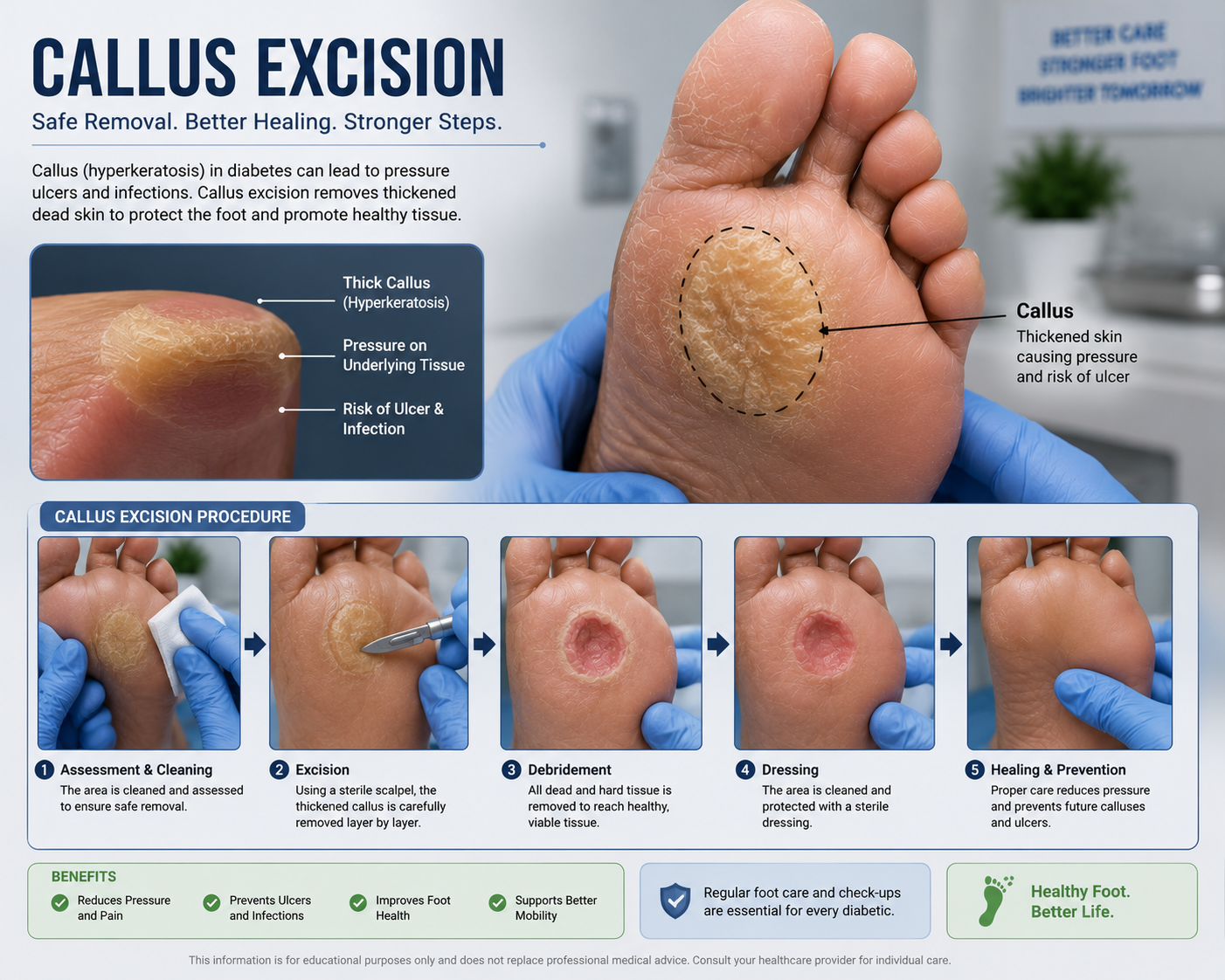
A callus is thickened, hardened skin that forms where the foot takes repeated pressure or friction, usually on the sole, heel, or ball of the foot. In most people it is harmless, but on a diabetic foot it is an important early warning sign.
On a numb diabetic foot, a callus marks a high-pressure spot and presses into the tissue beneath it, where a wound can quietly develop unseen. This is why an untreated callus is a recognised step toward a diabetic foot ulcer, and why safe treatment matters. Read more on the clinic's callus condition page.
Signs your callus needs professional treatment
Some calluses are simple, but the signs below mean you should have it assessed, the same day if you have diabetes.
- Thick, hard, yellowish skin on the sole, heel, or ball of the foot.
- A callus that is darkening, or has a spot within it.
- Tenderness, or a wound forming under the hard skin.
- A callus that keeps returning at the same spot.
- Any redness, discharge, or smell around it.
What you should NOT do to a callus
If you have diabetes, poor circulation, or numb feet, some common home remedies are genuinely dangerous. Avoid these completely.
- Do not cut or shave the callus with a blade or razor.
- Do not use acid corn or callus removers or medicated pads.
- Do not scrub aggressively with a pumice or metal file.
- Do not ignore a callus that is darkening or hiding a wound.
A numb foot cannot warn you when a home remedy has gone too far, which is how a small callus becomes a serious ulcer.
How expert callus treatment in Surat works
Professional callus treatment does two things: it removes the hard skin safely, and it addresses the pressure causing it so the callus does not simply return. Here is what happens.
- Safe removal: the hard skin is professionally pared away (debridement), which is painless and often relieving.
- Checking underneath: the skin beneath is inspected for any hidden wound or early ulcer.
- Pressure relief: insoles and footwear are used to offload the high-pressure spot.
- Cause assessment: any foot deformity driving the callus is identified and addressed through preventive foot care.
Callus or corn: what is the difference?
Calluses and corns are both thickened skin from pressure, but they differ. The table below compares them.
| Feature | Callus | Corn |
|---|---|---|
| Size and shape | Broad, flat, spread out | Small, round, with a hard core |
| Where it forms | Sole, heel, ball of foot | Tops or sides of toes, between toes |
| Pain | Usually painless | Often painful when pressed |
| Diabetes risk | Can hide an ulcer | Can hide an ulcer |
The clinic treats both, including corns and dry, cracked feet, which share the same pressure and skin causes.
Why does removing a callus matter so much?
Removing a callus is not just about smoother skin; it lowers the dangerous pressure building underneath it. This is well established in diabetic foot care.
As set out in the Diabetic Foot Journal on the role of pressure relief in diabetic foot problems, removal of callus reduces high foot pressures, and callus is a recognised predictor of plantar ulceration, with ulcers more likely to form under areas of thickened skin. Treating the callus and the pressure together is what prevents the ulcer.
Why does my callus keep coming back?
A callus keeps returning because the pressure causing it is still there. Trimming the hard skin without fixing the cause is only a temporary fix, and the callus rebuilds at the same spot within weeks.
Lasting relief comes from offloading the pressure point with the right insoles or footwear and, where needed, correcting the foot deformity behind it. This is why expert treatment addresses the cause, not just the hard skin.
How much does callus treatment cost in Surat?
The cost of callus treatment in Surat depends on the number of calluses, whether offloading insoles are needed, and whether a wound is found beneath, so it is confirmed after a quick assessment. Regular professional callus care is far cheaper than treating an ulcer it could have prevented.
At your visit, the team removes the callus, checks underneath, and explains any footwear or follow-up needed, with the cost set out clearly.
Where can you get expert callus treatment near you?
Callus treatment in Surat is available at Elegance Diabetic Foot & Ulcer Clinic, with a head office in Surat, Gujarat and a branch in Vizianagaram, Andhra Pradesh, and patients coming from across India. Many people search for a diabetic foot doctor near me only once a callus has cracked or hidden a wound, when earlier care would have been simpler.
Because a diabetic callus needs safe removal and a check for what lies beneath, choose a specialist foot clinic rather than a general salon pedicure. You can find centre details on the OPD centers page.
Callus treatment at Elegance Diabetic Foot & Ulcer Clinic, Surat
At Elegance Diabetic Foot & Ulcer Clinic in Surat, led by Dr. Ashutosh Shah, M.S., M.Ch, calluses are removed safely and, importantly, the pressure and deformity behind them are treated so they do not return. Every callus on a diabetic foot is checked for a hidden wound, and care is combined with foot assessment and offloading. As India's first chain dedicated to foot care, the focus is on catching problems at the callus stage, long before an ulcer forms.
Book safe callus treatment in Surat
If you have a callus, especially with diabetes, have it treated safely before it hides a wound. Book a consultation with Elegance Diabetic Foot & Ulcer Clinic in Surat, or send a photo of your foot on WhatsApp for quick guidance on your next step.
This article is for general education only and is not a substitute for professional medical advice, diagnosis, or treatment. Please consult Dr. Ashutosh Shah or a qualified specialist about your individual condition.
quiz Frequently Asked Questions
This article is general education, not a diagnosis. If you have a diabetic foot wound, please have it assessed in person. Send a photo on WhatsApp or book a consultation.
About the Author

Dr. Ashutosh Shah, Plastic, Reconstructive & Diabetic Foot Surgeon, Elegance Diabetic Foot & Ulcer Clinic, Surat
Dr. Ashutosh Shah is a board certified plastic and reconstructive surgeon with over 22 years of experience and more than 10,000 limbs and feet saved. He founded Elegance Diabetic Foot & Ulcer Clinic, India's first chain of clinics dedicated to foot care, with centres in Surat and OPD partners across South Gujarat. He is known for a limb first approach, safe wound care and ethical, natural results.