
Written by Dr. Ashutosh Shah, Plastic & Microvascular Surgeon - Diabetic Foot & Limb Salvage Specialist, Elegance Diabetic Foot & Ulcer Clinic (EDFC). Practising since 2004 (22+ years). Read full bio.
Medically reviewed by Dr. Ashutosh Shah
Callus removal in Gantyada is safe when done professionally and dangerous when done at home. Callus is not a skin problem, it is a pressure signal, and in a diabetic foot the ulcer forms underneath it. Most harm comes from a handful of widely believed ideas.
Almost every patient we see with a wound under a callus followed reasonable-sounding advice first. So rather than another explanation of what callus is, here are the eight beliefs that cause the damage, and what is actually true.
Myth 1: callus is just hard skin
Fact: it is a pressure marker, and in diabetes a pre-ulcer. Callus forms precisely where load is highest, which makes it a map of where your foot is being overworked. The skin beneath it is the tissue most likely to break down next.
That reframes the whole problem. Removing callus without asking why it formed treats the sign and leaves the cause. Background on the condition itself is on our callus condition page.
Myth 2: thick callus protects the foot
Fact: beyond a point it does the opposite. A thick callus becomes a hard plaque that presses inward on the soft tissue beneath every time you step, so it increases local pressure rather than cushioning it.
This is why professional reduction reduces ulcer risk rather than raising it, and why leaving a thick callus alone in the belief it is armour tends to end badly.
Myth 3: a dark spot in a callus is just a bruise
Fact: it usually means an ulcer is already forming. A dark red, purple or brown centre inside a callus is bleeding within the skin from repeated pressure, with tissue breaking down beneath an intact surface.
When callus like this is reduced in clinic, an open wound is frequently found immediately underneath. This needs assessment within days, not observation for weeks. Other dark marks on the foot are covered in our post on dark spots on the feet in diabetes.
Myth 4: corn caps and acid removers are safe, they are sold over the counter
Fact: they must never be used on a diabetic foot. These products work by chemically destroying skin, and they cannot distinguish callus from the healthy skin around it.
On a foot with reduced sensation you will not feel the burn developing, and on a foot with poor circulation the resulting wound may not heal. Over-the-counter availability reflects convenience of sale, not suitability for your foot.
Myth 5: I can shave or file it myself if I am careful
Fact: this is the commonest route to a self-inflicted diabetic foot wound. Blades, razors, scissors and pumice stones all remove more than intended, and a numb foot gives no feedback that you have gone too deep.
The problem is not carelessness; it is the missing warning signal. Someone with normal sensation stops when it hurts. In a numb foot there is no such stop, which is why this post deliberately describes no home method at all. Why sensation loss changes everything is covered in our post on not being able to feel your feet.
Myth 6: a salon pedicure is good enough
Fact: not for a diabetic foot. Salon and roadside foot care uses instruments and water tubs that are not sterilised to clinical standards, and the person working on your foot is not assessing your circulation or sensation.
Small nicks that would be trivial on a healthy foot become entry points for infection on a diabetic one. Professional foot care means a clinical setting, not a cosmetic one.
Myth 7: soaking the feet softens callus safely
Fact: prolonged soaking damages the skin barrier. Softened, waterlogged skin tears more easily and cracks between the toes, and hot water is a burn risk in a foot that cannot judge temperature.
Short washing with lukewarm water tested by hand or elbow, followed by thorough drying, is appropriate. Long soaks, salt tubs and hot water are not.
Myth 8: if it grows back, removing it is pointless
Fact: it grows back because the pressure was never corrected, and that is the fixable part. Reduction is maintenance; correcting the load is treatment.
The pressure comes from something specific: footwear, a bony prominence, a toe deformity, a tight calf, or a foot shape that concentrates load. Until that is addressed, callus returns on schedule. Where a bony prominence is the driver, procedures such as bone shaving surgery may be considered, within diabetic foot surgery.
What does professional callus removal actually involve?
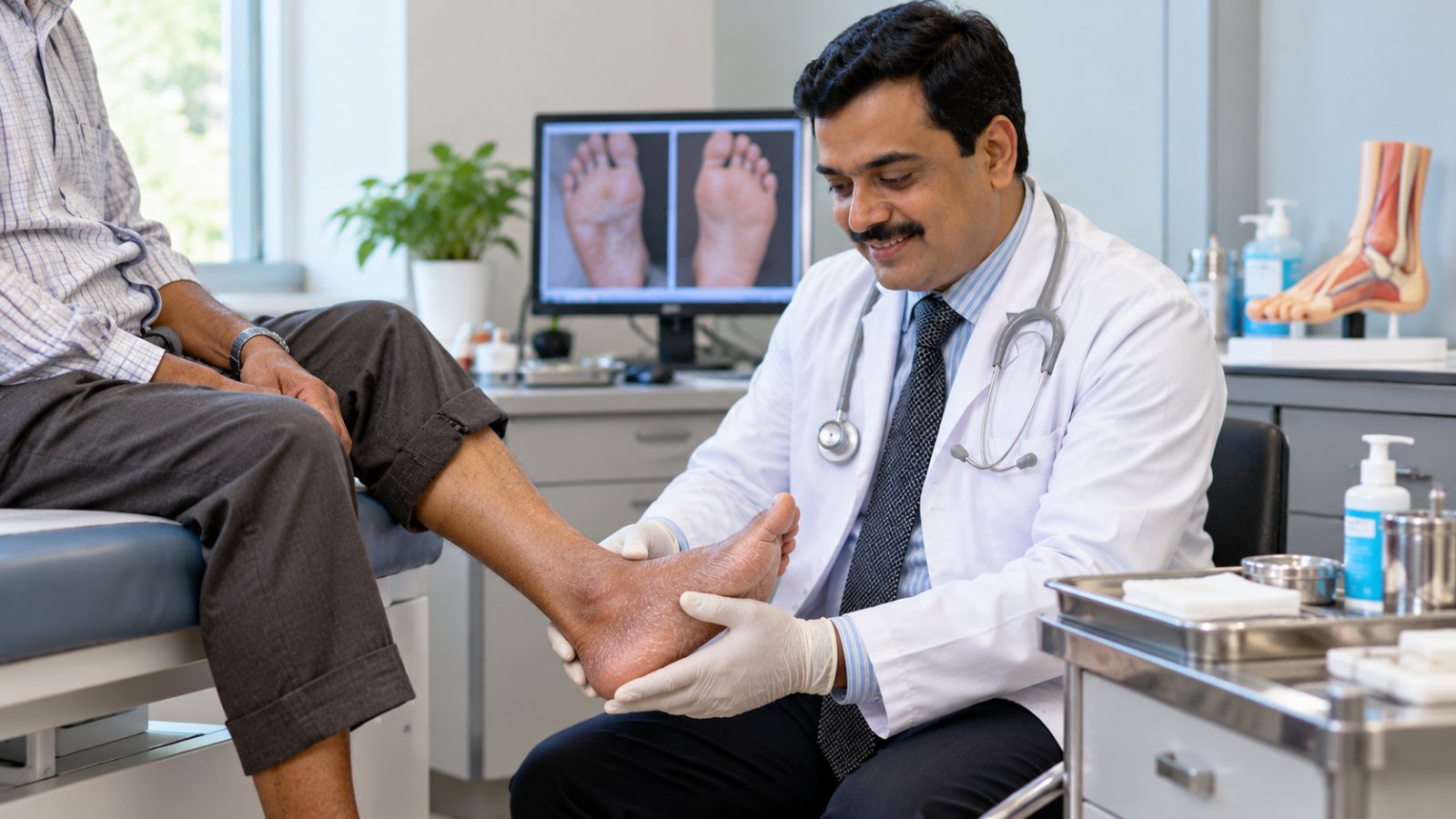
Sterile sharp reduction, plus an assessment of why the callus formed. The removal itself takes minutes; the useful part is what is found underneath and what is done about the cause.
- Examination of both feet and assessment of sensation and circulation, the latter through our vascular services where indicated.
- Sterile sharp debridement of the callus in layers, checking the tissue underneath as it thins.
- Inspection for a wound beneath, which is common under a callus with a dark centre.
- Wound treatment if one is found, managed under non-surgical wound management.
- Identification of the pressure source, including gait, deformity and footwear.
- Offloading: custom insoles or therapeutic footwear so the callus does not simply rebuild.
- A review interval, typically every few weeks to months depending on how fast it returns.
More on the condition and how it is managed is on our callus page, with related problems under foot conditions we treat.
How often should callus be reduced?
Often enough that it never becomes thick. For most people that means every four to twelve weeks, set by how quickly it rebuilds rather than by a fixed calendar.
A practical marker: if the callus is noticeably raised and hard again by your next visit, the interval is too long or the offloading is not working. Both are adjustable, and both are part of preventive foot care.
What can you safely do between appointments?
Look, moisturise, and protect. Nothing that cuts, burns or abrades. Your role is monitoring and prevention, not removal.
- Inspect the callus daily in good light, watching for any dark or reddish centre.
- Moisturise the area to keep the skin supple, avoiding between the toes.
- Wear the prescribed insoles and footwear all the time, including indoors.
- Never walk barefoot.
- Check inside shoes before wearing them.
- Report any change promptly rather than waiting for the next scheduled visit.
When does callus need urgent attention?
Within days for a dark centre or any break in the skin; the same day if there is infection. Callus itself is not an emergency, but what develops beneath it can be.
- A dark, reddish or purple centre inside the callus.
- Any crack, split or open area, however small.
- Discharge or a damp patch on the sock over the callus.
- Redness, swelling, warmth or foul smell around it.
- Fever with a foot problem.
- A blister forming near or under it, as covered in our post on blisters on the foot with diabetes.
Callus and diabetic foot care for Gantyada
Elegance Diabetic Foot & Ulcer Clinic (EDFC), led by Dr. Ashutosh Shah, provides professional callus reduction, sensation and circulation testing, ulcer treatment and limb salvage from its centre in Surat, with diabetic foot care expanding into the Vizianagaram district including Gantyada. For callus removal in Gantyada, the part that matters most is not the removal itself but finding and correcting the pressure that created it.
You can send a clear photo of the callus to our team on WhatsApp for initial guidance and book a foot assessment. If there is redness, discharge, swelling or fever, seek care the same day. Follow EDFC on Facebook, Instagram and YouTube for foot care guidance and real limb salvage stories.
Treat the pressure, not the skin
Callus is the foot telling you where it is being overloaded. Shaving it off at home silences the message and risks a wound; reducing it professionally and correcting the load removes the reason it formed. If a callus keeps returning to the same spot, that spot is worth investigating.
Next step: book a callus and pressure assessment with Dr. Ashutosh Shah at Elegance Diabetic Foot & Ulcer Clinic, or send a photo on WhatsApp today, especially if there is any dark area inside the callus.
Medical disclaimer: This article is for educational purposes only and is not a substitute for professional medical diagnosis or treatment. Callus in a diabetic foot should be assessed and reduced by a trained clinician. Chemical callus or corn removers should not be used on a diabetic foot. Redness, discharge, swelling or fever needs urgent in-person care. Please consult Dr. Ashutosh Shah or a qualified specialist about your condition. For further guidance, see the NHS guide to corns and calluses and the IWGDF diabetic foot guidelines.
quiz Frequently Asked Questions
This article is general education, not a diagnosis. If you have a diabetic foot wound, please have it assessed in person. Send a photo on WhatsApp or book a consultation.
About the Author

Dr. Ashutosh Shah, Plastic, Reconstructive & Diabetic Foot Surgeon, Elegance Diabetic Foot & Ulcer Clinic, Surat
Dr. Ashutosh Shah is a board certified plastic and reconstructive surgeon with over 22 years of experience and more than 10,000 limbs and feet saved. He founded Elegance Diabetic Foot & Ulcer Clinic, India's first chain of clinics dedicated to foot care, with centres in Surat and OPD partners across South Gujarat. He is known for a limb first approach, safe wound care and ethical, natural results.