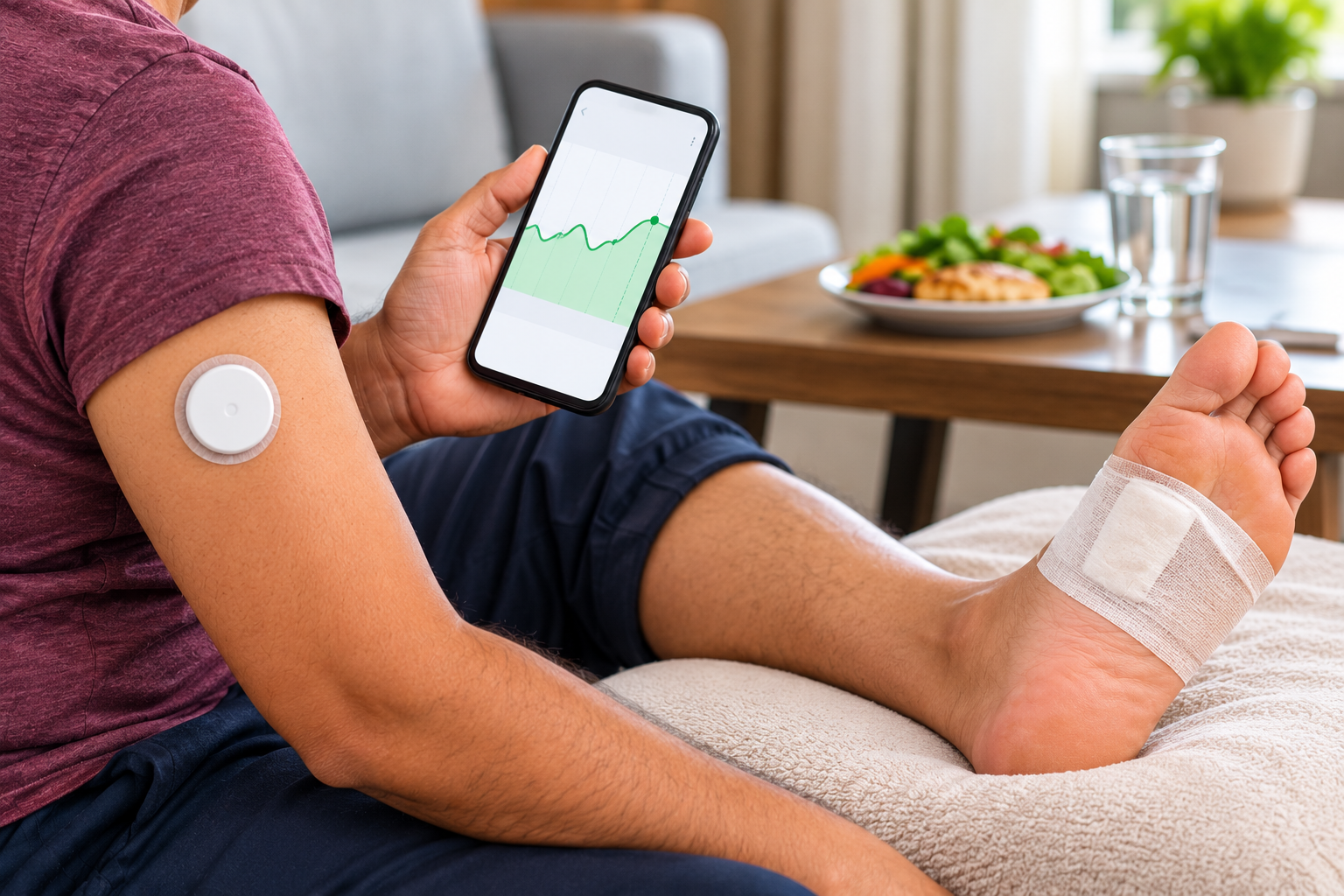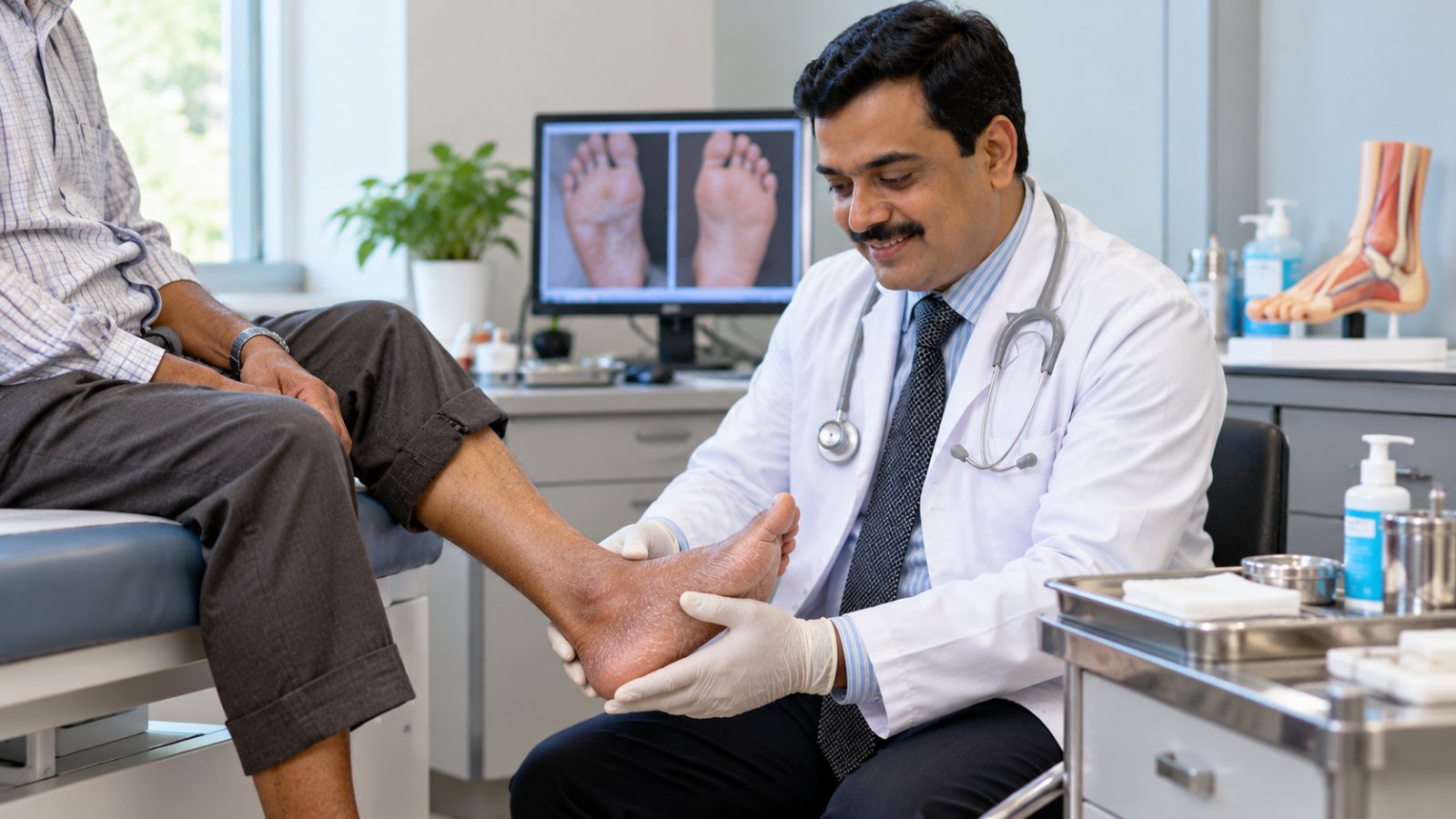

Advanced wound dressing for a diabetic patient is modern, specialised dressing (such as foam, hydrocolloid, antimicrobial, or negative-pressure therapy) that keeps a wound at the ideal moisture, controls infection, and speeds healing more than plain gauze. Chosen by an expert doctor for the right wound, it can heal diabetic ulcers faster and more safely, lowering complication risk.
As our clinic video puts it: it is not just dressing. The right advanced dressing can be the difference between a wound that lingers for months and one that heals. But the key words are the right dressing, for the right wound, by an expert. This guide explains advanced wound dressing for a diabetic patient.
What Is Advanced Wound Dressing for a Diabetic Patient?
Advanced wound dressing for a diabetic patient means using modern, purpose-designed dressings and therapies instead of simply covering the wound with dry gauze. Diabetic wounds heal slowly because of poor circulation, nerve damage, and high infection risk, so the dressing has a real job to do: hold the ideal amount of moisture, absorb excess fluid, fight bacteria, and protect new tissue. Advanced options include foam, hydrocolloid, alginate, hydrogel, and antimicrobial (for example silver) dressings, as well as negative-pressure wound therapy.
The purpose is an environment where healing can actually happen. A diabetic ulcer left under the wrong dressing can stall or worsen, while the right one actively supports repair.
How Is It Different from an Ordinary Dressing?
The difference is that ordinary gauze only covers, while advanced dressings actively help the wound heal. The table below compares them.
| Feature | Advanced dressing |
|---|---|
| Moisture | Keeps the ideal moist environment for healing. |
| Infection | Antimicrobial types actively reduce bacteria. |
| Fluid | Absorbs excess discharge without drying the wound. |
| Change frequency | Often fewer, less painful changes than gauze. |
These are matched to the wound within expert specialised dressing and wider ulcer management care.
Does Advanced Dressing Really Heal Wounds Faster?
For the right wounds, yes. A meta-analysis of negative-pressure wound therapy for diabetic foot ulcers found it improved complete healing compared with standard care, and is best suited to deeper or higher-risk ulcers when blood flow is adequate and ordinary care has not been enough. Other advanced dressings and therapies, like antimicrobial dressings and PRP, can also speed healing in the right cases.
The honest caveat is important: no dressing heals a diabetic ulcer on its own, and a costly dressing is not automatically better. Which is why expert judgement, not just an expensive product, drives real results.
What Types Are Used, and When?
An expert selects the dressing or therapy based on the wound's depth, moisture, and infection. Common options include the following.
- Foam and hydrocolloid: for moisture balance in moderately draining wounds.
- Alginate: highly absorbent, for wounds with more discharge.
- Antimicrobial (silver): to control infection in contaminated wounds.
- Negative-pressure (VAC/NPWT): for deeper, complex, or high-risk ulcers.
- PRP and biological therapies: to stimulate healing in stubborn wounds.
These are often combined with debridement and offloading, and the clinic offers VAC / NPWT and PRP / PRF as part of this.
Why Does It Need an Expert, Not Just Any Dressing?
Because the dressing is only one part of healing a diabetic wound, and choosing wrongly can do harm. An expert doctor first removes dead tissue (debridement), controls infection, checks blood supply, and offloads pressure from the wound, then selects the dressing that suits that specific wound at that specific stage, changing it as the wound evolves. A dressing that is right for a draining, infected ulcer is wrong for a clean, healing one. Just as importantly, healing depends on the whole picture: blood sugar control, adequate circulation, nutrition, and keeping weight off the wound often matter more than the dressing itself. This is exactly why advanced dressing works best inside expert, comprehensive diabetic foot care rather than as a product used in isolation at home.
Why Choose Elegance Diabetic Foot Clinic in Surat?
Healing a diabetic wound needs the full toolkit and the judgement to use it. At Elegance Diabetic Foot and Ulcers Clinic in Surat, care is led by Dr. Ashutosh Shah, a plastic, reconstructive and cosmetic surgeon with more than 22 years of experience, offering advanced dressings, NPWT, PRP, debridement, offloading, and reconstructive surgery under one roof, with a strong focus on healing wounds and preventing amputation. You can read about the expert doctor, explore specialised dressing and ulcer care, or contact the clinic.
Medical disclaimer: This article is for general information and education only and is not a substitute for personalised medical advice. Diabetic foot wounds can worsen rapidly and require prompt professional assessment; do not rely on dressings alone. Treatment choices, healing, and outcomes vary by individual and depend on blood sugar, circulation, infection, and offloading. Always have a diabetic wound managed by a qualified clinician. To get properly assessed, contact Elegance Diabetic Foot and Ulcers Clinic, Surat.
quiz Frequently Asked Questions
This article is general education, not a diagnosis. If you have a diabetic foot wound, please have it assessed in person. Send a photo on WhatsApp or book a consultation.
About the Author

Dr. Ashutosh Shah, Plastic, Reconstructive & Diabetic Foot Surgeon, Elegance Diabetic Foot & Ulcer Clinic, Surat
Dr. Ashutosh Shah is a board certified plastic and reconstructive surgeon with over 22 years of experience and more than 10,000 limbs and feet saved. He founded Elegance Diabetic Foot & Ulcer Clinic, India's first chain of clinics dedicated to foot care, with centres in Surat and OPD partners across South Gujarat. He is known for a limb first approach, safe wound care and ethical, natural results.