Written by Dr. Ashutosh Shah, Plastic & Microvascular Surgeon - Diabetic Foot & Limb Salvage Specialist, Elegance Diabetic Foot & Ulcer Clinic (EDFC). Practising since 2004 (22+ years). Read full bio.
Medically reviewed by Dr. Ashutosh Shah
Achilles tendon lengthening in Narasannapeta is a small operation that releases a tight calf tendon so the ankle can bend upwards normally. In diabetes it is used to reduce the crushing pressure on the ball of the foot that makes forefoot ulcers heal slowly and return repeatedly.
This is the least obvious of the diabetic foot operations, because the problem is not where the wound is. The wound sits on the forefoot; the cause sits at the back of the calf. Understanding that chain is what makes the surgery make sense.
What does a tight Achilles tendon have to do with a foot ulcer?
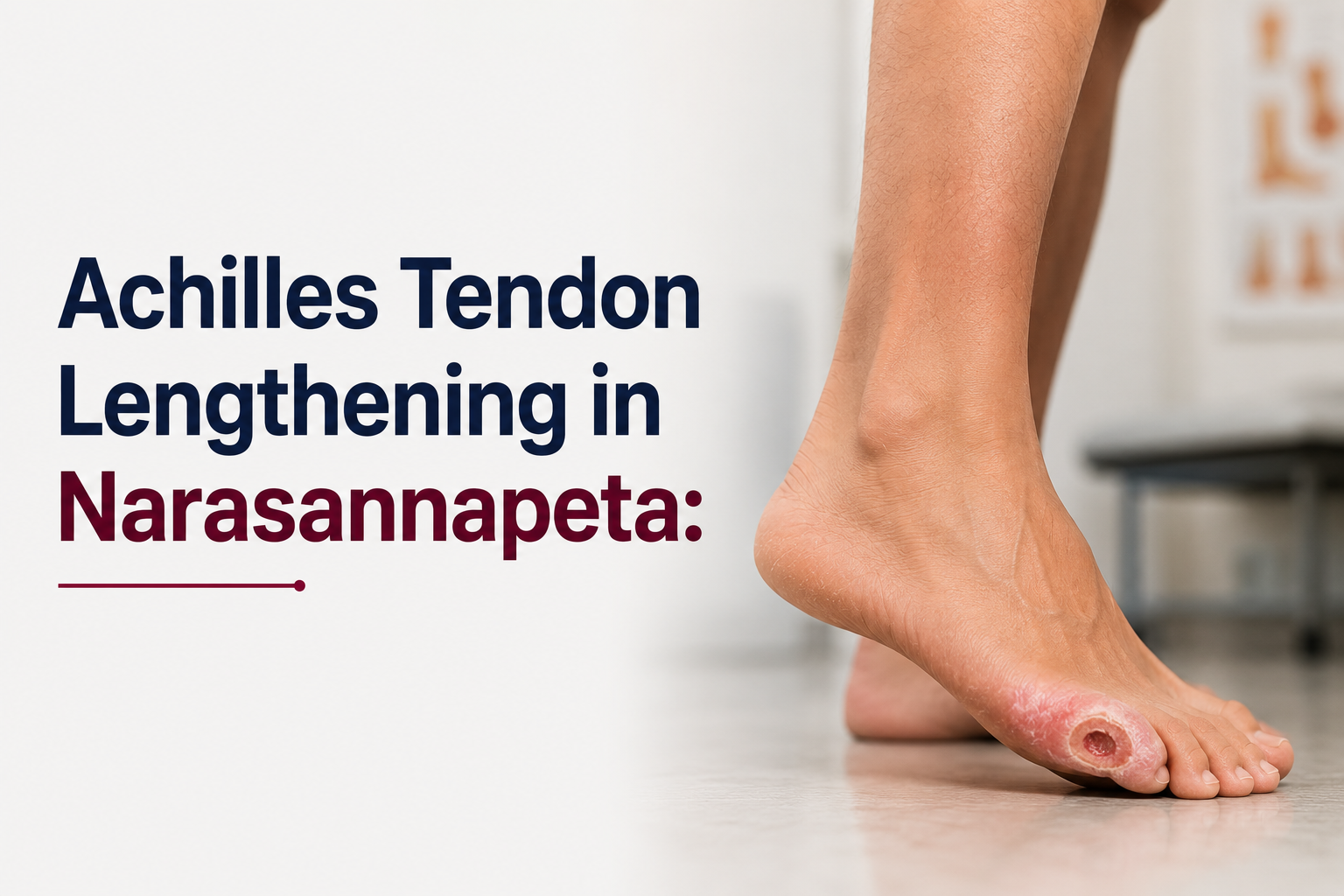
A tight Achilles tendon stops the ankle from bending upwards, so during walking the heel lifts too early and body weight is driven forward onto the ball of the foot. In a numb diabetic foot, that concentrated pressure breaks the skin down and keeps breaking it down.
The condition is called equinus, meaning the foot is held in a slightly pointed position like a horse's hoof. Years of high blood sugar stiffen the collagen in tendons, so the Achilles gradually shortens without the person noticing. It is a slow, silent change.
How can you check for a tight calf yourself?
Sit with your leg straight, then try to pull your foot upwards towards your shin. If the foot cannot come past a right angle with the knee straight, the calf is tight. Repeat with the knee bent, since more movement with a bent knee points to the upper calf muscle rather than the tendon itself.
Clinicians call this the Silfverskiold test, and it decides which operation suits you. It takes a few seconds, but it is not a substitute for assessment, particularly if there is already a wound on the foot.
What happens if a tight calf is left alone?
Left untreated, the pressure keeps building on the forefoot and creates a predictable chain: callus, then a wound under the callus, then a deeper ulcer, then infection reaching bone. Each stage takes longer to treat than the one before.
- Thick callus under the ball of the foot or the big toe.
- Bleeding or a dark spot inside the callus, which means the skin is already damaged.
- An open ulcer that heals and reopens in the same place.
- Deep infection, sometimes reaching tendon or bone.
- Toe deformity and further pressure points as the foot mechanics worsen.
These sit alongside the other foot conditions we treat, and the earlier the chain is broken, the smaller the intervention needed.
Who benefits from Achilles tendon lengthening, and who does not?
The operation suits people with a proven tight calf and a forefoot ulcer or callus that keeps returning despite proper offloading. It does not suit people whose ankle movement is already normal, who have a heel ulcer, or whose circulation has not been assessed.
Likely to benefit:
- Limited ankle upward movement confirmed on examination.
- Recurrent or non-healing ulcer under the ball of the foot or big toe.
- Deep callus that rebuilds within weeks of being trimmed.
- Adequate blood supply, or circulation that can be restored first.
- Willingness to wear offloading footwear afterwards.
Not suitable, or needs different treatment first:
- Normal ankle range of movement, since there is nothing to lengthen.
- An existing heel ulcer, which lengthening can make worse.
- Untreated blocked arteries, assessed through our vascular services first.
- Active spreading infection, which must be controlled before elective surgery.
- Severe calf weakness or an unstable ankle.
Which operation is used, and what is the difference?
Two procedures are used depending on where the tightness sits. Percutaneous Achilles tendon lengthening treats tightness in the tendon itself, while gastrocnemius recession releases the upper calf muscle. The Silfverskiold test decides which is appropriate.
| Procedure | What is released | Chosen when |
|---|---|---|
| Percutaneous Achilles lengthening | Three small staggered cuts in the tendon, which then stretches out | Ankle movement limited with the knee both straight and bent |
| Gastrocnemius recession | The upper calf muscle sheath, above the tendon | Movement improves noticeably when the knee is bent |
| Open Achilles lengthening | The tendon through a formal incision | Severe contracture or when other work is being done at the same time |
The percutaneous version is the most common in diabetic practice. It takes minutes, uses three small stab incisions rather than a long cut, and avoids a large wound on a limb that heals slowly.
What can this surgery not fix?
Lengthening the tendon reduces forefoot pressure, but it does not correct a bony prominence, a collapsed midfoot, a deformed toe or blocked arteries. If those are the real problem, this operation alone will disappoint.
- It does not remove a bony bump. That needs bone shaving surgery.
- It does not reposition a dropped metatarsal. That needs a metatarsal osteotomy.
- It does not close an open wound. Large defects may need a skin graft.
- It does not improve blood supply. Blocked arteries need separate treatment.
- It does not replace offloading footwear. Insoles are still required afterwards.
In practice it is often combined with one of these rather than done alone, all within diabetic foot surgery.
What is the main risk, and how is it managed?
The main risk is over-lengthening. If the tendon is released too much, push-off power weakens and pressure transfers backwards onto the heel, which can create a heel ulcer that is harder to treat than the forefoot ulcer you started with.
This is managed by lengthening a measured amount rather than as much as possible, by protecting the ankle in a cast afterwards, and by a graduated return to walking. It is also why the operation is avoided when a heel ulcer is already present. Other risks include wound problems, infection, nerve irritation and, rarely, tendon rupture.
What does recovery involve?
Recovery takes roughly six to twelve weeks. The ankle is protected in a cast or boot for the first few weeks, walking is gradual, and calf strength is rebuilt with physiotherapy. An associated forefoot ulcer often begins closing within the first few weeks.
- Week 1 to 2: cast or boot, elevation, minimal walking, wound checks.
- Week 2 to 6: protected weight bearing, dressings for any ulcer, total contact casting in some cases.
- Week 6 to 12: physiotherapy for calf strength and balance, gradual return to normal walking.
- After 3 months: custom insoles and offloading footwear for the long term.
Where an ulcer is still open, dressings continue alongside, managed under non-surgical wound management.
How do you keep the result?
The tendon can tighten again over years, and the diabetes that caused it does not go away. Custom insoles, daily foot checks, calf stretching, good blood sugar control and regular review are what hold the benefit in place.
- Wear the prescribed insoles and footwear, not ordinary chappals.
- Do the stretching programme your physiotherapist gives you.
- Check your soles daily for callus rebuilding or redness.
- Have callus trimmed professionally, never at home.
- Attend reviews under preventive foot care so tightening is caught before an ulcer forms.
Diabetic foot surgery and ulcer care for Narasannapeta
Elegance Diabetic Foot & Ulcer Clinic (EDFC), led by Dr. Ashutosh Shah, provides diabetic foot surgery, surgical offloading, limb salvage and reconstruction from its centre in Surat, with care expanding into the Srikakulam district including Narasannapeta. If you are considering Achilles tendon lengthening in Narasannapeta, the assessment that matters first is ankle movement, pressure distribution and circulation, not the wound alone.
You can send a clear photo of the sole of the foot to our team on WhatsApp for initial guidance and book a foot assessment. If the foot is hot, swollen, discharging or you have fever, seek hospital care the same day instead. Follow EDFC on Facebook, Instagram and YouTube for foot care guidance and real limb salvage stories.
Treat the calf, heal the forefoot
If a forefoot ulcer keeps coming back despite good dressings and proper footwear, the answer may be at the back of your leg rather than under your foot. Checking ankle movement takes seconds, costs nothing, and frequently explains a wound that has puzzled everyone for months.
Next step: book a foot and ankle assessment with Dr. Ashutosh Shah at Elegance Diabetic Foot & Ulcer Clinic, or send a photo of your foot on WhatsApp today to find out whether tightness in the calf is driving your ulcer.
Medical disclaimer: This article is for educational purposes only and is not a substitute for professional medical diagnosis or treatment. Suitability for Achilles tendon lengthening depends on your ankle movement, circulation, infection status and overall health. Please consult Dr. Ashutosh Shah or a qualified specialist about your condition. For further guidance, see the NHS guide to Achilles tendon problems and the IWGDF diabetic foot guidelines.
This article is general education, not a diagnosis. If you have a forefoot ulcer or callus that keeps returning, please have your foot and ankle assessed in person. Book a consultation or send a photo on WhatsApp.
quiz Frequently Asked Questions
This article is general education, not a diagnosis. If you have a diabetic foot wound, please have it assessed in person. Send a photo on WhatsApp or book a consultation.
About the Author
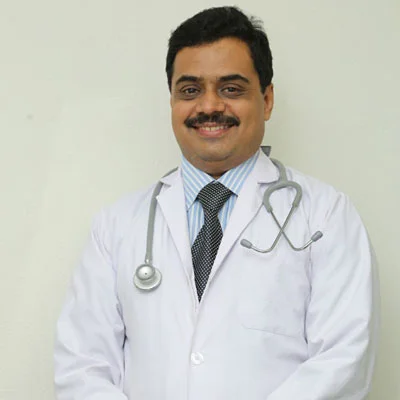
Dr. Ashutosh Shah, Plastic, Reconstructive & Diabetic Foot Surgeon, Elegance Diabetic Foot & Ulcer Clinic, Surat
Dr. Ashutosh Shah is a board certified plastic and reconstructive surgeon with over 22 years of experience and more than 10,000 limbs and feet saved. He founded Elegance Diabetic Foot & Ulcer Clinic, India's first chain of clinics dedicated to foot care, with centres in Surat and OPD partners across South Gujarat. He is known for a limb first approach, safe wound care and ethical, natural results.