
Moist Wound Healing
The principle behind modern wound care: healing happens faster in balanced moisture, not under a dry scab.
Key Takeaways
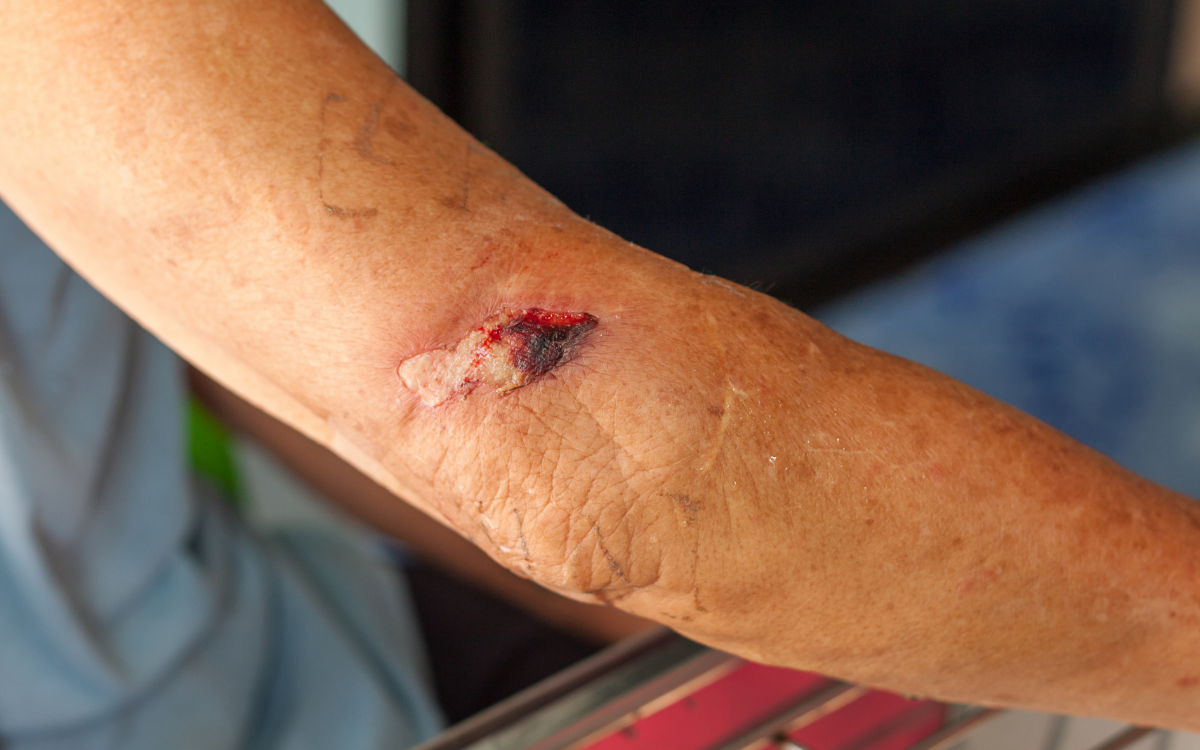
- Wounds kept at balanced moisture heal faster than wounds allowed to dry and scab.
- A scab is an obstacle that new skin cells must burrow underneath.
- Too much moisture is equally harmful, softening and breaking the surrounding skin.
- Moist healing is a principle, not a product, and it guides every dressing choice we make.
What Is Moist Wound Healing?
Moist wound healing: keeping a wound bed at balanced humidity so new cells can migrate across the surface without meeting a dry crust.
New skin grows from the edges inward and from remaining islands of tissue outward. Those cells move easily across a damp surface. Across dry, hardened tissue they must tunnel beneath it instead, which takes considerably longer.
Why Do Traditional Methods Slow Healing?
Open air drying, spirit and repeated antiseptic washes all harden the wound surface. Meanwhile, gauze absorbs the natural fluid that contains growth factors, then bonds to the tissue. Removing it tears away the fragile new layer that formed since the last change, which is why some wounds appear to restart each week.
How Is the Right Balance Maintained?
- Absorbent dressings when a wound produces heavy fluid
- Hydrogels when the surface is dry or hardened
- Barrier creams to protect the skin around the wound
- Dressing intervals long enough to leave the surface undisturbed
Does This Apply to Infected Wounds Too?
The principle holds, though infection changes the priorities. Infected wounds need drainage, antibiotics and often debridement first. Once infection is controlled, moist healing resumes as the guiding approach.
What Should You Expect and What Does It Cost?
Costs follow the dressings used, and the plan is priced at the first visit so you know the likely spend across the treatment course.
Expect steady rather than dramatic progress. A wound responding well shows a cleaner, pinker base within two weeks and visibly smaller edges by four. Where nothing has changed in that window, the cause is usually pressure or blood supply, and we investigate rather than simply continuing.