
Post-Surgical Footwear
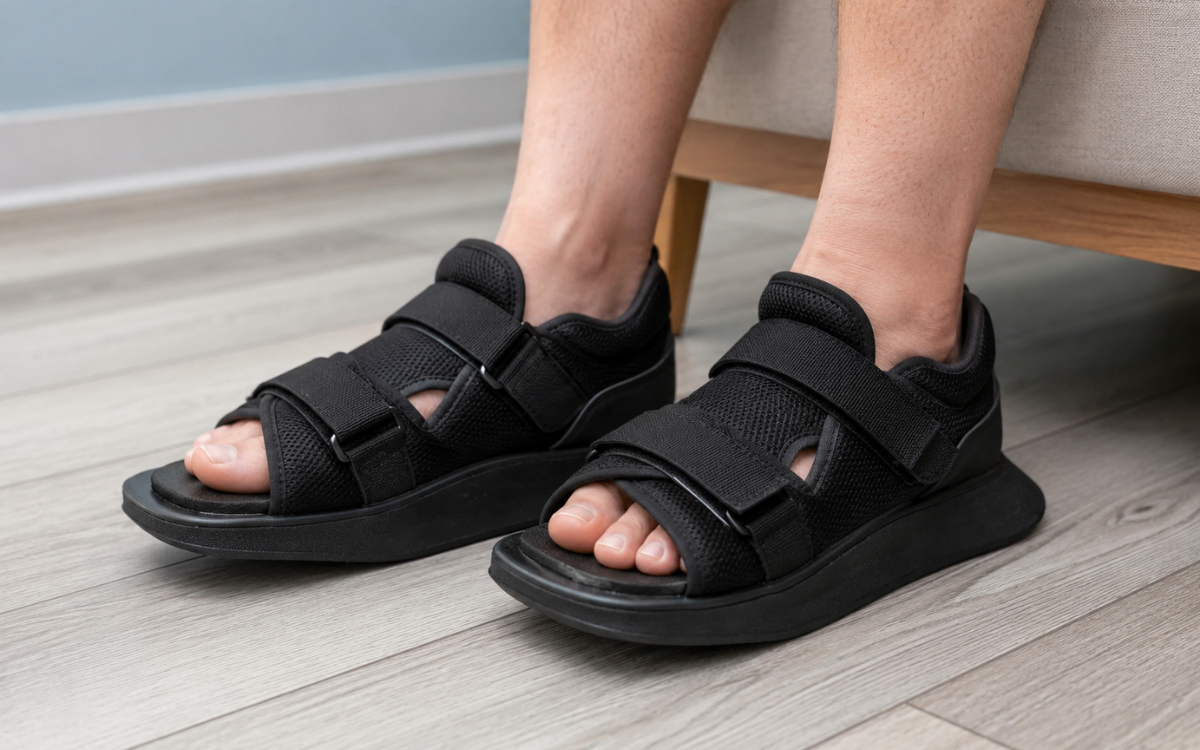
Specialised shoes that protect an operated foot while allowing you to keep walking safely.
Key Takeaways
- Post surgical shoes protect the operated area while allowing safe walking.
- Forefoot and heel relief designs shift weight away from specific regions.
- Wearing them consistently is what determines whether surgical results hold.
- They are temporary, and prescribed footwear follows once healing completes.
Why Is Special Footwear Needed After Foot Surgery?
Because ordinary shoes press exactly where they should not. A surgical wound, a healing osteotomy or a released tendon all need the load kept off them. Meanwhile, complete bed rest is neither realistic nor healthy, particularly for patients with diabetes who need to stay active.
Post surgical footwear resolves that conflict by redistributing weight away from the treated area.
What Types Are Used?
- Forefoot relief shoes: weight passes through the heel, protecting the front of the foot
- Heel relief shoes: the reverse, protecting a healing heel
- Flat rigid soled shoes: preventing the foot bending at a healing site
- Walking boots: full immobilisation after bone surgery or Charcot treatment
- Wide fitting post operative shoes: accommodating dressings and swelling
How Long Must They Be Worn?
Typically two to eight weeks depending on the procedure, and bone surgery needs longer than soft tissue surgery. Importantly, they must be worn for every step, including the short walk to the bathroom at night. Most surgical failures we see followed a few unprotected steps rather than a dramatic event.
What Comes Afterwards?
Once healing completes, you move into prescribed footwear with custom insoles designed around your new foot shape. That transition is planned, since the foot after surgery loads differently from before, and pressure mapping guides the new design.
What Does It Cost?
Post surgical shoes are modestly priced and often included within the surgical package. Walking boots cost more and are reusable. Everything is confirmed before surgery, so the total is known upfront rather than added afterwards.