
Written by Dr. Ashutosh Shah, Plastic & Microvascular Surgeon - Diabetic Foot & Limb Salvage Specialist, Elegance Diabetic Foot & Ulcer Clinic (EDFC). Practising since 2004 (22+ years). Read full bio.
Medically reviewed by Dr. Ashutosh Shah
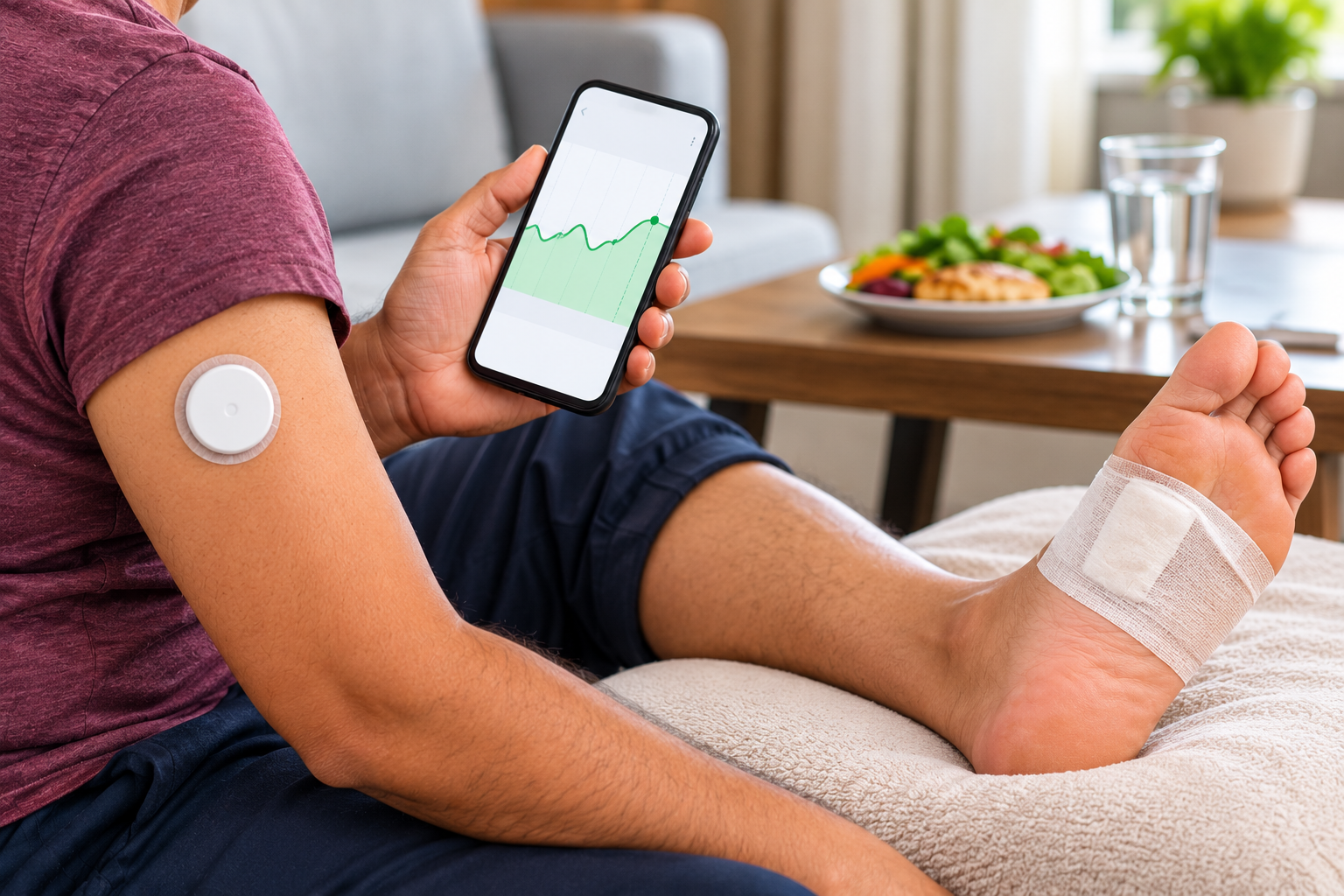
PAD diabetic foot in Kurupam means the leg arteries are narrowed, reducing blood supply to the foot. The critical point is that healing a wound needs far more blood flow than simply keeping skin alive, which is why a foot can seem fine for years and then fail as soon as it is injured.
Think of it as a budget. Your foot has an income of blood flow, and different activities cost different amounts. PAD cuts the income. A wound raises the outgoings. Everything below follows from that gap.
What does the foot spend its blood supply on?
Three things, at very different costs. Understanding the difference explains why the same leg can be adequate one week and inadequate the next.
- Keeping intact skin alive: cheap. Requires relatively little flow.
- Walking: moderate. Muscles demand several times their resting supply during activity.
- Healing a wound: expensive. New tissue, new blood vessels and fighting infection all require sustained high flow, well above what intact skin needs.
This is why a foot with narrowed arteries can look normal indefinitely, then develop a small blister that simply never closes. Nothing changed in the arteries that week. What changed is that the foot was suddenly asked to pay for something expensive.
How does diabetes cut the supply?
By narrowing the arteries in a pattern specific to diabetes. The disease affects the small vessels below the knee, in long, diffuse, heavily calcified segments, rather than one short blockage in a big artery.
That distribution matters practically. Long below-knee narrowings are harder to treat than a single focal blockage, results are less durable, and the arteries feeding specific parts of the foot may be affected unevenly, so one area of the foot can be well supplied while another is starved.
Why does diabetic PAD get caught so late?
Because nerve damage silences the alarms. In someone without diabetes, PAD announces itself through pain: calf pain on walking, then pain in the foot at rest. Neuropathy mutes both, so the warning stage is often skipped entirely.
Three specific failures of warning happen together:
- Claudication may be absent or vague. The classic pattern of calf pain after a set walking distance is described in our post on calf pain when walking with diabetes, but many diabetic patients never report it.
- Rest pain may not develop, so the stage that would normally send someone urgently to a doctor never arrives.
- The foot may feel warm and look pink despite poor skin perfusion, because autonomic damage shunts blood past the skin capillaries. Warmth is not reassurance. This mechanism is explained in our post on peripheral neuropathy of the feet.
The practical consequence is stark: in diabetes, PAD frequently presents for the first time as a wound that will not heal, which is exactly the situation explored in our post on non-healing ulcer treatment.
What signs are still worth looking for?
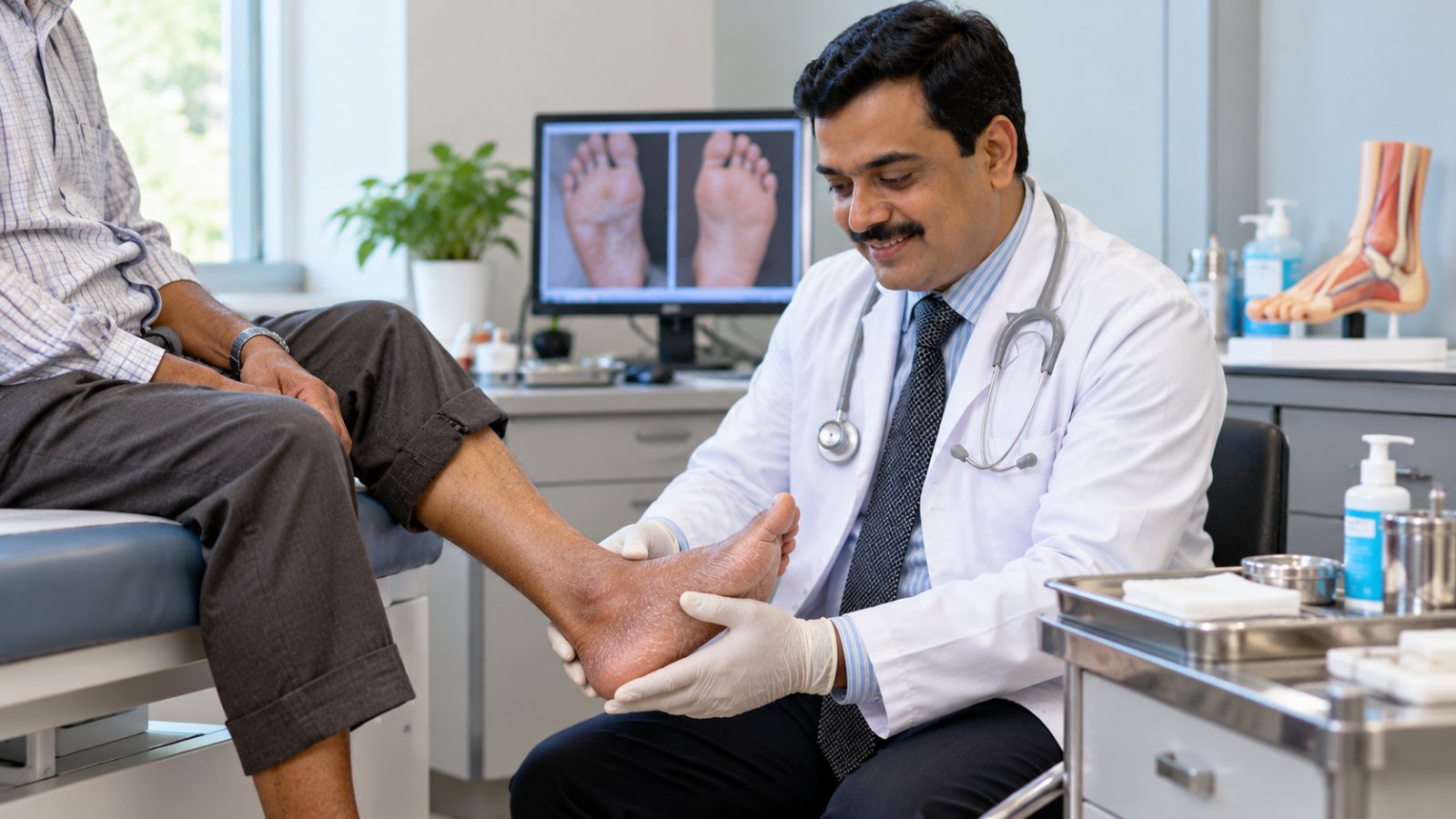
Physical signs, since symptoms are unreliable. These are what you and your clinician can observe rather than what you feel.
- Cold feet, especially one colder than the other.
- Weak or absent pulses at the ankle and top of the foot.
- Hairless, shiny, thin skin over the lower leg.
- Slow-growing, thickened nails.
- Pallor when the leg is raised, and deep redness when it hangs down.
- Slow refill when you press the toe pad and release it.
- A wound that is not smaller after four weeks of proper care.
- Any dark or blackening area, discussed in our post on dry gangrene treatment.
How is blood supply actually measured?
Not by a single test, and not reliably by the most commonly used one. This is where diabetic PAD assessment goes wrong most often.
| Test | What it measures | Limitation in diabetes |
|---|---|---|
| Pulse examination | Whether major arteries are palpable | Subjective; palpable pulses do not exclude below-knee disease |
| Ankle brachial index (ABI) | Ankle pressure compared with arm | Calcified ankle arteries resist compression, giving falsely normal or high readings |
| Toe brachial index / toe pressure | Pressure in the toe arteries | More reliable, since toe vessels calcify less |
| Doppler waveform | Shape of the flow signal | Useful even when pressures are unreliable |
| Angiography or CT/MR angiogram | Maps the exact narrowings | Used when planning treatment, involves contrast |
The single most important line in this section: a normal ankle brachial index does not exclude peripheral arterial disease in a diabetic patient. If the foot is cold, the pulses are weak, or a wound is not healing, further testing is warranted regardless of that number. Assessment of this kind is what our vascular services exist to do.
How is the supply increased?
By reopening or bypassing the narrowed segments. This is what changes the arithmetic when a wound needs more flow than the leg can currently deliver.
- Angioplasty, a balloon passed through a small puncture, sometimes with a stent, described in our post on leg angioplasty for diabetes.
- Bypass surgery, routing blood around a blockage that cannot be crossed.
- Medical therapy, including antiplatelet and cholesterol treatment, which protects the arteries rather than reopening them.
- Supervised walking programmes, which improve claudication distance by developing collateral vessels, where there is no open wound.
- Stopping smoking, which is the strongest single modifiable factor for leg arteries.
How is the demand reduced?
By removing what is consuming the supply. This half is often forgotten, but it is equally important and much of it is achievable immediately.
- Treating infection, which consumes oxygen and generates tissue demand.
- Removing dead tissue, which contributes nothing and harbours bacteria.
- Offloading the wound, so tissue is not being crushed while trying to heal.
- Controlling swelling, since oedema increases the distance oxygen must diffuse.
- Correcting anaemia and nutrition, because oxygen delivery depends on haemoglobin as well as flow.
- Wound care appropriate to the stage, under non-surgical wound management, with surgical options through diabetic foot surgery.
Why does PAD matter beyond the foot?
Because arteries narrow throughout the body, not only in the legs. Peripheral arterial disease is a marker of atherosclerosis elsewhere, which means raised risk of heart attack and stroke.
That reframes treatment. Cholesterol tablets, blood pressure control, antiplatelet therapy and stopping smoking are not just about saving the foot; they are about the person. Many patients are more motivated by the foot they can see than by a statistic, and that is a legitimate reason to start.
What happens if it is not treated?
The gap between supply and demand widens. The sequence is predictable, and each stage is harder to reverse than the one before.
- Silent narrowing, with no symptoms and normal-looking feet.
- Reduced reserve, where the foot maintains itself but cannot heal injury.
- A wound that stalls, often the first clinical sign in diabetes.
- Infection, which the reduced supply cannot fight and antibiotics struggle to reach.
- Tissue death, appearing as gangrene.
- Amputation, where the tissue cannot be salvaged.
The useful place to interrupt this is stage two, before any wound exists, which is why circulation testing belongs in routine diabetic foot review rather than only after something goes wrong. Related conditions are listed under foot conditions we treat.
What should you do if you have PAD?
Protect the foot from needing expensive repairs. With a reduced blood supply, prevention is worth far more than it is in someone with normal circulation.
- Inspect both feet daily, because a small wound is now a serious event.
- Never walk barefoot, and check inside footwear before wearing it.
- Report any wound within days, not weeks.
- Keep skin supple to prevent cracks, avoiding between the toes.
- Have callus and nails managed professionally, never at home.
- Take prescribed medication consistently, including cholesterol treatment.
- Walk regularly where there is no open wound, since it builds collateral circulation.
- Attend scheduled review under preventive foot care.
When is it an emergency?
Same day for a suddenly cold, pale or painful leg, or any spreading infection.
- A sudden cold, pale or blue foot, with or without pain.
- New severe pain in one leg.
- Rest pain relieved only by hanging the leg down.
- Blackening tissue, or a wound that suddenly enlarges.
- Fever, spreading redness, swelling or foul discharge.
Circulation assessment for Kurupam
Elegance Diabetic Foot & Ulcer Clinic (EDFC), led by Dr. Ashutosh Shah, provides circulation testing, wound care, reconstruction and limb salvage from its centre in Surat, with diabetic foot care expanding into the Parvathipuram Manyam district including Kurupam. For anyone concerned about PAD diabetic foot in Kurupam, the most valuable step is having the blood supply measured properly rather than assumed from how the foot looks or feels.
You can send clear photographs of both feet, along with any Doppler or angiogram reports, to our team on WhatsApp for initial guidance and book a foot and circulation assessment. If a leg is suddenly cold, pale or severely painful, seek hospital care the same day instead. Follow EDFC on Facebook, Instagram and YouTube for real limb salvage stories.
Test the supply before you need it
The reason PAD diabetic foot in Kurupam is dangerous is not that it hurts, but that it usually does not. A foot with poor circulation gets through years of ordinary life without complaint, then fails at the first blister. Knowing your blood supply before that happens changes what you protect against and how urgently a small wound gets treated.
Next step: if your feet are cold, your pulses are weak, or any wound has not shrunk in four weeks, book a circulation assessment with Dr. Ashutosh Shah at Elegance Diabetic Foot & Ulcer Clinic, or send photographs and reports on WhatsApp today.
Medical disclaimer: This article is for educational purposes only and is not a substitute for professional medical diagnosis or treatment. A normal ankle brachial index does not exclude arterial disease in diabetes, and circulation should be assessed by a clinician using appropriate tests. A suddenly cold, pale or severely painful leg needs immediate hospital assessment. Please consult Dr. Ashutosh Shah or a qualified specialist about your condition. For further guidance, see the NHS guide to peripheral arterial disease and the IWGDF diabetic foot guidelines.
quiz Frequently Asked Questions
This article is general education, not a diagnosis. If you have a diabetic foot wound, please have it assessed in person. Send a photo on WhatsApp or book a consultation.
About the Author

Dr. Ashutosh Shah, Plastic, Reconstructive & Diabetic Foot Surgeon, Elegance Diabetic Foot & Ulcer Clinic, Surat
Dr. Ashutosh Shah is a board certified plastic and reconstructive surgeon with over 22 years of experience and more than 10,000 limbs and feet saved. He founded Elegance Diabetic Foot & Ulcer Clinic, India's first chain of clinics dedicated to foot care, with centres in Surat and OPD partners across South Gujarat. He is known for a limb first approach, safe wound care and ethical, natural results.