Being told to rest fails because a numb foot feels nothing, so people still walk. A total contact cast spreads load across the whole sole and cannot be removed, which is why it heals plantar ulcers faster than any removable boot or footwear.
At Elegance Diabetic Foot & Ulcer Clinic (EDFC), Dr. Ashutosh Shah and the diabetic foot care team assess the ulcer, pressure points, foot shape and walking pattern before choosing an appropriate method for offloading diabetic foot ulcer pressure. The aim is not only to dress the wound but also to reduce the repeated mechanical stress that can prevent healing.
Why Does Walking on a Numb Foot Restart the Damage?
A plantar diabetic foot ulcer is repeatedly exposed to pressure every time a person stands or walks. In a healthy foot, pain acts as a warning and usually makes a person reduce activity. In a diabetic foot affected by neuropathy, that warning system may be greatly reduced or absent.
This means a person may continue walking on an ulcer without realising how much pressure is being placed on the damaged tissue.
Repeated walking creates pressure and shear around the wound. Newly forming tissue may be damaged again before it becomes strong enough to close the ulcer. Callus can also develop around high-pressure areas and concentrate even more load underneath the foot.
This is why simply telling someone to rest is often unreliable. Even if a person avoids long walks, they may still take many steps around the house, walk to the bathroom or stand in the kitchen. Proper offloading diabetic foot ulcer treatment reduces pressure on the wound rather than depending only on the patient to walk less.
This is especially important with a Neuropathic ulcer, because loss of protective sensation means repeated injury may occur without significant pain.
How Does a Total Contact Cast Work?
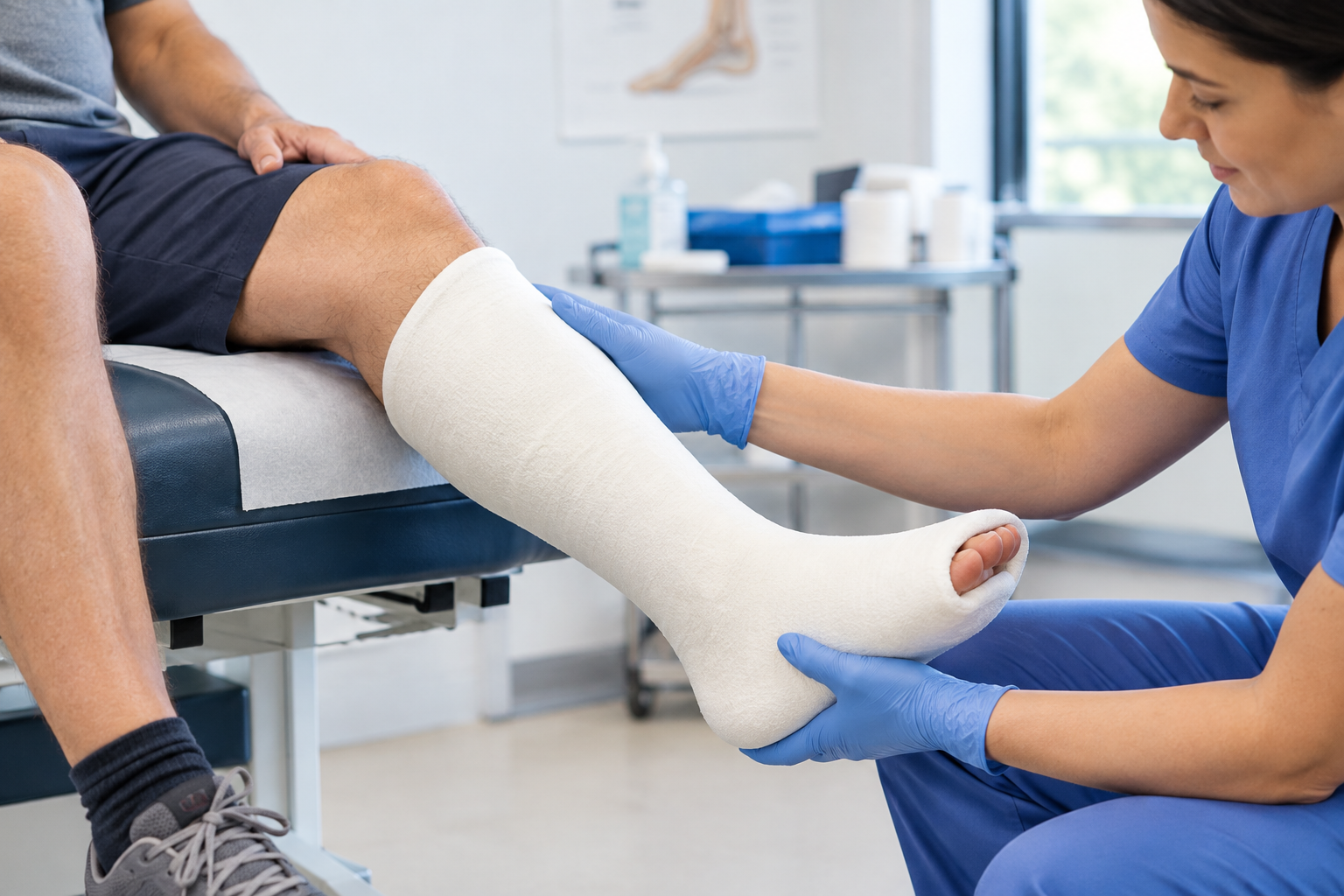
A total contact cast is designed to redistribute pressure away from the ulcer and across a larger area of the foot and lower leg.
The cast is carefully moulded around the contours of the foot. Instead of allowing a small part of the sole to repeatedly receive high pressure, it helps distribute the load over a broader surface.
A total contact cast for a foot ulcer can also reduce movement and shear around the wound. This gives healing tissue greater protection during essential day-to-day movement.
Another important advantage is that the cast cannot simply be removed by the patient.
With removable footwear, a person may take the device off for a few steps around the house. A total contact cast removes that option. Whenever the patient stands or walks, the prescribed pressure relief remains in place.
For appropriately selected plantar neuropathic ulcers, a total contact cast can therefore be an effective method for offloading diabetic foot ulcer pressure because it combines pressure redistribution with consistent use.
Learn more about Offloading and preventive surgery.
How Do the Offloading Options Compare?
There is no single offloading device suitable for every diabetic foot ulcer. Choosing the right method for offloading diabetic foot ulcer pressure depends on the ulcer location, depth, surrounding skin, circulation, infection, swelling, foot shape and the patient's ability to walk safely.
A total contact cast is one option. A non-removable walker can provide a similar practical advantage because the patient cannot take it off before walking.
A removable walker may also provide substantial pressure relief, but its effectiveness depends on whether it is actually worn during every weight-bearing step.
Half shoes and felted foam may be useful in selected situations. Bed rest alone is difficult to maintain consistently and does not protect the ulcer when the patient gets up and walks.
A Pressure and biomechanical assessment can help identify where excessive load is occurring and guide the choice of pressure-relieving treatment.
Offloading Options
| Offloading option | Healing rate | Compliance risk | Best-suited ulcer location | Cost |
|---|---|---|---|---|
| Total contact cast | High in appropriately selected ulcers | Low because it cannot be removed | Plantar forefoot and midfoot ulcers | Moderate |
| Non-removable walker | High when correctly fitted | Low | Plantar neuropathic ulcers | Moderate |
| Removable walker | Good when worn consistently | High because it can be removed | Selected plantar ulcers | Moderate |
| Half shoe | Variable | Moderate to high | Selected forefoot ulcers | Low to moderate |
| Felted foam | Variable; often used as an adjunct | Moderate | Localised plantar pressure areas | Low |
| Bed rest alone | Unreliable as a sole strategy | Very high | Not usually sufficient for an ambulant patient | Variable |
| Between-visit red flags | — | — | Smell, discharge staining the cast, fever or new pain | Come in the same day |
The safest offloading method should be selected after examining the individual wound and foot rather than choosing a device based on the ulcer alone.
Why Does Removable Footwear Heal Slower in Practice?
The difference between a removable walker vs cast is not simply how much pressure each device can reduce. A major practical difference is whether the device remains on the foot whenever the patient walks.
A removable walker can provide good pressure relief when worn correctly. However, patients may remove it for activities they consider minor.
They may take the boot off to walk to the bathroom, move around the bedroom, stand briefly in the kitchen or take a few steps indoors.
For the ulcer, those steps still count.
Even short periods of unprotected walking can repeatedly stress newly healing tissue. This is one reason adherence is such an important part of offloading diabetic foot ulcer management.
A non-removable cast or walker reduces this problem because the patient cannot decide when to use it. Pressure relief remains in place throughout normal weight-bearing activity.
After the ulcer heals, the goal shifts towards preventing another pressure injury. Appropriate Therapeutic footwear may then become part of the longer-term prevention plan.
How Long Is a Cast Worn and What Is Checked at Each Change?
A total contact cast is not normally applied once and left untouched until the ulcer heals. The foot requires regular clinical review, and the cast is changed according to the wound condition, swelling and fit.
There is no single treatment duration for every patient. Some ulcers respond relatively quickly, while deeper wounds or ulcers exposed to significant mechanical pressure may need a longer period of offloading.
At each cast change, the treating team checks:
-
wound size and depth
-
appearance of the wound bed
-
drainage or discharge
-
surrounding skin
-
callus formation
-
swelling
-
signs of infection
-
circulation
-
new rubbing or pressure areas
-
whether the cast still fits correctly
Changes in swelling can alter how the cast fits. A loose cast may allow movement and rubbing, while a cast that becomes too tight may create unwanted pressure.
The decision to continue casting, change the offloading method or move towards protective footwear should therefore be based on repeated assessment rather than a fixed number of days.
What Must You Report Between Cast Changes Without Waiting?
Patients should not assume that every problem can wait until the next scheduled cast appointment.
Because much of the foot is hidden inside the cast, a problem may first become noticeable through smell, discharge, discomfort or a change in how the cast feels.
Contact the treating clinic and seek same-day assessment if:
-
an unpleasant or unusual smell develops inside the cast
-
discharge or fluid begins staining the cast
-
you develop fever or feel generally unwell
-
new pain develops in the foot
-
the cast suddenly feels unusually tight
-
swelling develops around or above the cast
-
the cast becomes wet, cracked or significantly damaged
New pain deserves particular attention in a foot that was previously numb. It should not automatically be ignored simply because the original ulcer did not hurt.
Similarly, smell or discharge staining through the cast may indicate a change in the wound underneath. Waiting until the next routine cast change could allow the problem to worsen.
Successful offloading diabetic foot ulcer care therefore involves more than applying a cast. Regular review, appropriate cast changes and prompt reporting of warning signs are all important parts of treatment.
Conclusion: Effective Offloading Gives the Ulcer a Chance to Heal
A plantar diabetic foot ulcer cannot be treated effectively by dressing the wound while repeatedly loading the same pressure point. In a numb foot, continued walking may cause repeated tissue damage without enough pain to warn the patient.
Effective offloading diabetic foot ulcer treatment reduces this mechanical stress. A total contact cast redistributes pressure and remains in place during walking, while non-removable walkers, removable walkers, felted foam and other methods may have roles in selected patients.
At Elegance Diabetic Foot & Ulcer Clinic (EDFC), Dr. Ashutosh Shah and the team assess the ulcer, circulation, infection, pressure points and foot mechanics before planning an appropriate offloading strategy. Regular reassessment is equally important, particularly if there is a new smell, discharge, fever, new pain or a change in how the cast feels.
The goal is to protect the damaged area from repeated pressure long enough for healing to progress and then use appropriate pressure management and footwear to help reduce the risk of another ulcer.
quiz Frequently Asked Questions
This article is general education, not a diagnosis. If you have a diabetic foot wound, please have it assessed in person. Send a photo on WhatsApp or book a consultation.
About the Author

Dr. Ashutosh Shah, Plastic, Reconstructive & Diabetic Foot Surgeon, Elegance Diabetic Foot & Ulcer Clinic, Surat
Dr. Ashutosh Shah is a board certified plastic and reconstructive surgeon with over 22 years of experience and more than 10,000 limbs and feet saved. He founded Elegance Diabetic Foot & Ulcer Clinic, India's first chain of clinics dedicated to foot care, with centres in Surat and OPD partners across South Gujarat. He is known for a limb first approach, safe wound care and ethical, natural results.