
Serum Albumin
A protein level in the blood that predicts, quite reliably, whether a wound will close.
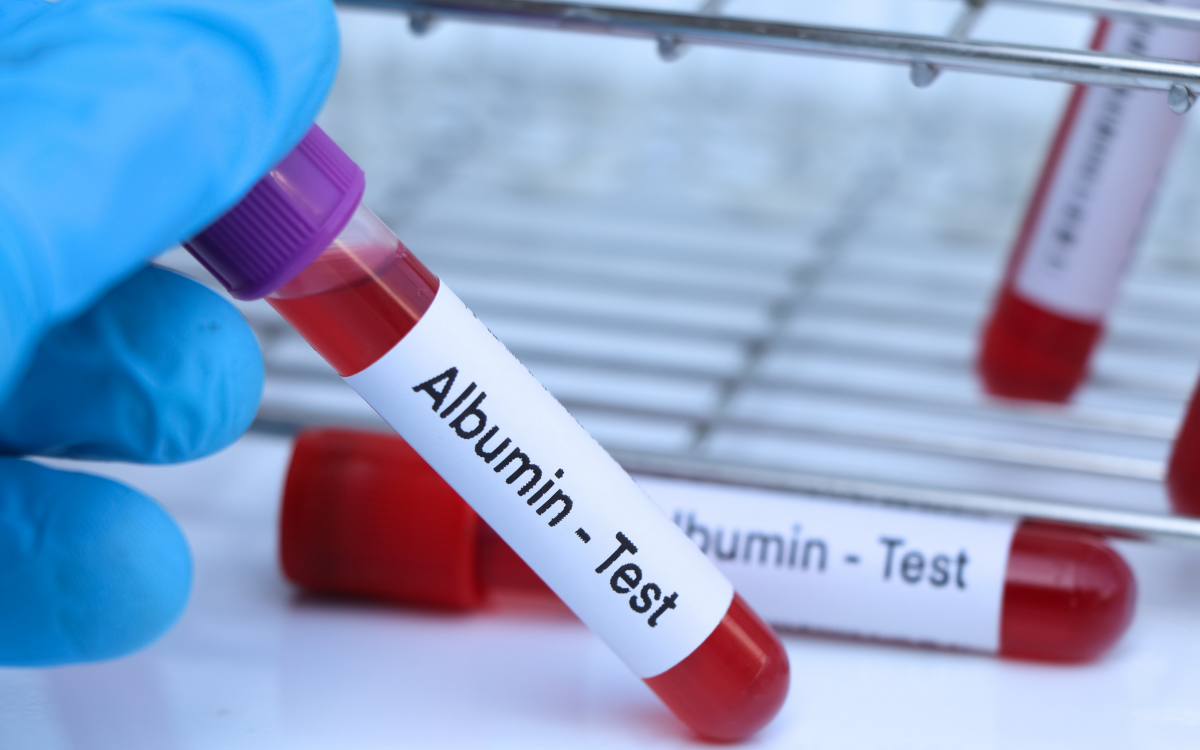
Key Takeaways
- Albumin is a blood protein that reflects nutritional status.
- Low albumin is one of the strongest predictors of a wound that will not close.
- Many patients with chronic ulcers are protein deficient without realising it.
- Correcting protein intake often restarts healing where dressings alone had failed.
Why Test Albumin in Foot Wound Patients?
Because wounds are literally built from protein. New tissue, collagen and skin all require raw material, and albumin shows whether that material is available. When the level is low, dressings can be perfect and the wound still refuses to close.
In practice, we see this often in older patients, in those eating very restricted diabetic diets, and in anyone with kidney disease. Consequently, testing early saves months of frustration.
What Is a Healthy Level?
Serum albumin: the main protein in blood plasma, measured in grams per decilitre, used as a marker of nutrition and healing capacity.
Levels in the normal range support healing. Readings below normal suggest protein deficiency, and the lower the value, the slower a wound tends to close. The test is simple, inexpensive and repeatable, so progress can be tracked.
How Is Low Albumin Corrected?
Diet comes first. Our team works out a realistic protein plan that respects your sugar control and kidney function, which matters because many patients avoid protein unnecessarily. Supplements are added where food alone is not enough, and any underlying cause such as protein loss through the kidneys is investigated.
Nutrition guidance is offered through our diet and nutrition service, so wound treatment and eating advice work together rather than separately.
What Does It Cost and How Long Until Levels Improve?
Serum albumin is an inexpensive test, usually taken alongside other blood work at a single sitting. The combined charge is confirmed upfront.
Levels rise gradually rather than overnight. With a proper protein plan, most patients show measurable improvement across four to six weeks, and wounds that had stalled often begin to contract again once the level moves up. That is why we retest instead of assuming progress.