
Written by Dr. Ashutosh Shah, Plastic & Microvascular Surgeon - Diabetic Foot & Limb Salvage Specialist, Elegance Diabetic Foot & Ulcer Clinic (EDFC). Practising since 2004 (22+ years). Read full bio.
Medically reviewed by Dr. Ashutosh Shah
Internal offloading surgery in Kothavalasa changes the foot itself so pressure no longer concentrates on one spot. It is used when casts, insoles and footwear have failed to keep an ulcer healed, and it does not remove the need for protective footwear afterwards.
There are only two ways to take pressure off a diabetic foot: put something between the foot and the ground, or change the foot. Everything in this guide is framed against that contrast, because understanding it explains when surgery becomes the sensible option.
What is the difference between external and internal offloading?
External offloading is what you wear. Internal offloading is what is built into the foot. Both aim at the same thing, which is lowering peak pressure at the point where skin keeps breaking down.
| External offloading | Internal offloading | |
|---|---|---|
| What it is | Total contact cast, removable boot, custom insoles, therapeutic footwear | Surgery on bone, tendon or joint to change how the foot loads |
| How fast it works | Immediately, from the day it is fitted | After healing, over weeks to months |
| Depends on | The patient wearing it, every time | The correction holding, which it usually does |
| Reversible | Yes, entirely | No |
| Main weakness | Only works while worn; some deformities cannot be accommodated | Surgical risk, healing time, and pressure may shift elsewhere |
Note the asymmetry in that table. External offloading fails mostly for human reasons, internal offloading fails mostly for biological ones. That is why the order of treatment matters.
Why is external offloading always tried first?
Because it is immediate, reversible and carries no surgical risk. A well-fitted total contact cast heals a large proportion of plantar ulcers without anyone going to theatre.
It is also the honest test. If an ulcer heals in a cast and then reopens once the person returns to ordinary footwear, that tells you the mechanics are the problem rather than the wound. Non-surgical management is described under non-surgical wound management, alongside preventive foot care.
When does external offloading stop being enough?
When the ulcer keeps returning despite proper external offloading, or when the deformity is too severe to accommodate. At that point the pressure is structural, and no insole thick enough will fix it without creating another problem.
- An ulcer that heals in a cast and reopens within weeks of normal footwear.
- Callus that rebuilds rapidly in the same place despite insoles.
- A deformity no footwear fits, such as a rocker-bottom sole or a rigid clawed toe.
- Exposed bone or a deep wound over a prominence.
- A patient who genuinely cannot comply with casting or boot wear over long periods.
Which operation matches which problem?
Internal offloading is a category, not a single operation. The procedure is selected to correct the specific mechanical fault causing the pressure.
| Mechanical problem | Typical operation | Detail |
|---|---|---|
| A metatarsal sitting too low or too long | Metatarsal osteotomy | See our post on metatarsal osteotomy |
| A localised bony prominence under the skin | Exostectomy, or bone shaving | See our post on bone shaving surgery |
| A tight calf loading the forefoot | Achilles or gastrocnemius lengthening | See our post on Achilles tendon lengthening |
| A curled toe pressing at the tip or knuckle | Flexor tenotomy or joint correction | See our post on hammertoe correction |
| A collapsed midfoot with a rocker-bottom sole | Arch stabilization and fusion | See our post on arch stabilization surgery |
These sit within our offloading and preventive surgery services, part of diabetic foot surgery.
What decides whether you are suitable?
Blood supply, infection status and the stability of the foot. These are checked before any elective offloading operation, because all three determine whether a surgical wound will heal.
- Adequate circulation, assessed through our vascular services, or restored first if arteries are blocked.
- No active spreading infection, which must be treated before elective bone surgery.
- No active Charcot inflammation, since operating into a hot, swollen foot carries much higher failure risk.
- Reasonable sugar control, protein and haemoglobin.
- Ability to follow weight-bearing restrictions for the required period.
What can internal offloading not do?
It cannot end the need for protective footwear. This is the most common and most costly misunderstanding about these operations.
- It does not restore sensation. The foot remains numb and still cannot warn you.
- It does not replace insoles or therapeutic footwear. You will still wear them, permanently.
- It does not guarantee no new pressure point. Relieving one site can raise pressure at another, called a transfer lesion.
- It does not improve circulation, which needs separate treatment.
- It does not stop the underlying diabetes from continuing to change the foot over years.
Put plainly: internal offloading changes the shape of the problem, external offloading manages what remains. You will end up doing both. Related problems are listed under foot conditions we treat.
What is recovery like?
It varies enormously across the category, from days to months. That range is one reason "offloading surgery" is a misleading single label.
- Flexor tenotomy: often a small procedure under local anaesthetic, with rapid return to walking in protective footwear.
- Bone shaving: commonly four to eight weeks of protected weight-bearing.
- Metatarsal osteotomy: around six to twelve weeks while the bone unites.
- Achilles lengthening: six to twelve weeks including cast or boot and physiotherapy.
- Arch stabilization: months, including a prolonged period off the foot.
In every case, custom insoles are fitted once healing allows, and that is when the long-term protection actually begins.
How do you protect the result?
Treat the operated foot as permanently high risk. The surgery bought you a better mechanical starting point; the daily routine is what keeps it.
- Wear the prescribed insoles and footwear all the time, including indoors.
- Inspect both feet daily, paying attention to the areas next to the corrected site.
- Never walk barefoot.
- Report any new callus or wound within days.
- Have callus reduced professionally, never at home.
- Attend scheduled reviews, since foot shape continues to change over years.
Internal offloading assessment for Kothavalasa
Elegance Diabetic Foot & Ulcer Clinic (EDFC), led by Dr. Ashutosh Shah, provides pressure assessment, offloading surgery, ulcer treatment and limb salvage from its centre in Surat, with diabetic foot care expanding into the Vizianagaram district including Kothavalasa. If you are considering internal offloading surgery in Kothavalasa, the question that comes first is whether proper external offloading has genuinely been tried.
You can send a clear photo of the sole of the foot to our team on WhatsApp for initial guidance and book a foot assessment. If the foot is hot, swollen, discharging or you have fever, seek care the same day. Follow EDFC on Facebook, Instagram and YouTube for foot care guidance and real limb salvage stories.
Change the foot, then keep protecting it
Internal offloading is worth doing when an ulcer keeps returning to the same spot despite good external offloading, because at that point the wound is a symptom of a shape problem. What it is not is an exit from foot care. The insoles continue, the daily check continues, and the surgery simply makes both of them more likely to work.
Next step: if a plantar ulcer has healed and reopened more than once, book a pressure and circulation assessment with Dr. Ashutosh Shah at Elegance Diabetic Foot & Ulcer Clinic, or send a photo of your sole on WhatsApp today.
Medical disclaimer: This article is for educational purposes only and is not a substitute for professional medical diagnosis or treatment. Suitability for offloading surgery depends on circulation, infection, Charcot activity and bone quality, and can only be judged after in-person assessment. A hot, swollen or discharging foot needs prompt care. Please consult Dr. Ashutosh Shah or a qualified specialist about your condition. For further guidance, see the NHS diabetes care information and the IWGDF diabetic foot guidelines.
quiz Frequently Asked Questions
This article is general education, not a diagnosis. If you have a diabetic foot wound, please have it assessed in person. Send a photo on WhatsApp or book a consultation.
About the Author
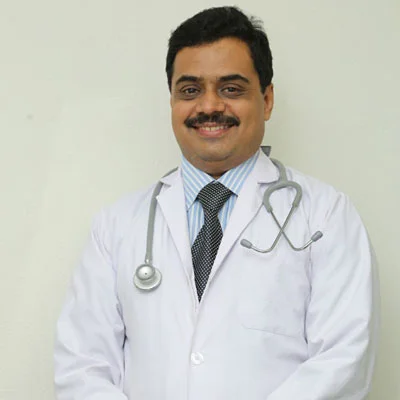
Dr. Ashutosh Shah, Plastic, Reconstructive & Diabetic Foot Surgeon, Elegance Diabetic Foot & Ulcer Clinic, Surat
Dr. Ashutosh Shah is a board certified plastic and reconstructive surgeon with over 22 years of experience and more than 10,000 limbs and feet saved. He founded Elegance Diabetic Foot & Ulcer Clinic, India's first chain of clinics dedicated to foot care, with centres in Surat and OPD partners across South Gujarat. He is known for a limb first approach, safe wound care and ethical, natural results.