Written by Dr. Ashutosh Shah, Plastic & Microvascular Surgeon - Diabetic Foot & Limb Salvage Specialist, Elegance Diabetic Foot & Ulcer Clinic (EDFC). Practising since 2004 (22+ years). Read full bio.
Medically reviewed by Dr. Ashutosh Shah
If your foot or toes are turning black and you have diabetes, treat it as urgent. It usually means tissue is dying from poor blood flow or infection (gangrene). See a diabetic foot specialist the same day, and go to emergency if you have fever, spreading redness, or a foul smell.
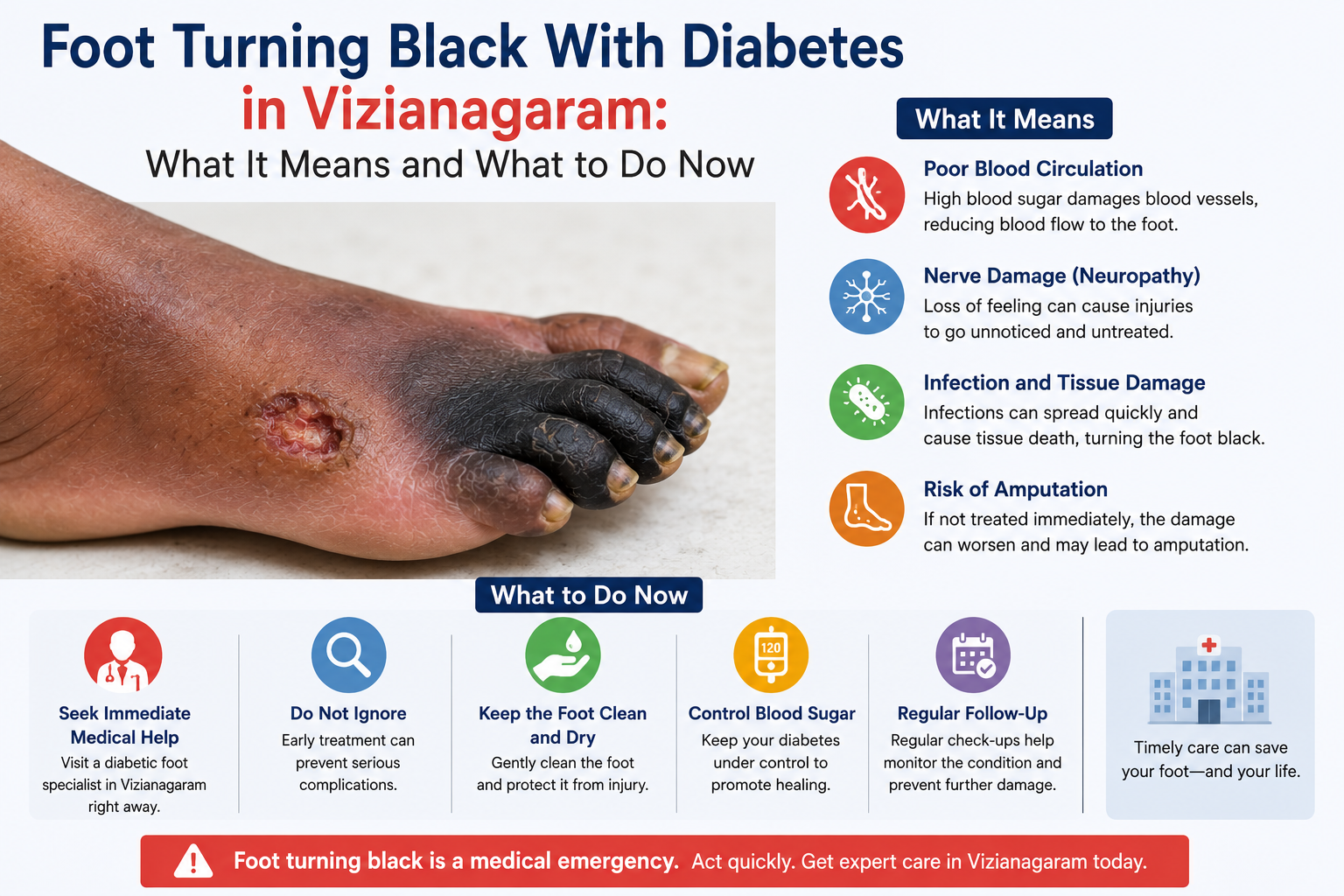
A foot turning black with diabetes is a medical emergency - it usually means tissue is dying from lost blood supply or severe infection (gangrene). In Vizianagaram, anyone with diabetes who notices blackening skin on the foot or toes should seek urgent specialist care immediately to avoid spreading infection and amputation.
If your foot or toe is turning black, do not wait - seek emergency medical care today. This guide explains why a diabetic foot turns black, how to tell dry gangrene from wet gangrene, whether the foot can be saved, and exactly what to do right now.
Why is my foot turning black with diabetes?
A foot turns black with diabetes when the tissue dies because it has lost its blood supply or is overwhelmed by infection. This dead tissue is called gangrene, and the black colour means the affected skin and tissue are no longer alive.
In diabetes, two long-term problems set the stage. High blood sugar narrows the arteries (peripheral artery disease), starving the foot of blood, and it damages the nerves so injuries and infections go unnoticed. A small wound can then progress to dead, blackened tissue faster than expected. Gangrene from poor circulation is one of the serious conditions we treat.
Is a black foot in diabetes an emergency?
Yes - a black foot in diabetes is a medical emergency. Blackening means tissue is already dying, and the longer it is left, the more it can spread, become infected, and threaten the whole limb or even life. Same-day specialist care offers the best chance of saving the foot.
In our diabetic foot practice we have seen feet saved when a blackening toe was treated within days, and limbs lost when the same warning sign was ignored for weeks. Time is the single most important factor.
What does black skin on the foot actually mean?
Black skin on the foot means gangrene - tissue death - which comes in two main forms. Dry gangrene is caused mainly by poor blood supply, while wet gangrene involves infection and is more dangerous and fast-spreading.
| Feature | Dry gangrene | Wet gangrene |
|---|---|---|
| Main cause | Loss of blood supply (poor circulation) | Infection, often with poor circulation |
| Appearance | Dry, shrivelled, dark/black, clear border | Swollen, moist, blistered, foul-smelling |
| Speed | Slower to progress | Spreads rapidly |
| Risk level | Serious - needs urgent assessment | Critical - can cause life-threatening sepsis |
Both forms need urgent specialist assessment. You cannot reliably judge at home how deep the damage goes, so any blackening of the foot should be examined quickly.
What are the warning signs that need emergency care?
The warning signs that need emergency care include black or dark skin, spreading redness, swelling, foul-smelling discharge, severe pain or sudden numbness, and fever. In diabetes, any of these on the foot means seek care the same day.
- Black, blue, or dark discoloured skin on a toe, heel, or part of the foot.
- Foul smell or pus from a wound - a sign of serious infection.
- Spreading redness and swelling moving up the foot or leg.
- Fever, chills, or feeling very unwell - possible blood infection (sepsis).
- Sudden cold, pale, or intensely painful foot - a blocked artery emergency.
Can a black foot or toe be saved, or is amputation always needed?
A black foot or toe can often be saved when treatment starts early, and amputation is not always needed. Restoring blood flow, controlling infection, and removing only the dead tissue can preserve much of the foot - but the chance of saving it falls the longer treatment is delayed.
In severe cases, a specialist may consider diabetic limb salvage surgery to preserve as much healthy, functional tissue as possible.
Sometimes a small area, such as a single toe, cannot be saved, and removing it early is what protects the rest of the foot. A limb-first approach treats amputation as the last resort, not the default, which is the philosophy behind our diabetic foot & limb-salvage services.
How is a blackening diabetic foot treated?
A blackening diabetic foot is treated by urgently restoring blood flow, controlling infection, and removing dead tissue, while protecting the healthy foot. The exact plan depends on whether the gangrene is dry or wet and how far it has spread.
Treatment may include infection control, removal of dead tissue and diabetic foot infection treatment when infection is present.
- Emergency assessment of circulation, infection, and how deep the dead tissue goes.
- Restoring blood flow when narrowed arteries are starving the foot.
- Antibiotics and drainage to control infection, especially in wet gangrene.
- Debridement to remove dead tissue so healthy tissue can recover.
- Wound care and reconstruction to heal the area and rebuild a working foot.
What should you do right now if your foot is turning black?
If your foot is turning black, seek emergency medical care today - do not wait or self-treat. Keep the foot clean and protected, stay off it, and get to a specialist or hospital as quickly as possible.
- Do seek same-day specialist or emergency care immediately.
- Do keep the area clean, dry, and covered with a clean dressing.
- Do keep weight off the foot and keep your blood sugar controlled.
- Don't cut, squeeze, or apply heat or harsh chemicals to the black area.
- Don't wait to "see if it improves" - gangrene does not heal on its own.
How can you prevent gangrene if you have diabetes?
You can prevent gangrene by controlling blood sugar, not smoking, checking your feet daily, and treating any wound or poor circulation early. Most cases of diabetic gangrene begin as a small, ignored wound or a silently blocked artery.
Daily foot checks, well-fitting footwear, never walking barefoot, and getting any non-healing wound, callus, or curled toe seen quickly all dramatically lower the risk. Early treatment of poor circulation is especially important, because it is what keeps tissue alive.
Emergency diabetic foot care for Vizianagaram
Elegance Diabetic Foot & Ulcer Clinic (EDFC) treats diabetic gangrene and severe foot wounds from its centre in Surat, and is opening a new Centre of Excellence for diabetic foot care and limb salvage in Vizianagaram. If your foot or toe is turning black, treat it as an emergency and seek care immediately - you can also send a clear photo of the foot to our team on WhatsApp for urgent advice on your next step. To arrange an assessment, contact our team.
You can also follow EDFC on Facebook, Instagram, and YouTube for diabetic foot care tips and real limb-salvage stories.
Get emergency help now
A foot turning black is not something to wait on. If you have diabetes and notice blackening skin on your foot or toes, seek same-day care. Contact Elegance Diabetic Foot & Ulcer Clinic or send a photo for urgent advice and a plan to protect your limb.
Medical disclaimer: This article is for educational purposes only and is not a substitute for professional medical diagnosis or emergency treatment. A foot turning black is a medical emergency - seek urgent care immediately. Please consult Dr. Ashutosh Shah or a qualified specialist about your condition. For authoritative guidance, see the NHS guide to gangrene and the IWGDF diabetic foot guidelines.
This article is general education, not a diagnosis. If you have a diabetic foot wound, please have it assessed in person. Send a photo on WhatsApp or book a consultation.
About the Author

Dr. Ashutosh Shah, Plastic, Reconstructive & Diabetic Foot Surgeon, Elegance Diabetic Foot & Ulcer Clinic, Surat
Dr. Ashutosh Shah is a board certified plastic and reconstructive surgeon with over 22 years of experience and more than 10,000 limbs and feet saved. He founded Elegance Diabetic Foot & Ulcer Clinic, India's first chain of clinics dedicated to foot care, with centres in Surat and OPD partners across South Gujarat. He is known for a limb first approach, safe wound care and ethical, natural results.