
Internal Offloading
Reshaping bone inside the foot so load spreads evenly, without depending on external devices.
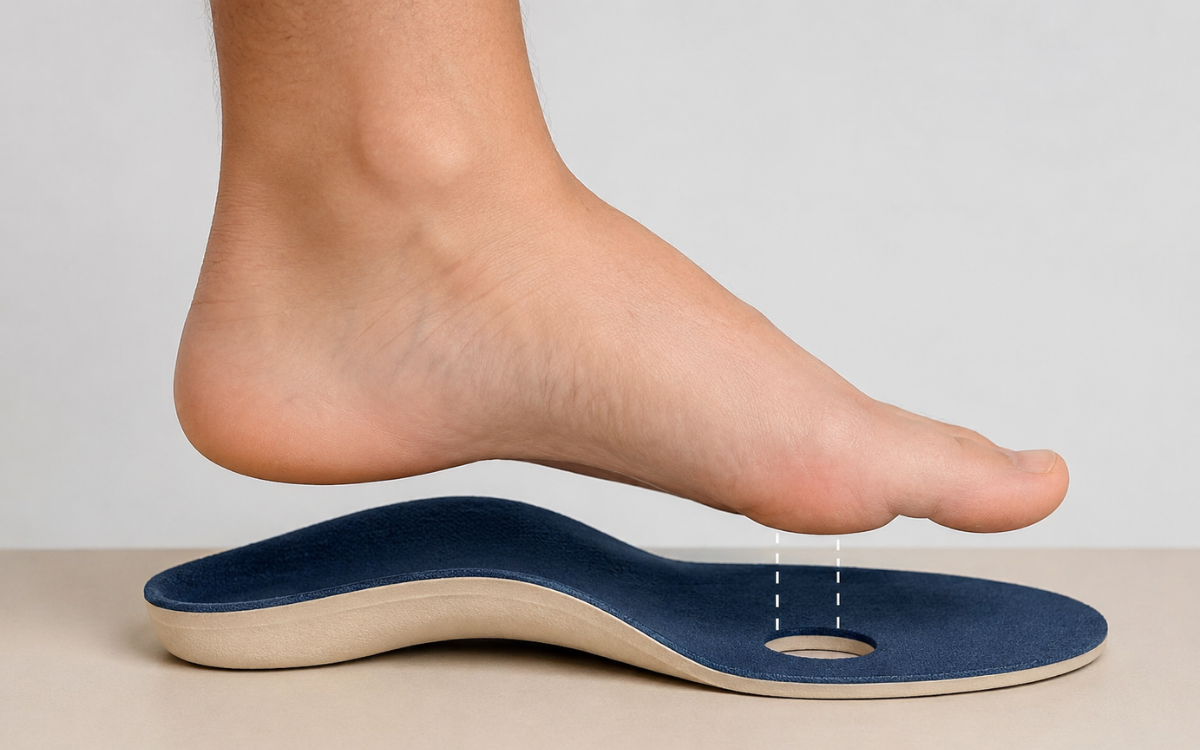
Key Takeaways
- Internal offloading corrects pressure from inside the foot, so it works around the clock.
- It suits patients who cannot or will not wear offloading devices consistently.
- Procedures include osteotomy, joint realignment and tendon balancing.
- Circulation assessment always comes before any internal procedure.
What Does Internal Offloading Involve?
Internal offloading: surgical correction of bone position or tendon balance inside the foot, so pressure is redistributed without external devices.
Rather than padding beneath a prominent bone, the bone itself is repositioned. A metatarsal may be shortened or elevated, a joint realigned, or tendon pull rebalanced so the foot sits flat again.
Who Benefits Most From This Approach?
- Patients whose ulcers recur despite excellent footwear compliance
- Those who cannot wear bulky devices due to work or mobility
- Feet with fixed deformity that no insole can accommodate
- Patients with a rocker bottom foot after Charcot collapse
- Anyone who removes their footwear indoors, which is nearly everyone in India
That last point deserves emphasis. Most Indian households remove shoes indoors, which means external offloading stops working for many hours each day. Internal correction continues protecting the foot regardless.
What Are the Risks?
Being honest about this matters. Any surgery on a diabetic foot carries risk of infection and delayed healing, and bone healing takes longer in diabetes. Consequently, we assess circulation and sugar control carefully, and we operate only where the balance clearly favours it.
Where blood supply is inadequate, revascularisation comes first without exception.
What Recovery and Cost Should You Expect?
Expect several weeks in a protective boot or cast while bone heals, followed by graduated return to walking. Costs sit between simple day procedures and major reconstruction, quoted individually after imaging and vascular assessment.
How Is the Decision Made?
It follows a clear sequence. Circulation is tested first, then imaging shows the bone position and quality, and pressure mapping confirms exactly where load falls. Only when all three agree do we recommend an internal procedure.
Patients frequently ask whether they can simply try better footwear for longer. Where the ulcer is new and the deformity flexible, that is a reasonable path and we say so. Where the same site has broken down repeatedly across a year, the mechanics will not change on their own.