
Written by Dr. Ashutosh Shah, Plastic & Microvascular Surgeon - Diabetic Foot & Limb Salvage Specialist, Elegance Diabetic Foot & Ulcer Clinic (EDFC). Practising since 2004 (22+ years). Read full bio.
Medically reviewed by Dr. Ashutosh Shah
A toe changing colour in diabetes can signal a circulation, nerve, or infection problem and should never be ignored. In Vizianagaram, diabetic toes that turn red, blue, purple, white, or black need prompt specialist assessment - some colour changes are early warnings, while black or blue can be an emergency.
Your toes can be an early window into how well blood is reaching your feet. This guide walks through what each toe colour can mean in diabetes, which changes are urgent, and what to do when you notice your toe is not its normal shade.
Why do toes change colour in diabetes?
Toes change colour in diabetes mainly because of changes in blood flow, nerve function, or infection. When circulation drops, the toe can look pale, blue, or purple; when blood pools or infection sets in, it can look red or dark.
Two long-term effects of diabetes drive most of this. High blood sugar narrows the arteries (peripheral artery disease), reducing the oxygen-rich blood that gives skin its healthy colour, and it damages nerves so you may not notice problems early. Poor circulation and neuropathy are among the conditions we treat behind most diabetic toe colour changes.
What does each toe colour mean in diabetes?
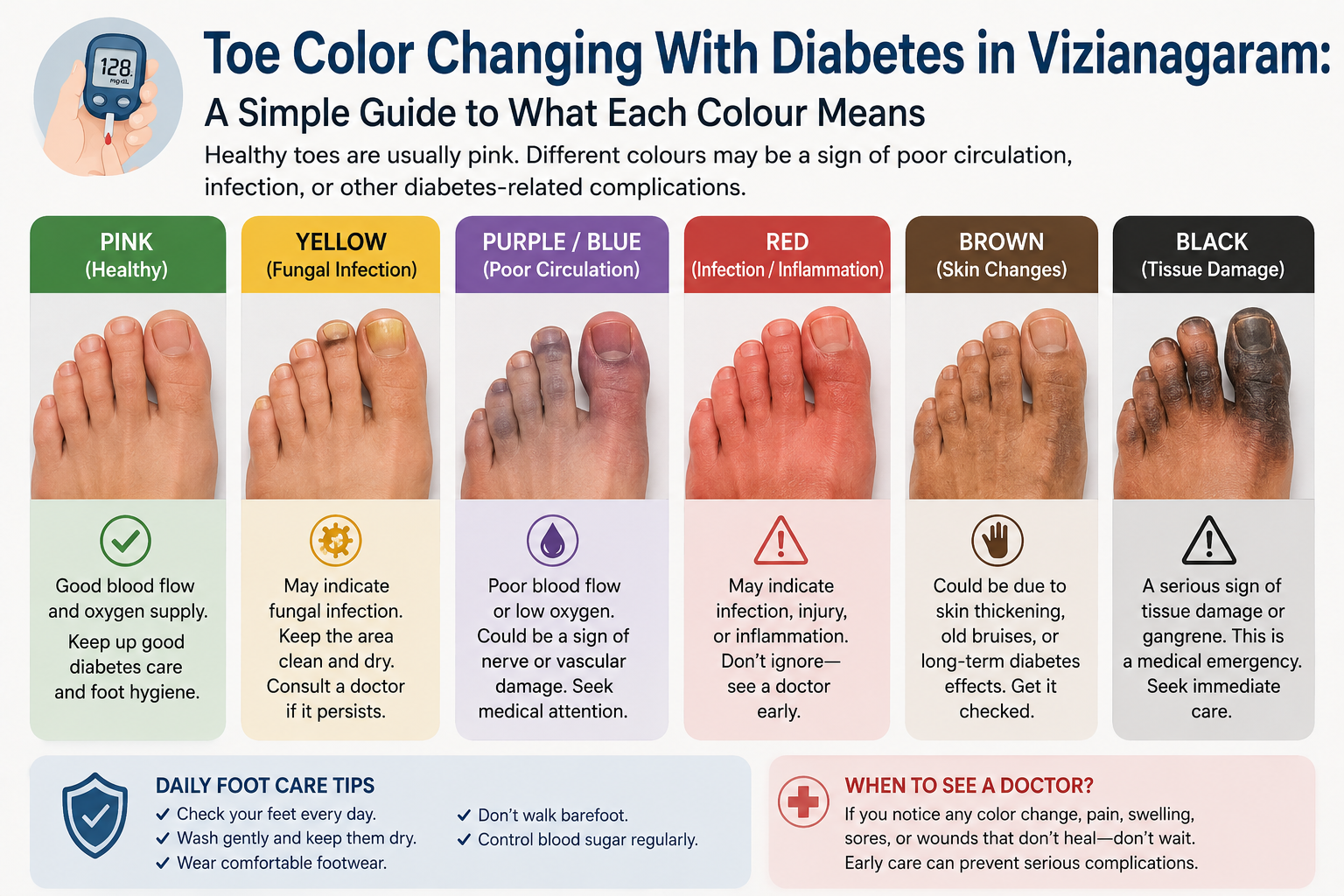
Each toe colour can point to a different problem, though only an examination can confirm the cause. As a general guide, pale or blue toes suggest poor blood flow, red toes can mean infection or hanging the foot down for relief, and black toes mean tissue death.
| Toe colour | What it may suggest | Urgency |
|---|---|---|
| Pale or white | Reduced blood flow to the toe | Get assessed soon |
| Blue or purple | Low oxygen / poor circulation | Urgent - see a specialist quickly |
| Bright or dark red | Infection, inflammation, or dependent blood pooling | Urgent if spreading, swollen, or hot |
| Brown / dusky | Failing circulation or early tissue damage | Urgent - prompt assessment |
| Black | Dead tissue (gangrene) | Emergency - same-day care |
Colour is only a clue, not a diagnosis. A toe can change colour for several reasons at once, so any persistent or worsening change in a diabetic toe deserves a proper circulation check.
Which toe colour changes are an emergency?
Black, blue, or rapidly spreading dark-red toes are emergencies and need same-day care. These suggest tissue is losing its blood supply or a serious infection is taking hold, both of which can threaten the toe and the wider foot if treatment is delayed.
Treat it as urgent if a colour change comes with pain or sudden numbness, coldness, swelling, foul smell, or any open wound. In diabetes, missing pain can hide how serious the problem is, so colour changes should be acted on even when they do not hurt.
Can a discoloured toe recover its normal colour?
A discoloured toe can often recover when the cause is treated early - for example, restoring blood flow can bring colour back to a pale or bluish toe. However, a truly black toe is dead tissue that cannot return to normal, which is why early action matters so much.
In our diabetic foot practice we have seen dusky, threatened toes regain healthy colour once circulation was restored in time - and we have seen the window close when the same change was watched for too long. Early assessment is what keeps the options open.
How are diabetic toe colour changes diagnosed and treated?
Diabetic toe colour changes are diagnosed by checking circulation, sensation, and signs of infection, and treated by addressing the cause - usually restoring blood flow, controlling infection, or relieving pressure. The treatment depends entirely on why the colour changed.
- Circulation tests such as foot pulses, ankle-brachial index, and Doppler ultrasound.
- Infection check for any wound, swelling, warmth, or discharge.
- Restoring blood flow when narrowed arteries are the cause.
- Treating infection with wound care and antibiotics when needed.
- Protecting the toe with offloading and footwear advice.
Pinpointing and fixing the cause is the focus of our diabetic foot & limb-salvage services, with the aim of keeping the toe and foot healthy.
What should you do if your toe changes colour?
If your toe changes colour, get it assessed promptly - and seek same-day care for a black, blue, or rapidly worsening toe. Keep the foot protected, avoid pressure on the toe, and do not apply heat or try home remedies.
- Do arrange a specialist circulation check, urgently for dark or blue toes.
- Do protect the toe, keep the foot clean, and check both feet daily.
- Do keep your blood sugar controlled and stay off a painful or wounded toe.
- Don't apply heat, massage hard, or use harsh chemicals on the toe.
- Don't wait to see if a dark or spreading colour change clears by itself.
How can you protect your toes and circulation?
You can protect your toes by controlling blood sugar, not smoking, checking your feet daily, and treating any wound or circulation problem early. Healthy circulation is the best defence against colour changes turning serious.
Daily foot checks, well-fitting footwear, never walking barefoot, and getting any non-healing wound, callus, or curled toe seen early all help. Because narrowed arteries are a common cause of toe discoloration, managing blood pressure and cholesterol matters too.
Checking diabetic toe colour changes in Vizianagaram
Elegance Diabetic Foot & Ulcer Clinic (EDFC) assesses circulation problems and diabetic toe changes from its centre in Surat, and is opening a new Centre of Excellence for diabetic foot care and limb salvage in Vizianagaram. Not sure whether your toe colour change is serious? Send a clear photo of the foot to our team on WhatsApp for quick guidance, and book a circulation assessment if it is dark, painful, or spreading.
You can also follow EDFC on Facebook, Instagram, and YouTube for diabetic foot care tips and real limb-salvage stories.
Get your toe checked
A change in toe colour is your body flagging a possible circulation or infection problem. If you have diabetes and a toe that has changed colour, don't wait - contact Elegance Diabetic Foot & Ulcer Clinic or send a photo for advice and a plan to protect your foot.
Medical disclaimer: This article is for educational purposes only and is not a substitute for professional medical diagnosis or treatment. A black, blue, or rapidly worsening toe is a medical emergency - seek urgent care. Please consult Dr. Ashutosh Shah or a qualified specialist about your condition. For authoritative guidance, see the NHS guide to peripheral arterial disease and the IWGDF diabetic foot guidelines.
quiz Frequently Asked Questions
This article is general education, not a diagnosis. If you have a diabetic foot wound, please have it assessed in person. Send a photo on WhatsApp or book a consultation.
About the Author

Dr. Ashutosh Shah, Plastic, Reconstructive & Diabetic Foot Surgeon, Elegance Diabetic Foot & Ulcer Clinic, Surat
Dr. Ashutosh Shah is a board certified plastic and reconstructive surgeon with over 22 years of experience and more than 10,000 limbs and feet saved. He founded Elegance Diabetic Foot & Ulcer Clinic, India's first chain of clinics dedicated to foot care, with centres in Surat and OPD partners across South Gujarat. He is known for a limb first approach, safe wound care and ethical, natural results.