Written by Dr. Ashutosh Shah, Plastic & Microvascular Surgeon - Diabetic Foot & Limb Salvage Specialist, Elegance Diabetic Foot & Ulcer Clinic (EDFC). Practising since 2004 (22+ years). Read full bio.
Medically reviewed by Dr. Ashutosh Shah
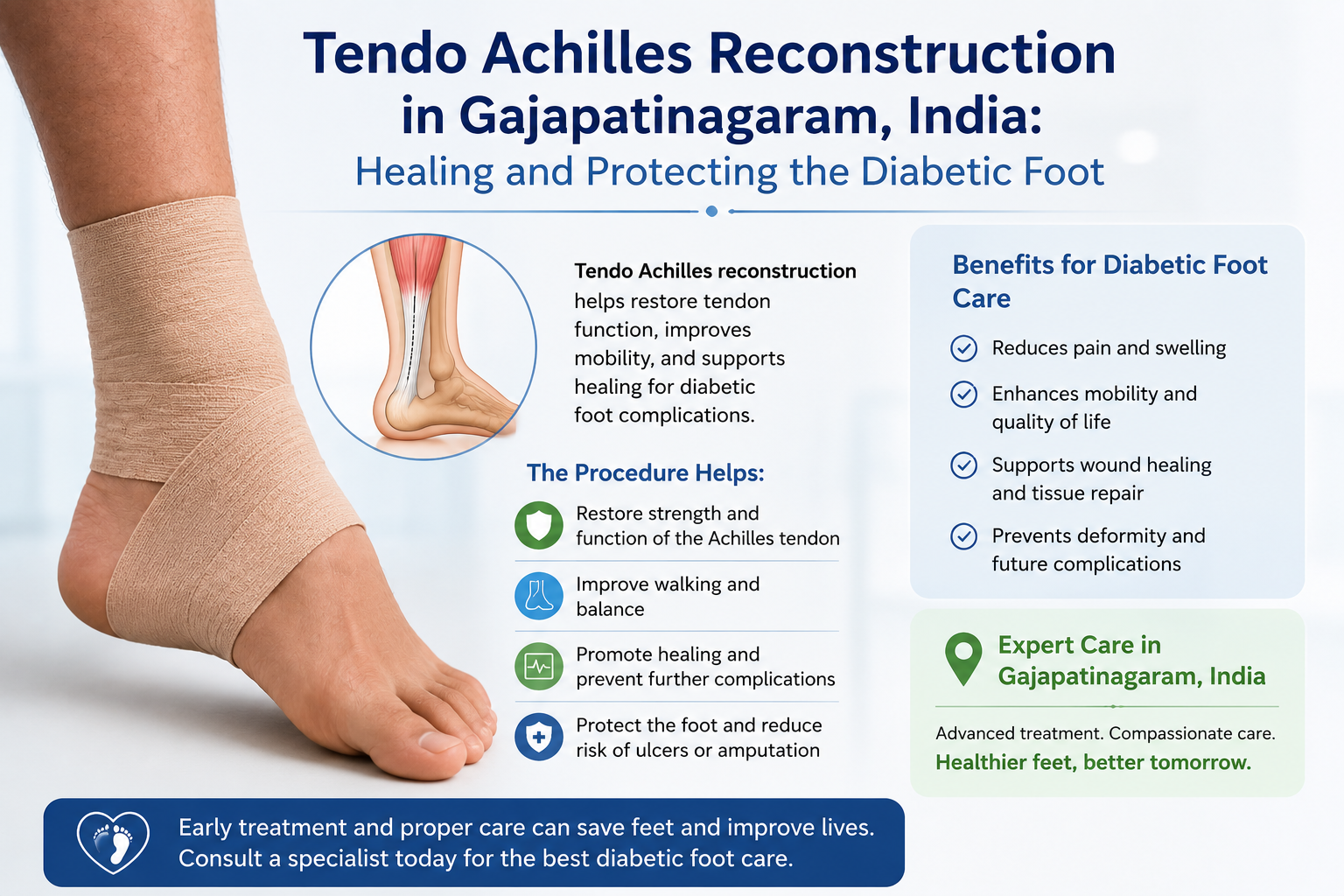
Tendo Achilles reconstruction in Gajapatinagaram, India covers surgery on the Achilles tendon - including lengthening to relieve forefoot pressure and repair of a damaged tendon. In diabetic feet, a tight Achilles raises pressure under the forefoot, so lengthening it can help stubborn ulcers heal and reduce the chance they return.
The Achilles tendon has a surprising role in diabetic foot ulcers. When it is too tight, it overloads the front of the foot. This guide explains how Achilles surgery - lengthening and reconstruction - can help heal ulcers and protect the foot.
What is tendo Achilles reconstruction?
Tendo Achilles reconstruction is surgery to restore or rebalance the Achilles tendon - the strong band connecting the calf muscles to the heel. In the diabetic foot it most often means tendo-Achilles lengthening (TAL) to ease forefoot pressure, and sometimes repair or reconstruction of a tendon damaged by rupture or infection.
The goal depends on the problem: lengthening a too-tight tendon to offload the forefoot, or repairing a tendon that has torn or been weakened. Tendon procedures like these relate to several of the conditions we treat.
Why is the Achilles tendon important in the diabetic foot?
The Achilles tendon is important in the diabetic foot because when it becomes tight (a condition called equinus deformity), it limits how far the ankle bends up and pushes extra pressure onto the ball of the foot. On a numb, neuropathic foot, that high pressure is a common cause of forefoot ulcers.
Diabetes can stiffen the tendon over time, making equinus more likely. In our practice we often find a tight Achilles behind a forefoot ulcer that keeps coming back despite good wound care - the pressure simply has nowhere to go.
How does Achilles lengthening help heal diabetic foot ulcers?
Achilles lengthening helps heal diabetic foot ulcers by relaxing the tight tendon so the ankle can bend up normally, which lowers the pressure under the forefoot. With the pressure reduced, stubborn forefoot ulcers can heal, and they are less likely to return.
Studies of tendo-Achilles lengthening combined with total contact casting report high healing rates for forefoot ulcers that had failed casting alone, and lower recurrence afterward. It treats the mechanical cause, not just the wound - which is why it can succeed where dressings have not.
When is Achilles tendon repair or reconstruction needed?
Achilles tendon repair or reconstruction is needed when the tendon is torn (ruptured) or has been damaged or weakened, sometimes after deep infection or surgery. The aim is to restore a functioning tendon so the foot and ankle can work and bear weight safely.
| Procedure | Main purpose | Typical use in diabetes |
|---|---|---|
| Tendo-Achilles lengthening (TAL) | Reduce forefoot pressure | Forefoot ulcer with a tight Achilles (equinus) |
| Tendon repair | Reconnect a torn tendon | Achilles rupture |
| Tendon reconstruction | Rebuild a damaged or deficient tendon | After infection or significant tendon loss |
A specialist decides which is appropriate after examining the tendon, the ulcer or injury, and the foot's circulation and sensation.
Who is a candidate for tendo-Achilles surgery?
A good candidate for tendo-Achilles lengthening is a diabetic patient with a forefoot ulcer and a tight Achilles (limited ankle dorsiflexion), with reasonable circulation. Candidates for repair or reconstruction are those with a ruptured or damaged tendon affecting function.
Assessment includes checking ankle movement, the ulcer, circulation, and sensation. As with any diabetic foot surgery, good blood supply and blood-sugar control improve healing and outcomes.
How is the surgery performed?
Tendo-Achilles lengthening is often performed through tiny percutaneous cuts that let the tendon stretch, while repair or reconstruction uses an open approach to reconnect or rebuild the tendon. The procedure is done under anaesthesia, often followed by a cast or boot to protect healing.
- Lengthening: small cuts release the tight tendon so the ankle bends up more.
- Casting/offloading: a total contact cast or boot protects the foot and helps the ulcer heal.
- Repair: a torn tendon is stitched back together.
- Reconstruction: a damaged tendon is rebuilt, sometimes using nearby tissue.
What is recovery like, and what are the risks?
Recovery involves a period in a cast or boot, limited weight-bearing, and gradual return to activity and physiotherapy. Risks include infection, slower healing in diabetes, weakness, and - with lengthening - the chance of over-lengthening that can shift pressure to the heel and cause a heel ulcer.
This heel-ulcer risk is a real and recognised downside of Achilles lengthening, which is why careful technique, the right amount of lengthening, and close follow-up matter. Your surgeon will balance the benefits and risks for your specific foot.
Tendo-Achilles surgery at EDFC for Gajapatinagaram
Elegance Diabetic Foot & Ulcer Clinic (EDFC), led by plastic and microvascular surgeon Dr. Ashutosh Shah, performs diabetic foot and tendon surgery from its centre in Surat, and is opening a new Centre of Excellence for diabetic foot care and limb salvage in Vizianagaram, serving Gajapatinagaram and the surrounding region. If you have a forefoot ulcer that keeps returning or a tendon injury, our team can assess whether tendo-Achilles surgery would help. Book a consultation to discuss your case.
You can also follow EDFC on Facebook, Instagram, and YouTube for diabetic foot care tips and real limb-salvage stories.
Discuss your options
If a forefoot ulcer keeps returning or you have an Achilles tendon injury, the tendon itself may be part of the problem. Book a consultation with Elegance Diabetic Foot & Ulcer Clinic for an assessment and an honest discussion of whether tendo-Achilles surgery could help.
Medical disclaimer: This article is for educational purposes only and is not a substitute for professional medical diagnosis or treatment. Surgical suitability and outcomes vary by individual. Please consult Dr. Ashutosh Shah or a qualified specialist about your condition. For background reading, see this overview of tendon lengthening for diabetic foot ulcers and the IWGDF diabetic foot guidelines.
quiz Frequently Asked Questions
This article is general education, not a diagnosis. If you have a diabetic foot wound, please have it assessed in person. Send a photo on WhatsApp or book a consultation.
About the Author
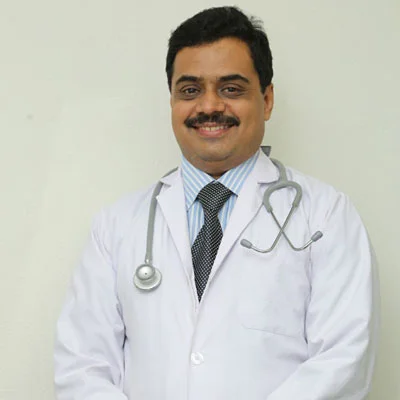
Dr. Ashutosh Shah, Plastic, Reconstructive & Diabetic Foot Surgeon, Elegance Diabetic Foot & Ulcer Clinic, Surat
Dr. Ashutosh Shah is a board certified plastic and reconstructive surgeon with over 22 years of experience and more than 10,000 limbs and feet saved. He founded Elegance Diabetic Foot & Ulcer Clinic, India's first chain of clinics dedicated to foot care, with centres in Surat and OPD partners across South Gujarat. He is known for a limb first approach, safe wound care and ethical, natural results.