Written by Dr. Ashutosh Shah, Diabetic Foot & Wound Care Specialist, Elegance Diabetic Foot, Anakapalle.
Medically reviewed by Dr. Ashutosh Shah
Rest pain in foot in Anakapalle, India usually means poor blood flow to the foot, causing a deep, burning ache in the toes or forefoot at rest, especially at night. It often signals peripheral arterial disease and is a warning sign worth checking promptly, particularly for people with diabetes.
If your foot hurts when you lie down but eases when you hang it off the bed, this guide is for you. It explains what rest pain means, why it happens, the warning signs, how it is diagnosed, and how it is treated, with safe, practical advice for patients in Anakapalle.
What is rest pain in the foot?
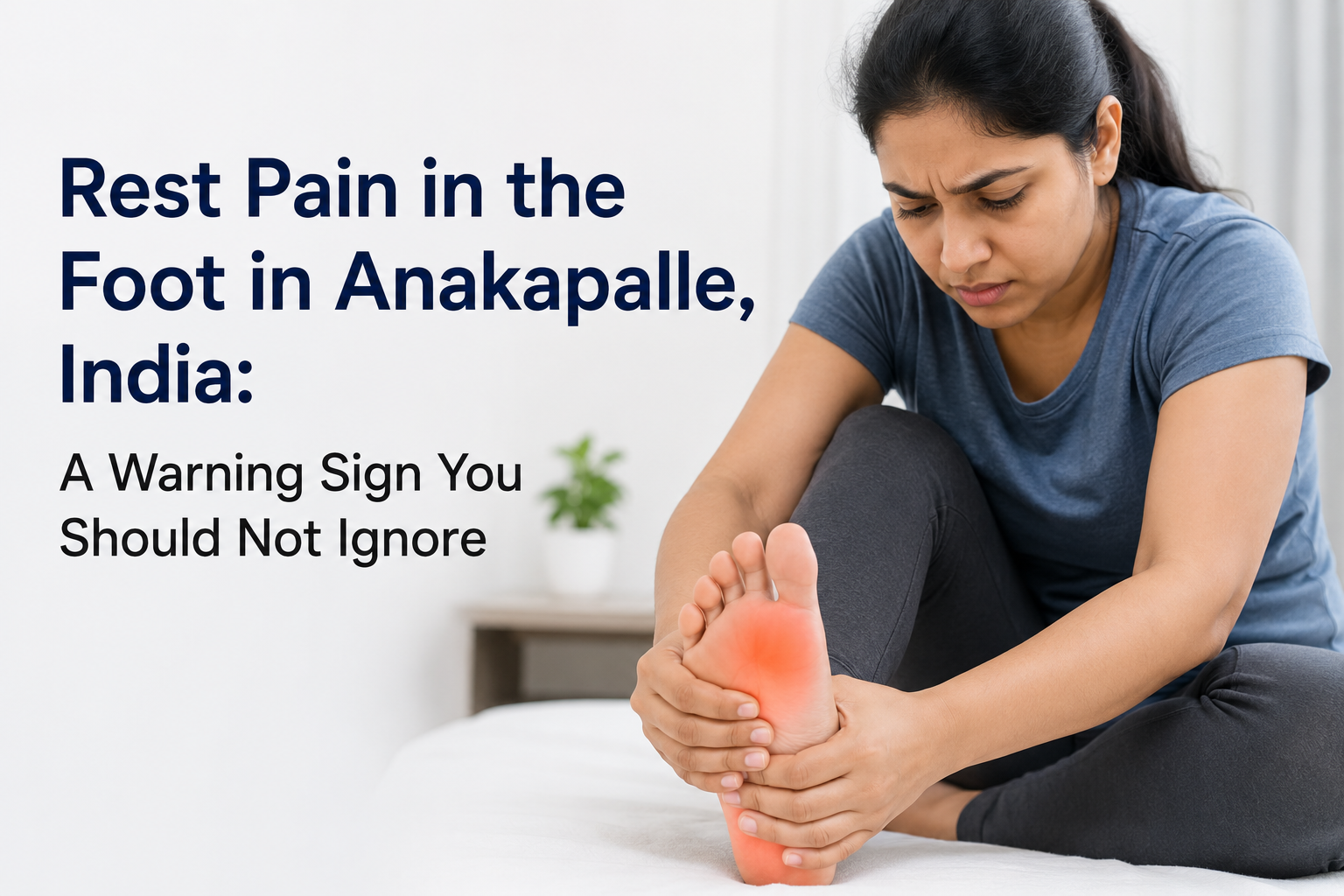
Rest pain in the foot is pain that appears while the foot is at rest, with no activity to trigger it. It is felt most often in the toes and forefoot, and it tends to be worse at night when the leg is lying flat.
Doctors call this ischemic rest pain, where "ischemic" means the tissue is not getting enough blood. It is different from ordinary tiredness after a long day. The pain often eases when you lower the foot, because gravity helps a little more blood reach the toes.
Why does rest pain in the foot happen?
Most true rest pain is caused by peripheral arterial disease (PAD), narrowed or blocked leg arteries that limit blood flow to the foot. When the supply falls low enough, the foot hurts even at rest. This advanced stage is known as critical limb ischemia.
Common contributors and look-alikes include:
- Diabetes: speeds up artery narrowing and damages foot nerves, so problems are often noticed late.
- Smoking: one of the strongest drivers of PAD.
- High blood pressure and high cholesterol: harden and clog arteries over time.
- Diabetic nerve damage (neuropathy): burning or tingling that can feel similar but has a different cause.
- Infection or a foot ulcer: can cause throbbing pain at rest and needs urgent care.
In our clinic in Anakapalle, we often see patients who brushed off early calf cramping while walking, then returned once the pain settled into the foot at rest, a sign the circulation problem had advanced.
What are the warning signs to watch for?
The main warning sign is foot pain at rest, especially burning in the toes at night, that eases when you lower the foot. A few other signs point to poor circulation and should not be ignored.
- Pain in the toes or forefoot that wakes you at night.
- Relief when you hang the foot off the bed or stand up.
- Cold, pale, or bluish toes.
- Shiny skin, hair loss on the foot, or slow-growing nails.
- A sore, ulcer, or darkened area that will not heal.
- Weak or absent pulses in the foot.
How is rest pain in the foot diagnosed?
Diagnosis begins with a physical exam, checking foot pulses, skin, temperature, and any wounds, followed by simple circulation tests. The aim is to confirm whether reduced blood flow is the cause and how severe it is.
Common tests include the ankle-brachial index (ABI), which compares blood pressure at the ankle and the arm; Doppler ultrasound to map blood flow; and, where needed, angiography to pinpoint where an artery is narrowed. For people with diabetes, the doctor will also check nerve sensation and screen for infection.
How is rest pain in foot in Anakapalle, India treated?
Treatment aims to restore blood flow, ease pain, and protect the foot from ulcers and tissue loss. The right plan depends on how blocked the arteries are, ranging from medication and lifestyle change to procedures that reopen the artery.
| Approach | What it involves | Typically used when |
|---|---|---|
| Lifestyle & risk-factor control | Stopping smoking, blood-sugar control, blood-pressure and cholesterol management, supervised walking | Early disease and alongside every other treatment |
| Medication | Anti-platelet or blood-thinning medicines, cholesterol-lowering drugs, pain relief | To slow progression and ease symptoms |
| Angioplasty / stenting | A balloon (and sometimes a stent) reopens the narrowed artery from inside | When a specific blockage limits foot blood flow |
| Bypass surgery | A graft reroutes blood around a blocked segment of artery | Longer or complex blockages causing critical ischemia |
| Wound & foot care | Dressing of ulcers, infection control, pressure offloading, regular review | When an ulcer or non-healing wound is present |
Because rest pain can mean a limb is at risk, prompt specialist review matters. Surgical and non-surgical options are weighed up at your consultation, based on your test results.
How can you prevent it and protect your circulation?
You can lower your risk by protecting your arteries and caring for your feet every day. The same habits that keep diabetes and heart disease in check also protect foot circulation.
- Stop smoking, the single most important step.
- Keep blood sugar, blood pressure, and cholesterol within target.
- Walk regularly to encourage healthy blood flow, as advised by your doctor.
- Check your feet daily for cuts, colour change, or sores.
- Wear well-fitting shoes and never walk barefoot.
- Have your foot pulses and sensation checked at routine diabetes reviews.
When should you see a doctor in Anakapalle?
See a doctor promptly if you have foot pain at rest, pain that wakes you at night, or a wound that will not heal, and seek urgent care for cold, pale, or blackening toes. These can mean blood flow to the foot is critically low.
If you have diabetes, do not wait for the pain to worsen. Early review can be the difference between a treatable circulation problem and a limb-threatening one. You can book a foot assessment with our team in Anakapalle.
Care for rest pain in the foot at Elegance Diabetic Foot
At Elegance Diabetic Foot in Anakapalle, circulation and diabetic-foot problems are our daily focus, from early PAD to complex non-healing wounds. Our approach combines careful circulation testing, wound care, and a clear plan to protect your foot and keep you mobile. You can read more about Dr. Ashutosh Shah's background or browse our foot-health articles.
Authoritative guidance on this topic is available from the U.S. National Heart, Lung, and Blood Institute and the Mayo Clinic.
Medical disclaimer
This article is for education only and is not a substitute for professional diagnosis or treatment. Foot pain at rest can indicate a serious circulation problem, so please consult Dr. Ashutosh Shah or a qualified specialist about your situation.
quiz Frequently Asked Questions
This article is general education, not a diagnosis. If you have a diabetic foot wound, please have it assessed in person. Send a photo on WhatsApp or book a consultation.
About the Author

Dr. Ashutosh Shah, Plastic, Reconstructive & Diabetic Foot Surgeon, Elegance Diabetic Foot & Ulcer Clinic, Surat
Dr. Ashutosh Shah is a board certified plastic and reconstructive surgeon with over 22 years of experience and more than 10,000 limbs and feet saved. He founded Elegance Diabetic Foot & Ulcer Clinic, India's first chain of clinics dedicated to foot care, with centres in Surat and OPD partners across South Gujarat. He is known for a limb first approach, safe wound care and ethical, natural results.