Written by Dr. Ashutosh Shah, Plastic & Microvascular Surgeon - Diabetic Foot & Limb Salvage Specialist, Elegance Diabetic Foot & Ulcer Clinic (EDFC). Practising since 2004 (22+ years). Read full bio.
Medically reviewed by Dr. Ashutosh Shah
Numbness in the feet is one of the most common signs of diabetes, caused by nerve damage called diabetic peripheral neuropathy. In Vizianagaram, diabetic foot numbness should be taken seriously because it hides injuries that can turn into ulcers - early assessment and foot protection help prevent serious complications.
Numb feet may feel like a minor nuisance, but in diabetes they remove the warning system that normally protects your feet. This guide explains why diabetes causes numbness, why it matters, and the simple steps that keep numb feet safe.
What causes numbness in the feet with diabetes?
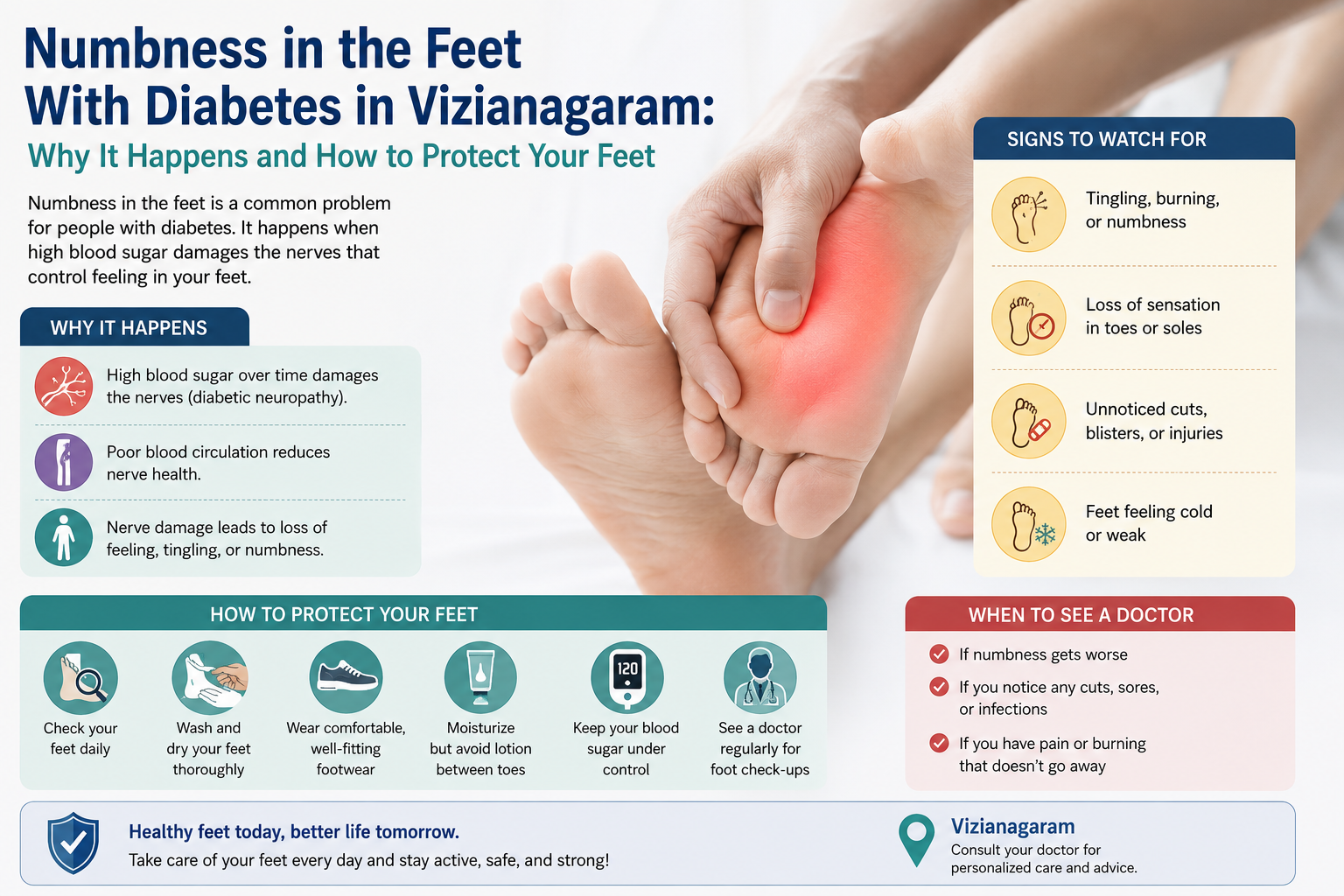
Numbness in the feet with diabetes is caused by high blood sugar damaging the nerves over time, a condition called diabetic peripheral neuropathy. The longest nerves - those reaching the feet - are usually affected first, which is why numbness often starts in the toes and feet.
Persistently high blood sugar harms both the nerves and the tiny blood vessels that feed them. This leads to reduced sensation, often alongside tingling or burning. Neuropathy and the foot problems it causes are among the conditions we treat.
Is diabetic foot numbness dangerous?
Yes - diabetic foot numbness is dangerous because it removes the pain that normally warns you of injury. A blister, cut, or burn can go unnoticed and quietly develop into an ulcer or infection while the foot feels fine.
In our diabetic foot practice we often meet patients whose first sign of a problem was not pain but a wound they discovered by chance - a stone in the shoe, a small burn, or a blister that had already broken down. Numbness is exactly why diabetic foot wounds are so easily missed.
What are the symptoms of diabetic neuropathy?
The symptoms of diabetic neuropathy include numbness, tingling, burning, or a "pins and needles" feeling in the feet, often worse at night. Some people feel pain, while others gradually lose sensation without realising it.
- Numbness or reduced feeling in the toes and soles.
- Tingling or "pins and needles" sensations.
- Burning or shooting pain, often worse at night.
- Feet that feel cold or strange even when warm to the touch.
- Not feeling cuts, blisters, heat, or stones in the shoe.
Can diabetic foot numbness be reversed or treated?
Diabetic foot numbness usually cannot be fully reversed once nerves are damaged, but good blood-sugar control can slow or stop it getting worse. Treatment focuses on protecting the feet, managing any painful symptoms, and preventing the injuries that numbness allows.
The earlier neuropathy is found, the more nerve function can be preserved. Tight control of blood sugar, blood pressure, and cholesterol - plus not smoking - gives the nerves the best chance and protects circulation at the same time.
How is diabetic foot numbness diagnosed?
Diabetic foot numbness is diagnosed with a simple foot examination that tests sensation, reflexes, and circulation. A clinician checks how well you feel light touch, vibration, and a fine filament on the sole, and looks for any deformity or skin damage.
This screening is quick and painless, and it identifies "high-risk" feet that need extra protection. Regular foot checks are recommended for everyone with diabetes, even when the feet feel normal.
How can you protect numb feet from injury?
You can protect numb feet by checking them every day, wearing well-fitting footwear, never walking barefoot, and avoiding heat sources you cannot feel. Because numbness hides injury, prevention and daily inspection do the job that pain normally would.
| Do this | Avoid this |
|---|---|
| Check the soles and between toes daily (use a mirror) | Walking barefoot, indoors or outdoors |
| Wear well-fitting, closed, protective footwear | Tight, pointed, or brand-new shoes for long periods |
| Check shoes for stones or rough seams before wearing | Hot water bottles, heaters, or hot sand on the feet |
| Moisturise dry skin and trim nails carefully | Cutting calluses or corns yourself with blades |
| Get any wound, callus, or curled toe checked early | Ignoring a wound because it doesn't hurt |
These habits, supported by regular professional foot checks, are the core of our diabetic foot & limb-salvage services - keeping high-risk feet healthy before problems start.
When should you see a doctor about numb feet?
You should see a doctor if you have diabetes and notice new or worsening numbness, tingling, or burning in your feet, and urgently if you find any wound, blister, colour change, or swelling. Because numbness hides injury, a regular foot check is wise even without symptoms.
Seek same-day care for a wound that will not heal, a foot or toe turning dark, swelling, or signs of infection such as redness, warmth, or discharge - numbness means these can develop without the usual pain to warn you.
Diabetic foot and nerve care in Vizianagaram
Elegance Diabetic Foot & Ulcer Clinic (EDFC) provides diabetic foot screening and care from its centre in Surat, and is opening a new Centre of Excellence for diabetic foot care and limb salvage in Vizianagaram. If you have diabetes and numb feet - or have spotted a wound you did not feel - you can send a clear photo to our team on WhatsApp for guidance, and book a foot assessment to protect your feet before problems develop.
You can also follow EDFC on Facebook, Instagram, and YouTube for diabetic foot care tips and real limb-salvage stories.
Protect your feet early
Numbness is your body's warning system switching off - so daily care and regular checks matter even more. If you have diabetes and numb feet, book a foot assessment with Elegance Diabetic Foot & Ulcer Clinic or send a photo of any wound for advice and a plan to keep your feet safe.
Medical disclaimer: This article is for educational purposes only and is not a substitute for professional medical diagnosis or treatment. If you have diabetes and notice a wound, colour change, or infection on a numb foot, seek prompt care. Please consult Dr. Ashutosh Shah or a qualified specialist about your condition. For authoritative guidance, see the NHS guide to peripheral neuropathy and the IWGDF diabetic foot guidelines.
quiz Frequently Asked Questions
This article is general education, not a diagnosis. If you have a diabetic foot wound, please have it assessed in person. Send a photo on WhatsApp or book a consultation.
About the Author

Dr. Ashutosh Shah, Plastic, Reconstructive & Diabetic Foot Surgeon, Elegance Diabetic Foot & Ulcer Clinic, Surat
Dr. Ashutosh Shah is a board certified plastic and reconstructive surgeon with over 22 years of experience and more than 10,000 limbs and feet saved. He founded Elegance Diabetic Foot & Ulcer Clinic, India's first chain of clinics dedicated to foot care, with centres in Surat and OPD partners across South Gujarat. He is known for a limb first approach, safe wound care and ethical, natural results.