
Written by Dr. Ashutosh Shah, Plastic & Microvascular Surgeon - Diabetic Foot & Limb Salvage Specialist, Elegance Diabetic Foot & Ulcer Clinic (EDFC). Practising since 2004 (22+ years). Read full bio.
Medically reviewed by Dr. Ashutosh Shah
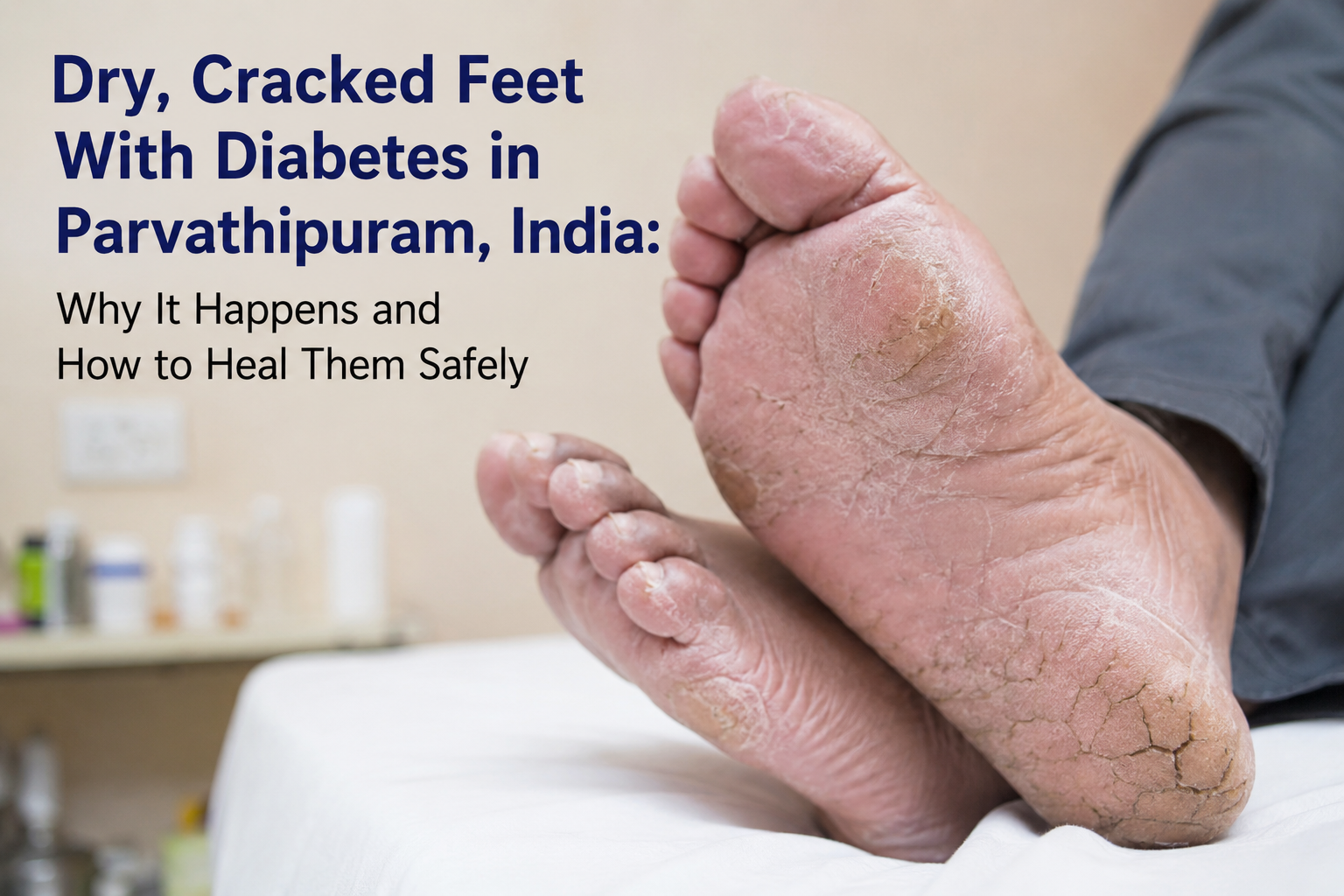
Dry, cracked feet in diabetes are caused by nerve damage that reduces the skin's natural moisture, often worsened by high blood sugar. For people with diabetes in Parvathipuram, India, deep heel cracks matter because they can become entry points for infection and slow-healing wounds, so daily foot care is essential.
Cracked heels look like a cosmetic problem, but in diabetes they can be a doorway for infection. This guide explains why diabetic feet dry out and crack, how to heal them safely, and the signs that mean a crack needs professional care.
Why do diabetics get dry, cracked feet?
Diabetics get dry, cracked feet because nerve damage reduces the sweat that keeps skin soft, and high blood sugar dries the skin further. The skin on the heels then becomes hard and inflexible, so the pressure of standing and walking splits it into cracks.
Damage to the nerves that control sweating is called autonomic neuropathy. Combined with thick callus and dryness, it is a common reason diabetic heels crack. Dry skin and the wounds it can lead to are linked to several of the conditions we treat.
Are cracked heels dangerous for diabetics?
Yes - cracked heels can be dangerous for diabetics because deep cracks (fissures) break the skin barrier and let bacteria in. On a foot with reduced sensation and slower healing, that can turn into an infected wound or ulcer without much pain to warn you.
In our diabetic foot practice we have seen serious heel infections that began as nothing more than a deep, dry crack. The skin barrier is the foot's first defence, and keeping it intact is a key part of preventing ulcers.
What makes diabetic foot cracks worse?
Diabetic foot cracks get worse with thick callus, walking barefoot, open-back footwear, hot water, harsh soaps, and high blood sugar. Each of these dries or stresses the heel skin further, deepening the cracks.
| Crack severity | What you might see | What to do |
|---|---|---|
| Mild dryness | Flaky, tight skin, fine surface lines | Moisturise daily, improve blood-sugar control |
| Visible cracks | Hard callus, open shallow cracks on the heel | Get heels assessed; professional callus care |
| Deep fissure | Deep, painful, or bleeding crack; redness | Seek prompt care - risk of infection |
If a crack is deep, bleeding, or surrounded by redness, treat it as more than a skin problem and have it checked promptly.
How do you treat dry, cracked feet in diabetes?
You treat dry, cracked feet in diabetes by moisturising daily, softening and reducing thick callus safely, protecting the heels, and controlling blood sugar. The aim is to restore the skin barrier before cracks deepen into wounds.
- Moisturise daily with a suitable foot cream - on the heels and soles, but not between the toes.
- Have thick callus reduced professionally rather than cutting it yourself.
- Wear closed, well-fitting footwear that supports the heel and avoids open backs.
- Control blood sugar to improve skin health and healing.
- Treat any deep or infected crack with proper wound care from a specialist.
Routine heel and callus care is part of our diabetic foot & limb-salvage services, aimed at keeping the skin intact and preventing ulcers.
How do you heal a deep heel crack safely?
You heal a deep heel crack safely by keeping it clean and covered, moisturising the surrounding skin, offloading pressure, and having a specialist treat it if it is deep, bleeding, or infected. Do not try to cut the hard skin yourself.
A clinician can safely reduce the callus around the crack, dress it, and check for infection - steps that help a deep fissure heal and stop it becoming an ulcer. Keeping weight off the heel while it heals also makes a big difference.
How can you prevent dry, cracked feet?
You can prevent dry, cracked feet by moisturising daily, never walking barefoot, wearing supportive closed footwear, and checking your feet every day. Good blood-sugar control keeps the skin healthier and less likely to crack.
- Do apply foot moisturiser daily and after washing.
- Do wear closed, cushioned footwear and clean socks.
- Do check your heels and soles daily for cracks or redness.
- Don't walk barefoot or wear open-back sandals for long periods.
- Don't use very hot water, harsh soaps, or razor blades on callus.
When should you see a doctor about cracked feet?
You should see a doctor if a heel crack is deep, painful, bleeding, or surrounded by redness, swelling, or discharge, or if it is not healing. In diabetes, any broken skin on the foot deserves prompt attention to prevent infection.
Because reduced sensation can hide how serious a crack is, do not wait for pain to act. A persistent crack, or one that keeps returning, is also worth a professional review.
Diabetic foot and skin care for Parvathipuram
Elegance Diabetic Foot & Ulcer Clinic (EDFC) provides diabetic foot and heel care from its centre in Surat, and is opening a new Centre of Excellence for diabetic foot care and limb salvage in Vizianagaram, serving Parvathipuram and the surrounding region. If you have diabetes and dry, cracked feet - especially deep or reddened heel cracks - you can send a clear photo of your feet to our team on WhatsApp for guidance, and book a foot assessment if a crack is deep or not healing.
You can also follow EDFC on Facebook, Instagram, and YouTube for diabetic foot care tips and real limb-salvage stories.
Protect your feet
Healthy, intact skin is one of the simplest defences for a diabetic foot. If you have diabetes and dry, cracked feet that won't heal, book a foot assessment with Elegance Diabetic Foot & Ulcer Clinic or send a photo for advice and a simple heel-care plan.
Medical disclaimer: This article is for educational purposes only and is not a substitute for professional medical diagnosis or treatment. If you have diabetes and a deep, bleeding, or infected heel crack, seek prompt care. Please consult Dr. Ashutosh Shah or a qualified specialist about your condition. For authoritative guidance, see the NHS guide to diabetes and foot problems and the IWGDF diabetic foot guidelines.
quiz Frequently Asked Questions
This article is general education, not a diagnosis. If you have a diabetic foot wound, please have it assessed in person. Send a photo on WhatsApp or book a consultation.
About the Author

Dr. Ashutosh Shah, Plastic, Reconstructive & Diabetic Foot Surgeon, Elegance Diabetic Foot & Ulcer Clinic, Surat
Dr. Ashutosh Shah is a board certified plastic and reconstructive surgeon with over 22 years of experience and more than 10,000 limbs and feet saved. He founded Elegance Diabetic Foot & Ulcer Clinic, India's first chain of clinics dedicated to foot care, with centres in Surat and OPD partners across South Gujarat. He is known for a limb first approach, safe wound care and ethical, natural results.