
Written by Dr. Ashutosh Shah, Plastic & Microvascular Surgeon - Diabetic Foot & Limb Salvage Specialist, Elegance Diabetic Foot & Ulcer Clinic (EDFC). Practising since 2004 (22+ years). Read full bio.
Medically reviewed by Dr. Ashutosh Shah
A cut on the foot that is not healing in someone with diabetes is a warning sign of poor circulation, nerve damage, or infection - not a minor problem. In Vizianagaram, any diabetic foot wound that has not improved within two weeks should be assessed by a specialist to prevent serious complications.
A small cut, blister, or crack that would heal in days for most people can turn into a dangerous wound when you have diabetes. This guide explains why diabetic foot cuts stall, the warning signs that need urgent care, and exactly what to do if a cut on your foot is not healing.
Why won't a cut on my foot heal if I have diabetes?
A cut on the foot will not heal in diabetes mainly because high blood sugar damages the nerves and narrows the blood vessels that healing depends on. Without good sensation and blood flow, a non-healing diabetic foot wound can quietly worsen instead of closing.
Three problems usually combine:
- Nerve damage (neuropathy): you may not feel the cut, so you keep walking on it and it gets worse.
- Poor circulation (peripheral artery disease): narrowed arteries starve the wound of oxygen, nutrients, and antibiotics.
- Weakened defences: high blood sugar slows the immune cells that fight infection and rebuild tissue.
Together these turn an ordinary cut into a non-healing diabetic foot wound that can progress to an ulcer. Poor circulation and neuropathy are among the conditions we treat at the root of most stubborn foot wounds.
Is a non-healing diabetic foot cut dangerous?
Yes - a non-healing diabetic foot cut is dangerous because it can become infected, spread to deeper tissue and bone, and in serious cases lead to amputation. The danger is greater because numbness can hide the warning pain that would normally make you act.
In our diabetic foot practice we regularly see small cuts that were dressed at home for weeks quietly turn into deep ulcers once poor circulation or hidden infection was missed. The good news is that early treatment dramatically improves the outcome. Most diabetic foot wounds can heal and the limb can be saved when blood flow, infection, and pressure are addressed quickly - which is why a wound that won't heal should never be left to "see how it goes."
What are the warning signs that a foot wound needs urgent care?
The warning signs that a foot wound needs urgent care include spreading redness, swelling, pus or bad smell, blackened skin, fever, or a wound that is getting bigger. Any of these in a person with diabetes means see a doctor the same day.
| Wound status | What you might see | What to do |
|---|---|---|
| Healing normally | Cut getting smaller, clean edges, no spreading redness | Keep clean, offload pressure, monitor daily |
| Needs review (amber) | No improvement in 1–2 weeks, callus around it, mild redness | Get it assessed by a foot specialist soon |
| Urgent (red) | Pus, foul smell, spreading redness, swelling, fever, black tissue | Seek same-day medical care - this is an emergency |
When in doubt, treat a non-healing diabetic foot wound as urgent. It is always safer to have a small wound checked than to wait for it to become a deep ulcer or infection.
How long should a cut on a diabetic foot take to heal?
A minor cut on a diabetic foot should show clear improvement within one to two weeks. If a foot wound is not smaller, cleaner, and closing within that time, it should be assessed by a specialist rather than treated at home any longer.
Healing time depends on your circulation, blood-sugar control, and how well the wound is offloaded. A wound that stalls is the foot's way of signalling that one of these factors needs medical attention.
How is a non-healing diabetic foot wound treated?
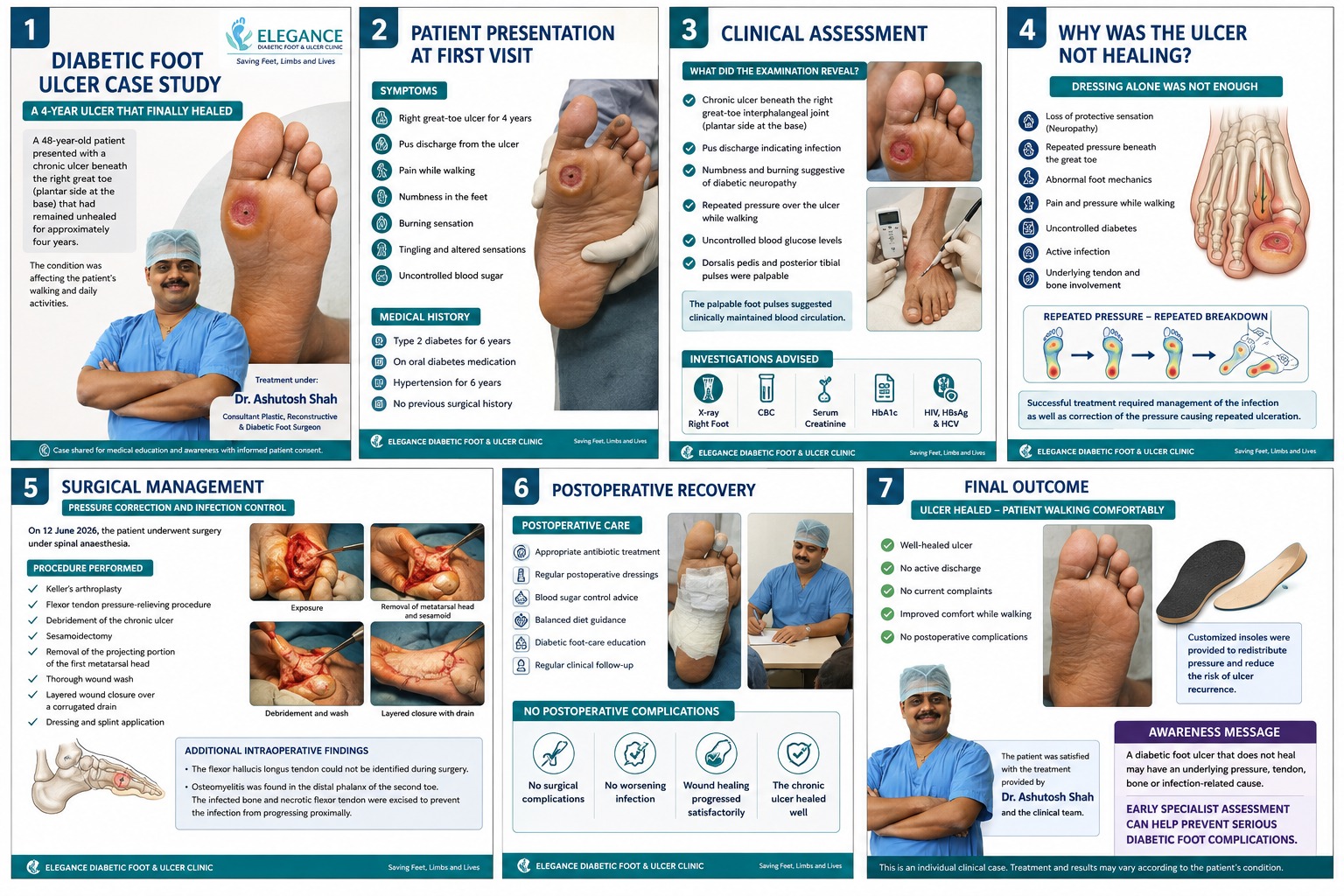
A non-healing diabetic foot wound is treated by finding and fixing the cause - restoring blood flow, controlling infection, removing dead tissue, and taking pressure off the wound. Dressings alone rarely work until these underlying problems are addressed.
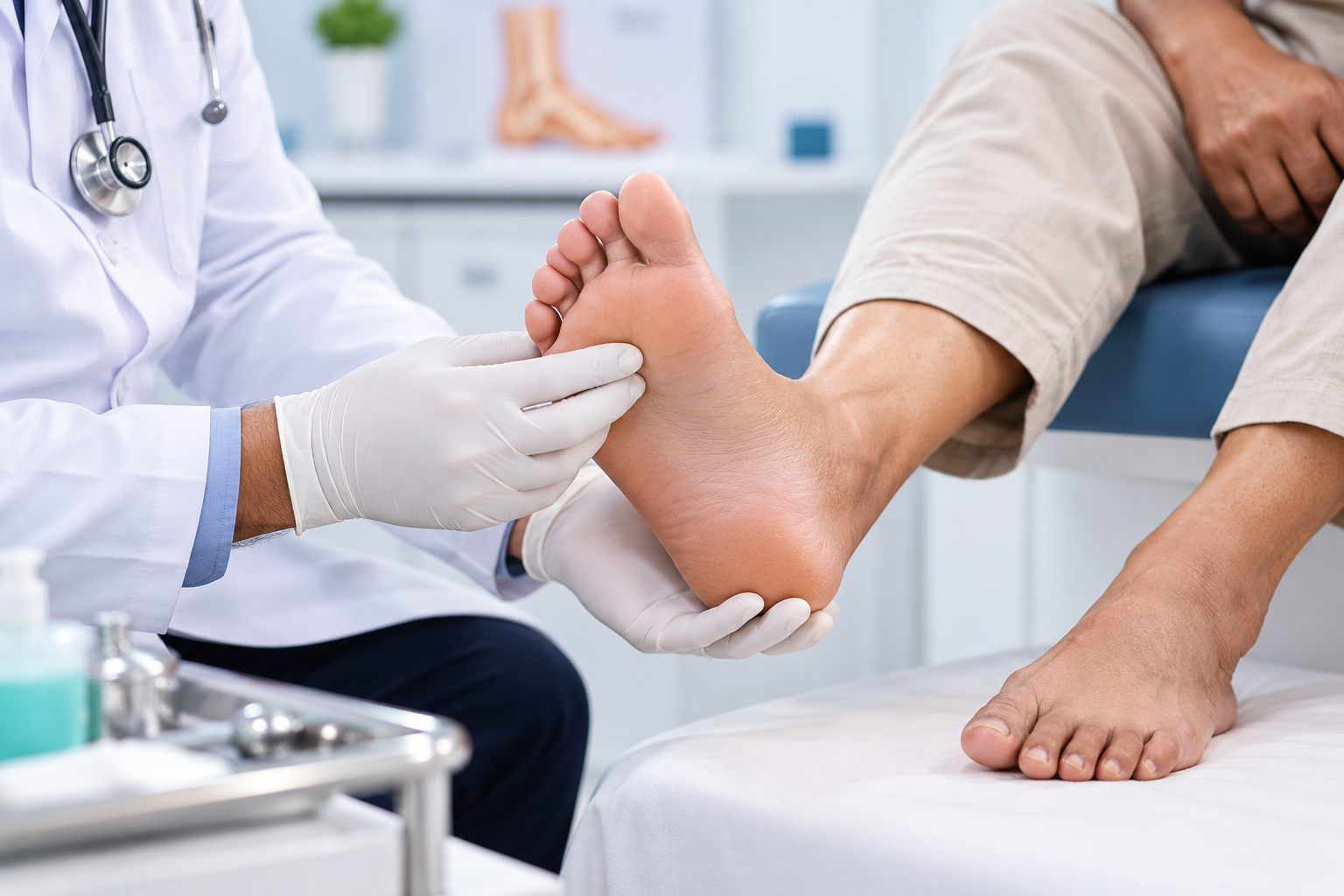
- Assessment: checking circulation, sensation, and signs of infection or bone involvement.
- Debridement: gently removing dead tissue and callus so healthy tissue can heal.
- Infection control: targeted antibiotics and wound care when infection is present.
- Restoring blood flow: treating poor circulation when it is holding back healing.
- Offloading: special footwear or casts to remove pressure from the wound.
This complete pathway is what our diabetic foot & limb-salvage services are built around, with one goal: heal the wound and save the foot.
What should you do right now if a cut on your foot won't heal?
If a cut on your foot won't heal, clean it gently, cover it with a clean dressing, keep weight off it, and arrange a specialist review without delay. Do not try to cut callus yourself or use harsh chemicals on the wound.
- Do wash gently with clean water, pat dry, and apply a clean dressing.
- Do stay off the foot as much as possible and wear protective footwear.
- Do check your blood sugar and keep it controlled.
- Don't use razor blades, sharp tools, or strong antiseptics at home.
- Don't wait weeks hoping it clears - send a photo or get it seen.
How can you prevent non-healing foot wounds?
You can prevent non-healing foot wounds by checking your feet daily, wearing well-fitting footwear, never walking barefoot, and treating any cut or callus early. Good blood-sugar control and regular foot checks are the strongest protection.
Simple daily habits - inspecting the soles and between the toes, moisturising dry skin, and getting calluses or curled toes treated before they break down - prevent most diabetic foot wounds from ever starting.
Diabetic foot wound care for Vizianagaram
Elegance Diabetic Foot & Ulcer Clinic (EDFC) cares for diabetic foot wounds from its centre in Surat, and is opening a new Centre of Excellence for diabetic foot care and limb salvage in Vizianagaram. If you have diabetes and a cut on your foot that is not healing, you do not have to wait - you can send a clear photo of the wound to our team on WhatsApp for quick advice on your next step. To arrange a full assessment, book a consultation with our team.
You can also follow EDFC on Facebook, Instagram, and YouTube for diabetic foot care tips and real limb-salvage stories.
Get your wound checked
If you have diabetes and a cut on your foot that is not healing, don't wait for it to get worse. Book an appointment or send a photo to Elegance Diabetic Foot & Ulcer Clinic for advice and a personalised plan to heal the wound and protect your foot.
Medical disclaimer: This article is for educational purposes only and is not a substitute for professional medical diagnosis or treatment. Please consult Dr. Ashutosh Shah or a qualified diabetic-foot specialist about your individual condition. For authoritative guidance, see the IWGDF diabetic foot guidelines and the NHS guide to diabetes and foot problems.
quiz Frequently Asked Questions
This article is general education, not a diagnosis. If you have a diabetic foot wound, please have it assessed in person. Send a photo on WhatsApp or book a consultation.
About the Author

Dr. Ashutosh Shah, Plastic, Reconstructive & Diabetic Foot Surgeon, Elegance Diabetic Foot & Ulcer Clinic, Surat
Dr. Ashutosh Shah is a board certified plastic and reconstructive surgeon with over 22 years of experience and more than 10,000 limbs and feet saved. He founded Elegance Diabetic Foot & Ulcer Clinic, India's first chain of clinics dedicated to foot care, with centres in Surat and OPD partners across South Gujarat. He is known for a limb first approach, safe wound care and ethical, natural results.