Written by Dr. Ashutosh Shah, Plastic & Microvascular Surgeon - Diabetic Foot & Limb Salvage Specialist, Elegance Diabetic Foot & Ulcer Clinic (EDFC). Practising since 2004 (22+ years). Read full bio.
Medically reviewed by Dr. Ashutosh Shah
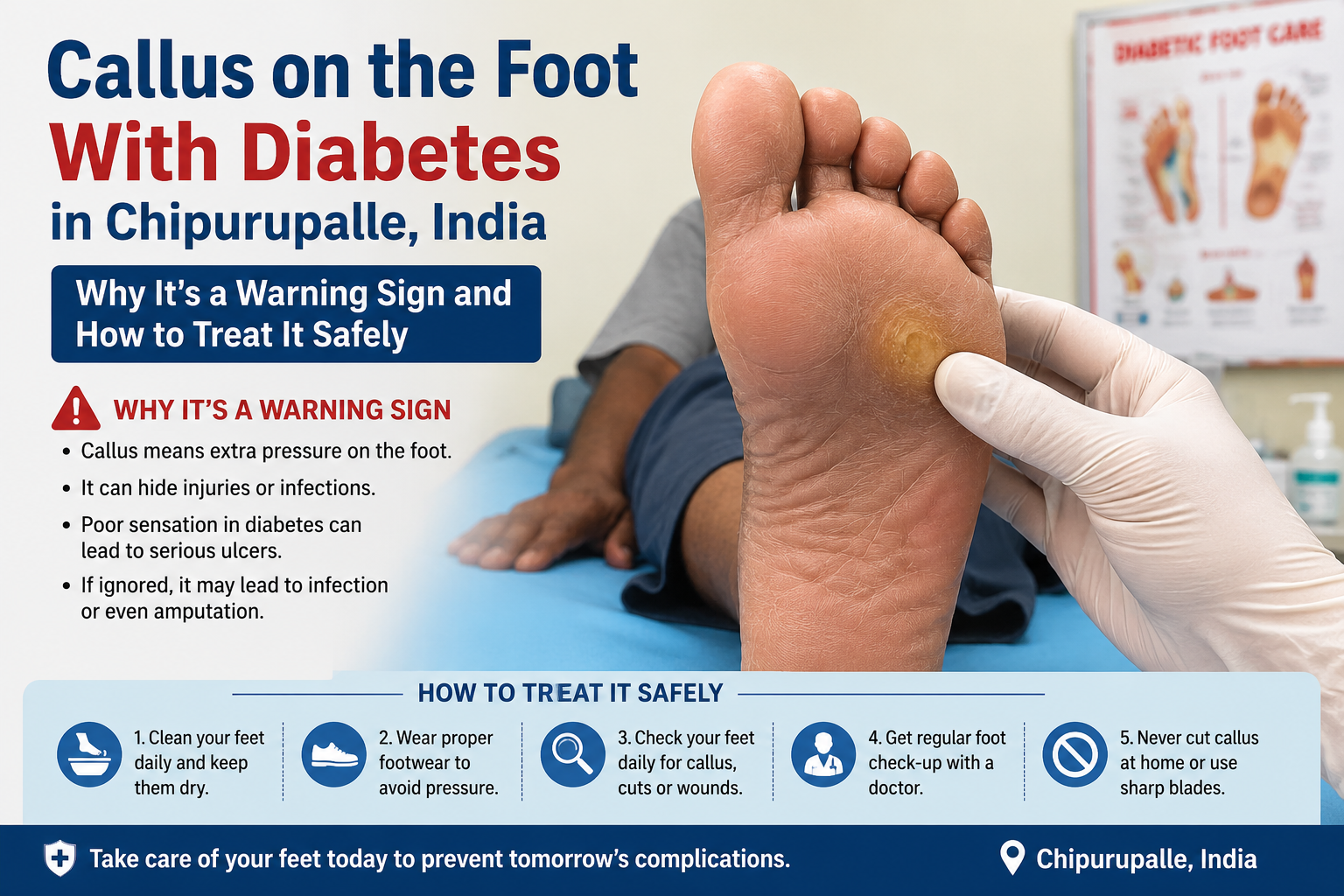
A callus on the foot in diabetes is thickened skin caused by pressure, and it is an important warning sign - not just hard skin. For people with diabetes in Chipurupalle, India, callus over a pressure point can hide or lead to an ulcer, so it should be assessed and never cut at home.
Most people treat a callus as a cosmetic nuisance. In diabetes it is better seen as a flag that says "too much pressure here." If you are dealing with a callus on foot diabetic in Chipurupalle, India, this guide explains why diabetic foot calluses matter, how they are safely treated, and how to stop them coming back.
What is a callus on the foot?
A callus is an area of thickened, hardened skin that forms where the foot is exposed to repeated pressure or friction. It usually appears on the sole, the ball of the foot, the heel, or under the toes - the spots that take the most load when you walk.
Callus is the skin's way of protecting itself, but when it builds up it adds even more pressure to the area beneath. Callus is one of the everyday foot problems linked to the conditions we treat.
Why are calluses a warning sign in diabetes?
Calluses are a warning sign in diabetes because they mark a high-pressure spot that is at risk of breaking down into an ulcer. Hard callus presses on the soft tissue underneath, which can bleed or break down - sometimes hidden beneath the callus before you notice a wound.
In our diabetic foot practice we treat heavy callus as a pre-ulcer sign, not just hard skin. A dark spot or fluid under a callus often means tissue damage has already started underneath, which is why a callus on the foot in a diabetic patient should be checked rather than ignored.
What causes calluses on diabetic feet?
Calluses on diabetic feet are caused by repeated pressure from walking, foot deformities, and ill-fitting footwear, made worse by numbness. Because nerve damage can mute pain, the pressure that builds callus often goes unnoticed until it is severe.
- Pressure points on the sole, ball of the foot, or heel from walking.
- Foot deformities such as claw or hammer toes and bony prominences.
- Tight, loose, or hard footwear that rubs or concentrates pressure.
- Numbness (neuropathy) that lets high pressure go unfelt.
- Dry skin, which makes callus harder and more likely to crack.
Why shouldn't diabetics cut calluses themselves?
Diabetics should not cut calluses themselves because blades and corn removers can break the skin, and on a foot with reduced sensation that injury can become an ulcer or infection. Over-the-counter acid corn plasters can also burn the skin and should be avoided.
Safe callus removal is best done professionally, where the hard skin is reduced carefully and the foot is checked for any damage underneath. Trying to do it at home is one of the more common ways a small problem becomes a serious wound.
How are diabetic foot calluses treated?
Diabetic foot calluses are treated by safely reducing the hard skin (debridement) and, crucially, relieving the pressure that caused it through better footwear or offloading. Removing callus without fixing the pressure means it simply returns.
| What you notice | What it may mean | What to do |
|---|---|---|
| Mild, even callus | Pressure point building up | Professional callus care; review footwear |
| Thick callus with a dark spot | Possible bleeding or damage underneath | Get it assessed promptly |
| Callus with fluid, a hole, or wound | An ulcer may have formed under the callus | Seek urgent specialist care |
This combination of safe debridement and pressure relief is central to our diabetic foot & limb-salvage services, aimed at preventing ulcers before they form.
How do you prevent calluses from coming back?
You prevent calluses from coming back by relieving the pressure that causes them - well-fitting or custom footwear, insoles, and treating any deformity - along with daily foot checks and moisturising. Callus management is about pressure, not just the skin.
- Wear well-fitting, cushioned footwear and consider insoles or custom shoes.
- Have foot deformities assessed, as they concentrate pressure.
- Check your feet daily for new or thickening callus.
- Moisturise to keep callus soft (not between the toes).
- Have callus reduced professionally on a regular schedule if it builds quickly.
When should you see a doctor about a foot callus?
You should see a doctor if a callus is thick, painful, darkening, or has any fluid, hole, or wound, and for routine reduction if you have diabetes. Because callus can hide an ulcer, professional assessment is safer than waiting or self-treating.
Seek prompt care if you see a dark spot, discharge, redness, or an opening in or around a callus - these can signal that an ulcer has formed underneath and needs urgent attention.
Diabetic callus and foot care for Chipurupalle
Elegance Diabetic Foot & Ulcer Clinic (EDFC) provides safe callus care and ulcer prevention from its centre in Surat, and is opening a new Centre of Excellence for diabetic foot care and limb salvage in Vizianagaram, serving Chipurupalle and the surrounding region. If you have a callus on foot diabetic in Chipurupalle, India - especially with thick, painful callus or a dark spot or wound - you can send a clear photo of the foot to our team on WhatsApp for guidance, and book a foot assessment for safe treatment.
You can also follow EDFC on Facebook, Instagram, and YouTube for diabetic foot care tips and real limb-salvage stories.
Protect your feet early
A callus is your foot pointing to a pressure problem - addressing it early helps prevent ulcers. If you have diabetes and thick or painful callus, book a foot assessment with Elegance Diabetic Foot & Ulcer Clinic or send a photo for advice and safe, professional care.
Medical disclaimer: This article is for educational purposes only and is not a substitute for professional medical diagnosis or treatment. If you have diabetes and a callus with a dark spot, fluid, or wound, seek prompt care. Please consult Dr. Ashutosh Shah or a qualified specialist about your condition. For authoritative guidance, see the NHS guide to corns and calluses and the IWGDF diabetic foot guidelines.
quiz Frequently Asked Questions
This article is general education, not a diagnosis. If you have a diabetic foot wound, please have it assessed in person. Send a photo on WhatsApp or book a consultation.
About the Author

Dr. Ashutosh Shah, Plastic, Reconstructive & Diabetic Foot Surgeon, Elegance Diabetic Foot & Ulcer Clinic, Surat
Dr. Ashutosh Shah is a board certified plastic and reconstructive surgeon with over 22 years of experience and more than 10,000 limbs and feet saved. He founded Elegance Diabetic Foot & Ulcer Clinic, India's first chain of clinics dedicated to foot care, with centres in Surat and OPD partners across South Gujarat. He is known for a limb first approach, safe wound care and ethical, natural results.