
Written by Dr. Ashutosh Shah, Plastic & Microvascular Surgeon - Diabetic Foot & Limb Salvage Specialist, Elegance Diabetic Foot & Ulcer Clinic (EDFC). Practising since 2004 (22+ years). Read full bio.
Medically reviewed by Dr. Ashutosh Shah
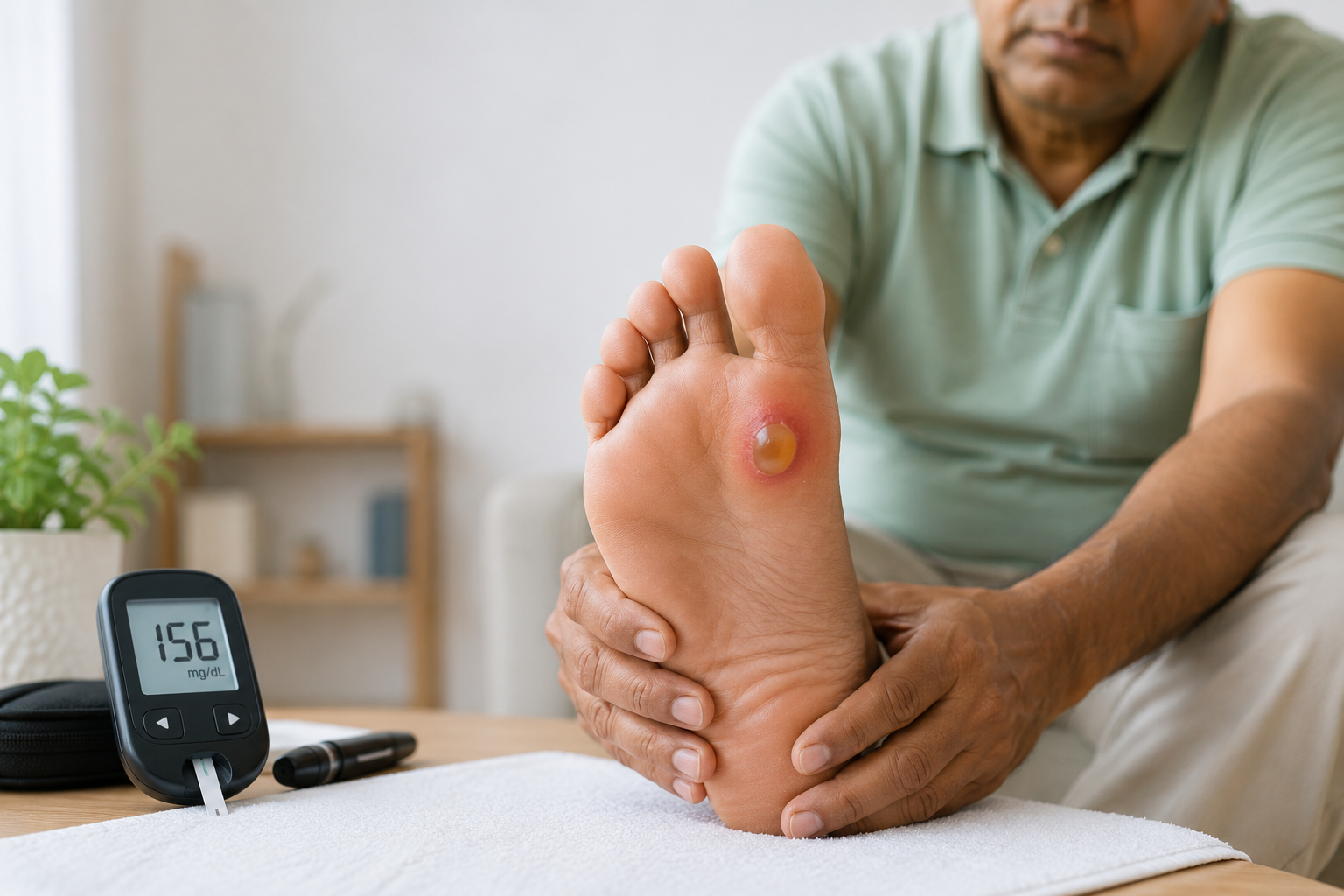
A blister on foot diabetic in Vizianagaram should be taken seriously, because the broken skin can quickly become an ulcer or infection. For people with diabetes in Vizianagaram, a foot blister should be protected and not popped, and any blister that bursts, reddens, or will not heal should be checked promptly.
A blister seems like a minor thing - and on a healthy foot it usually is. In diabetes, the same blister can be the start of a serious wound. If you have a blister on your foot and are diabetic in Vizianagaram, this guide explains why it matters, how to care for it safely, and when to seek help.
Why are blisters on a diabetic foot serious?
Blisters on a diabetic foot are serious because the skin is the foot's protective barrier, and once a blister breaks, bacteria can get in. With reduced sensation and slower healing, what would be a trivial blister on a healthy foot can turn into an ulcer or infection in diabetes.
Numbness is the key risk: you may not feel a blister forming or bursting, so it can be walked on and worsened without you noticing. A blister on the foot in a diabetic patient is one of the early problems linked to the conditions we treat.
What causes blisters on diabetic feet?
blister on foot diabetic in Vizianagaram are most often caused by friction from footwear, but they can also come from burns or, less commonly, appear spontaneously (a condition called diabetic bullae). Identifying the cause helps prevent the next blister.
- Friction: tight, loose, or new shoes rubbing the skin.
- Burns: from hot water, heaters, or hot surfaces a numb foot cannot feel.
- Pressure points: from deformity such as hammer toes or bunions.
- Diabetic bullae: blisters that appear on their own, usually painless.
- Moisture and socks: damp skin and rough seams adding friction.
Should you pop a blister if you have diabetes?
No - you should not pop a blister if you have diabetes. The intact skin over a blister is a natural barrier against infection, and breaking it deliberately gives bacteria a way in. Keep the blister covered and protected, and let a specialist decide if it needs draining.
If a blister is large, painful, or in danger of bursting on its own, have it assessed rather than opening it yourself. On a diabetic foot, professional, sterile care is much safer than a home needle.
How do you treat a diabetic foot blister safely?
You treat a diabetic foot blister safely by keeping it clean, covering it with a sterile dressing, taking pressure off it, and not bursting it. Watch closely for any signs of infection, and have it checked if it bursts or does not heal.
| Blister status | What you might see | What to do |
|---|---|---|
| Intact | Fluid-filled, skin unbroken | Cover, protect, offload; do not pop; monitor |
| Burst / open | Skin broken, fluid leaking | Keep clean and covered; get it assessed |
| Infected / not healing | Redness, pus, swelling, smell, or no healing | Seek prompt specialist care |
In our diabetic foot practice we often find that early, gentle protection of a blister - and changing the footwear that caused it - is enough to prevent a wound, as long as it is caught early.
What are the signs a blister is infected or becoming an ulcer?
The signs a foot blister is infected or becoming an ulcer include increasing redness, swelling, warmth, pus or discharge, a bad smell, or an open sore that will not heal. In diabetes, these can appear with little pain, so any of them needs prompt assessment.
- Spreading redness or warmth around the blister.
- Pus, cloudy fluid, or a bad smell.
- Swelling or increasing pain (or new numbness).
- An open sore where the blister was, that is not healing.
- Feeling unwell or feverish - a sign infection may be spreading.
How can you prevent foot blisters?
You can prevent foot blisters by wearing well-fitting footwear, breaking in new shoes gradually, keeping feet dry, and checking your feet daily. Avoiding heat sources you cannot feel also prevents burn blisters on numb feet.
Wear seamless or smooth socks, check inside shoes for rough spots or grit, and address deformities like hammer toes that create rubbing. Daily foot checks catch a blister before it breaks down.
When should you see a doctor about a foot blister?
You should see a doctor if a diabetic foot blister bursts, looks infected, is large or painful, or is not healing - and promptly for any redness, swelling, pus, or fever. Because numbness can hide trouble, it is safer to have a foot blister checked than to wait.
Seek urgent care if there is spreading redness, discharge, or you feel unwell, as these suggest infection that needs treatment quickly to protect the foot.
Diabetic foot blister care for Vizianagaram
Elegance Diabetic Foot & Ulcer Clinic (EDFC) treats foot blisters, wounds, and ulcers from its centre in Surat, and is opening a new Centre of Excellence for diabetic foot care and limb salvage in Vizianagaram. If you have a blister on your foot and are diabetic in Vizianagaram - especially one that has burst, looks infected, or will not heal - you can send a clear photo of the foot to our team on WhatsApp for guidance, and book a foot assessment for safe care.
You can also follow EDFC on Facebook, Instagram, and YouTube for diabetic foot care tips and real limb-salvage stories.
Protect your foot
A blister is a small thing that deserves quick, careful attention on a diabetic foot. If you have diabetes and a foot blister, book a foot assessment with Elegance Diabetic Foot & Ulcer Clinic or send a photo for advice and safe care before it becomes a wound.
Medical disclaimer: This article is for educational purposes only and is not a substitute for professional medical diagnosis or treatment. If you have diabetes and a blister that has burst, looks infected, or will not heal, seek prompt care. Please consult Dr. Ashutosh Shah or a qualified specialist about your condition. For authoritative guidance, see the NHS guide to blisters and the IWGDF diabetic foot guidelines.
quiz Frequently Asked Questions
This article is general education, not a diagnosis. If you have a diabetic foot wound, please have it assessed in person. Send a photo on WhatsApp or book a consultation.
About the Author

Dr. Ashutosh Shah, Plastic, Reconstructive & Diabetic Foot Surgeon, Elegance Diabetic Foot & Ulcer Clinic, Surat
Dr. Ashutosh Shah is a board certified plastic and reconstructive surgeon with over 22 years of experience and more than 10,000 limbs and feet saved. He founded Elegance Diabetic Foot & Ulcer Clinic, India's first chain of clinics dedicated to foot care, with centres in Surat and OPD partners across South Gujarat. He is known for a limb first approach, safe wound care and ethical, natural results.