
Transcutaneous Oxygen Measurement
A test that measures the oxygen actually reaching the skin, which predicts whether a wound can heal.
Key Takeaways
- TCOM measures oxygen at skin level rather than blood flow in the artery.
- It predicts healing more accurately than pulses alone, especially in calcified diabetic arteries.
- Low readings indicate that revascularisation is needed before surgery can succeed.
- The test is painless and uses small sensors placed on the skin.
Why Measure Oxygen Instead of Blood Flow?
Transcutaneous oxygen measurement: a painless test using skin sensors to measure how much oxygen reaches the tissue, expressed in millimetres of mercury.
Diabetes hardens artery walls, which can make ankle pressure readings falsely high. As a result, a foot may appear to have good circulation while the skin is actually starved. Measuring oxygen directly avoids that trap.
When Is TCOM Used?
- Before deciding on amputation level, so tissue is not removed unnecessarily
- Before planning foot surgery in a patient with weak pulses
- When an ulcer refuses to heal despite good wound care
- To check whether angioplasty or bypass has genuinely improved the foot
What Do the Results Mean?
Healthy readings suggest a wound should heal with good local care. Low readings suggest healing is unlikely until circulation improves, which points toward angioplasty or bypass through our vascular services. Borderline readings guide closer monitoring rather than immediate surgery.
How Is the Test Performed?
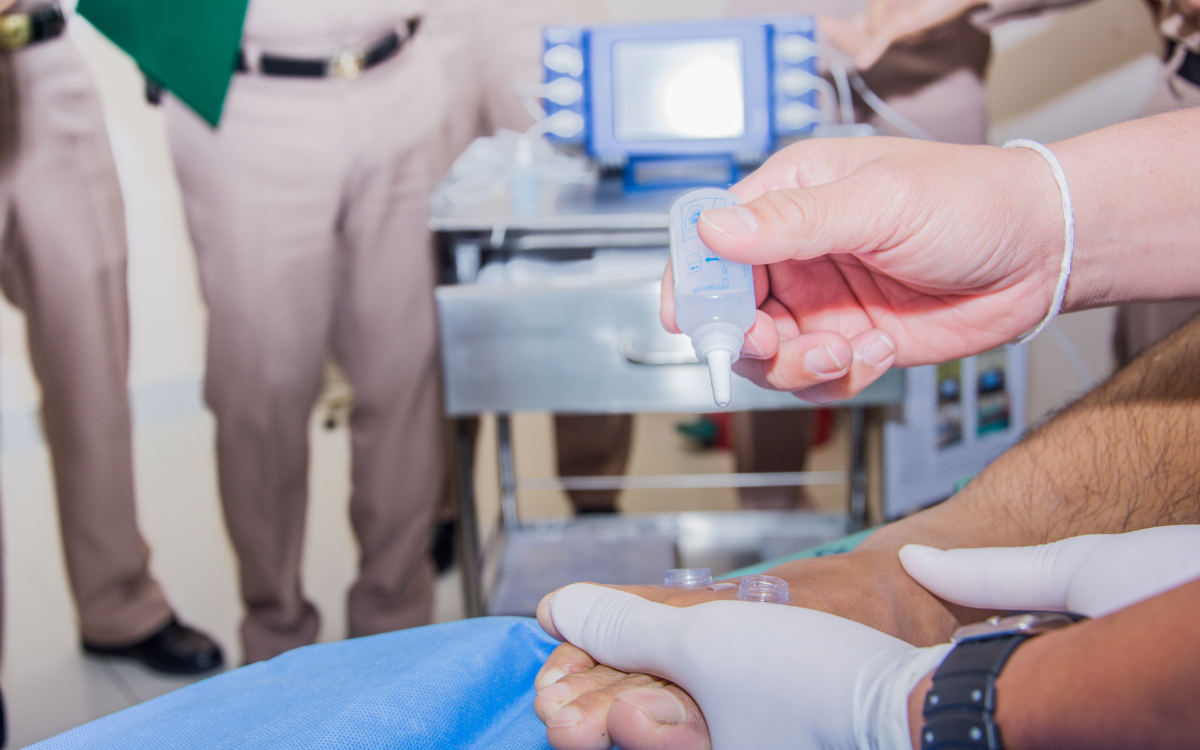
Small sensors are attached to the skin of the foot and a reference site on the chest. The skin is gently warmed so blood vessels open, then readings are recorded over several minutes. Nothing is injected and there is no discomfort beyond mild warmth.
What Does TCOM Cost in Surat?
This is a specialised test, so it costs more than a routine Doppler study while remaining far cheaper than surgery that fails through poor blood supply. The charge is confirmed at booking.
Expect to sit comfortably for around half an hour with sensors on the skin. The value lies in the decision it informs, because knowing the oxygen level prevents both unnecessary amputation and doomed operations.