
Nerve Function Evaluation
A complete grading of sensory, motor and autonomic nerve function in the foot.
Key Takeaways
- Diabetic neuropathy affects sensory, motor and autonomic nerves, each in a different way.
- Loss of protective sensation is the single biggest risk factor for a foot ulcer.
- Motor nerve damage causes claw toes, which then create pressure points.
- Autonomic damage stops the foot sweating, leading to dry, cracking skin.
What Does the Evaluation Test?
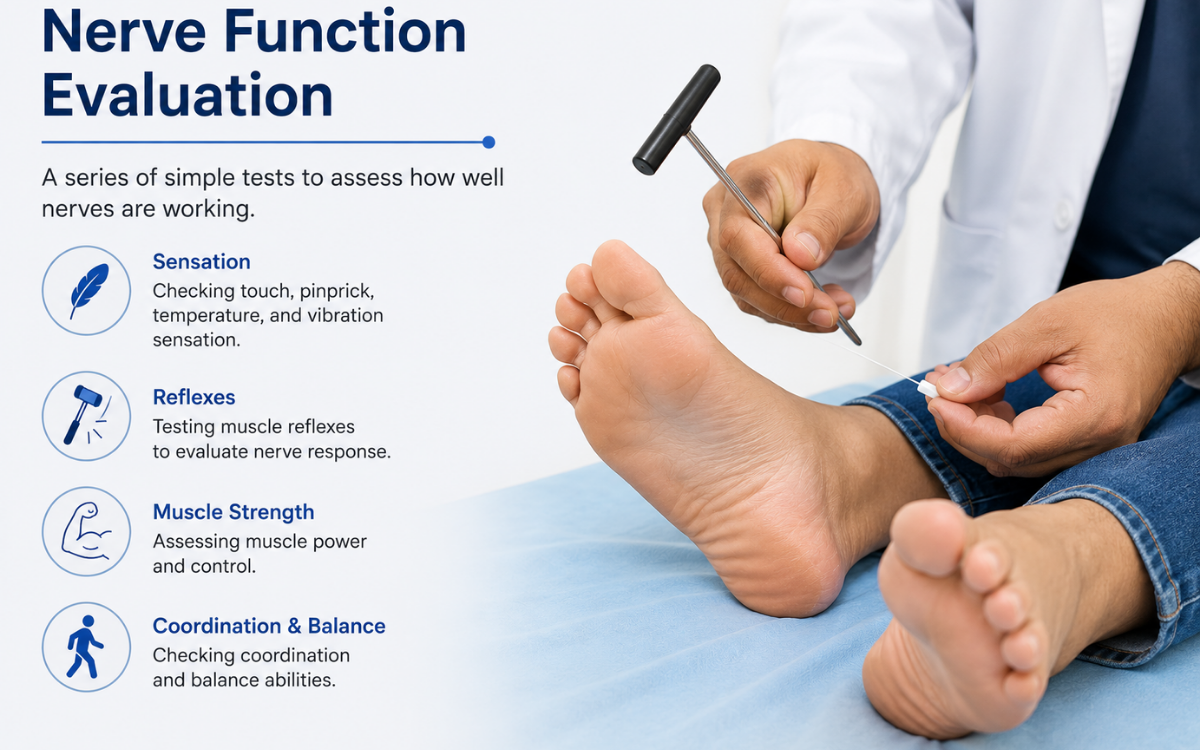
Sensory testing checks whether you can feel light touch, vibration and temperature. Motor testing looks at muscle strength, toe position and how the foot works while walking. Autonomic assessment examines skin dryness and sweating, which explains most cracked heels in diabetes.
Together these build a picture of risk. Someone who cannot feel a monofilament but has strong muscles carries a different risk from someone with clawed toes and dry skin.
Why Is Grading Better Than a Yes or No Answer?
Because treatment changes with severity. Mild sensory loss means education and yearly review. Complete loss of protective sensation means protective footwear now, plus checks every few months. Consequently, a graded result gives a practical plan rather than a label.
Can Nerve Damage Improve?
Partly. Better sugar control slows progression, and correcting vitamin B12 deficiency improves symptoms in many patients. Nerve pain responds to medication. Sensation that has been lost for years, however, rarely returns fully, so protection becomes the priority.
Where nerve compression is contributing, decompression surgery is considered through our nerve surgery service.
Who Needs This Evaluation?
Every person with diabetes should have nerve function assessed at diagnosis and then yearly. Sooner if you notice burning at night, numbness, unsteady walking, or if you have already had an ulcer.
What Does the Evaluation Cost?
Nerve testing forms part of a standard diabetic foot assessment in Surat and is priced accordingly. Where additional studies are advised, those are explained and quoted separately.
Expect a clear grade rather than a vague answer. You will leave knowing whether your protective sensation is intact, reduced or lost, what that means for your ulcer risk, and how often your feet need checking from now on.