Written by Dr. Ashutosh Shah, Plastic & Microvascular Surgeon - Diabetic Foot & Limb Salvage Specialist, Elegance Diabetic Foot & Ulcer Clinic (EDFC). Practising since 2004 (22+ years). Read full bio.
Medically reviewed by Dr. Ashutosh Shah
Feet that feel cold in diabetes can be a sign of poor circulation or nerve damage, and sometimes both. For people with diabetes in Vizianagaram, persistently cold feet should be checked, because reduced blood flow raises the risk of slow-healing wounds - and warming numb feet with heat can cause unfelt burns.
Cold feet are easy to brush off, but in diabetes they can be an early clue about your circulation or nerves. If your feet feel cold and you are diabetic in Vizianagaram, this guide explains why it happens, how to warm them safely, and the signs that mean you should see a specialist.
Why do my feet feel cold with diabetes?
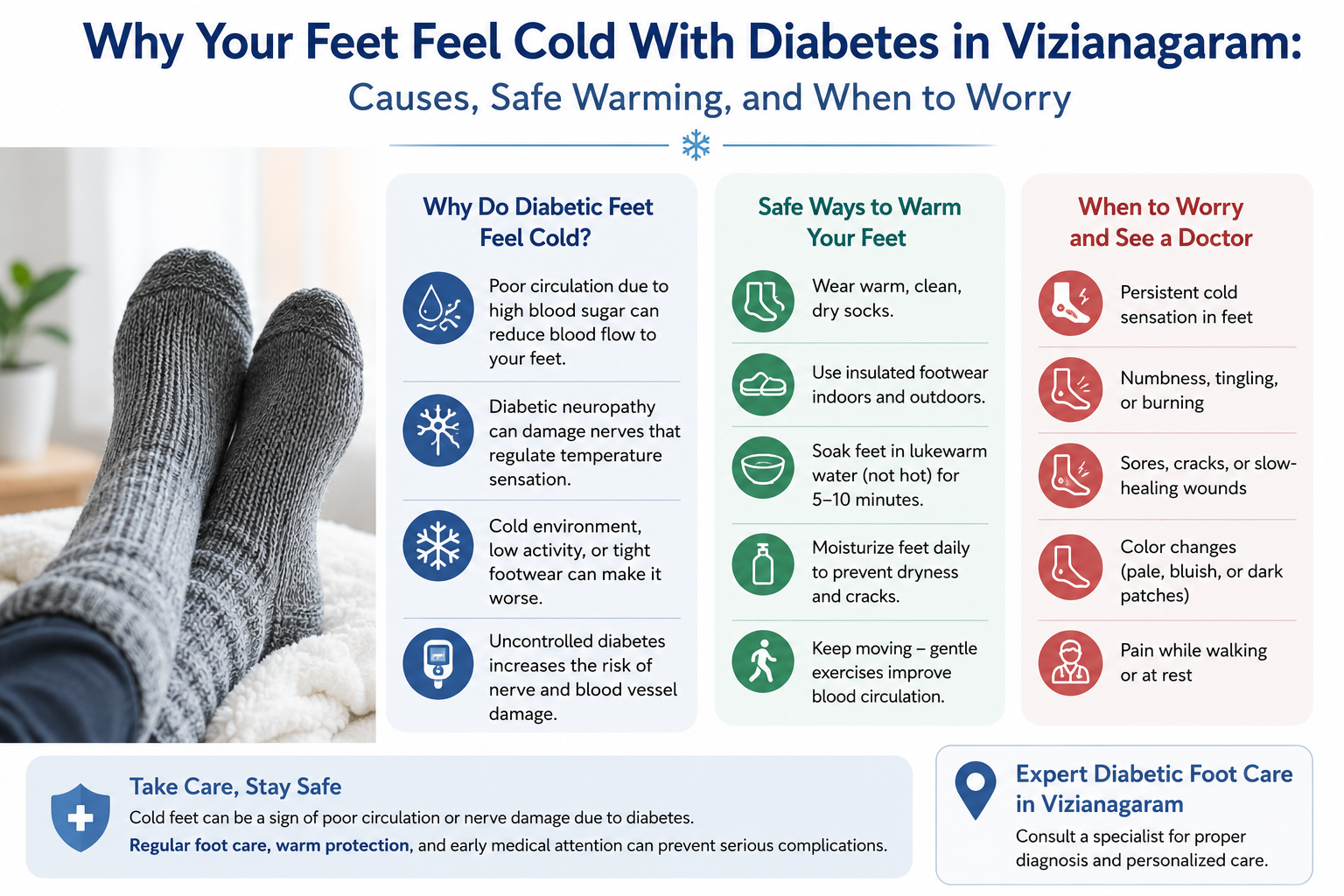
Your feet feel cold diabetic in vizianagaram usually because of reduced blood flow, nerve damage, or both. Poor circulation means less warm blood reaches the feet, while nerve damage can make the feet feel cold even when their temperature is normal.
So "cold feet" can mean two different things - feet that truly are cold from low blood flow, or feet that only feel cold because the nerves are misfiring. When feet feel cold in a diabetic patient, both are linked to the conditions we treat, and telling them apart guides the right care.
Are cold feet a sign of poor circulation?
Yes, cold feet can be a sign of poor circulation, especially when the feet are cool or cold to the touch, pale, or slow to heal. In diabetes, narrowed arteries (peripheral artery disease) reduce the warm blood reaching the feet, leaving them cold.
When poor circulation is the cause, cold feet often come with other signs - pale or bluish skin, weak pulses, shiny skin, or wounds that heal slowly. These point to reduced blood flow that should be assessed.
Can nerve damage make feet feel cold?
Yes, nerve damage (diabetic neuropathy) can make feet feel cold, tingly, or strange even when they are actually warm to the touch. The damaged nerves send confusing signals, so the sensation of cold does not always match the real temperature.
| Feature | Feet cold to the touch (circulation) | Feet that only feel cold (nerves) |
|---|---|---|
| Actual temperature | Genuinely cool or cold | Often normal and warm to touch |
| Other signs | Pale/bluish skin, weak pulses, slow healing | Tingling, burning, numbness |
| Main concern | Reduced blood flow to the foot | Loss of protective sensation |
| What helps | Circulation assessment and care | Blood-sugar control, foot protection |
The two can also occur together. A specialist can check your pulses, sensation, and circulation to find out which is driving your cold feet.
Are cold feet in diabetes dangerous?
Cold feet in diabetes can be dangerous when they signal poor circulation, because reduced blood flow slows healing and raises the risk of ulcers and infection. The bigger immediate danger, though, is often how people try to warm numb feet.
In our diabetic foot practice we regularly see burns from hot water bottles, heaters, and hot soaks used to warm cold, numb feet - injuries the person could not feel happening. On a diabetic foot, that burn can become a serious wound.
How do you safely warm cold feet with diabetes?
You safely warm cold feet with diabetes by using warm socks and movement - never direct heat that a numb foot cannot feel. Avoid hot water bottles, heaters, electric blankets, and hot foot soaks, which can burn the skin without warning.
- Do wear warm, well-fitting socks (including in bed if needed).
- Do keep moving and walking to encourage circulation.
- Do check the water temperature with your elbow, not your foot, before washing.
- Don't use hot water bottles, heaters, or electric blankets on the feet.
- Don't soak feet in hot water to warm them.
How are cold feet diagnosed and treated?
Cold feet are diagnosed by checking foot pulses, circulation, and sensation, and treated by addressing the cause - improving blood flow when circulation is poor, and protecting the feet when nerves are affected. Tests are quick and painless.
If poor circulation is found, treatment may include managing risk factors and, in significant cases, procedures to restore blood flow. If nerve damage is the cause, the focus is on blood-sugar control and protecting the feet from injury. Either way, this is part of our diabetic foot & limb-salvage services.
When should you see a doctor about cold feet?
You should see a doctor if cold feet are persistent, one-sided, or come with pale or bluish skin, pain, numbness, slow-healing wounds, or weak pulses. Seek prompt care if a foot is suddenly cold, painful, and pale, which can signal a blocked artery.
Because cold feet can be the first hint of poor circulation, having them assessed - especially with diabetes - is a simple step that can catch problems early.
Diabetic foot and circulation care for Vizianagaram
Elegance Diabetic Foot & Ulcer Clinic (EDFC) assesses circulation and nerve problems from its centre in Surat, and is opening a new Centre of Excellence for diabetic foot care and limb salvage in Vizianagaram. If your feet feel cold diabetic in vizianagaram, you can send a clear photo of your feet to our team on WhatsApp for guidance, and book a circulation assessment - especially if the feet are pale, painful, or one-sided.
You can also follow EDFC on Facebook, Instagram, and YouTube for diabetic foot care tips and real limb-salvage stories.
Get your feet checked
Cold feet can be an early signal worth listening to. If you have diabetes and persistently cold feet, book a circulation assessment with Elegance Diabetic Foot & Ulcer Clinic or send a photo for advice and a plan to protect your feet.
Medical disclaimer: This article is for educational purposes only and is not a substitute for professional medical diagnosis or treatment. A suddenly cold, pale, painful foot is a medical emergency - seek urgent care. Please consult Dr. Ashutosh Shah or a qualified specialist about your condition. For authoritative guidance, see the NHS guide to peripheral arterial disease and the NHS guide to peripheral neuropathy.
quiz Frequently Asked Questions
This article is general education, not a diagnosis. If you have a diabetic foot wound, please have it assessed in person. Send a photo on WhatsApp or book a consultation.
About the Author

Dr. Ashutosh Shah, Plastic, Reconstructive & Diabetic Foot Surgeon, Elegance Diabetic Foot & Ulcer Clinic, Surat
Dr. Ashutosh Shah is a board certified plastic and reconstructive surgeon with over 22 years of experience and more than 10,000 limbs and feet saved. He founded Elegance Diabetic Foot & Ulcer Clinic, India's first chain of clinics dedicated to foot care, with centres in Surat and OPD partners across South Gujarat. He is known for a limb first approach, safe wound care and ethical, natural results.