Written by Dr. Ashutosh Shah, Plastic & Microvascular Surgeon - Diabetic Foot & Limb Salvage Specialist, Elegance Diabetic Foot & Ulcer Clinic (EDFC). [Reg. No.]. Practising since 2004 (22+ years). Read full bio.
Medically reviewed by Dr. Ashutosh Shah
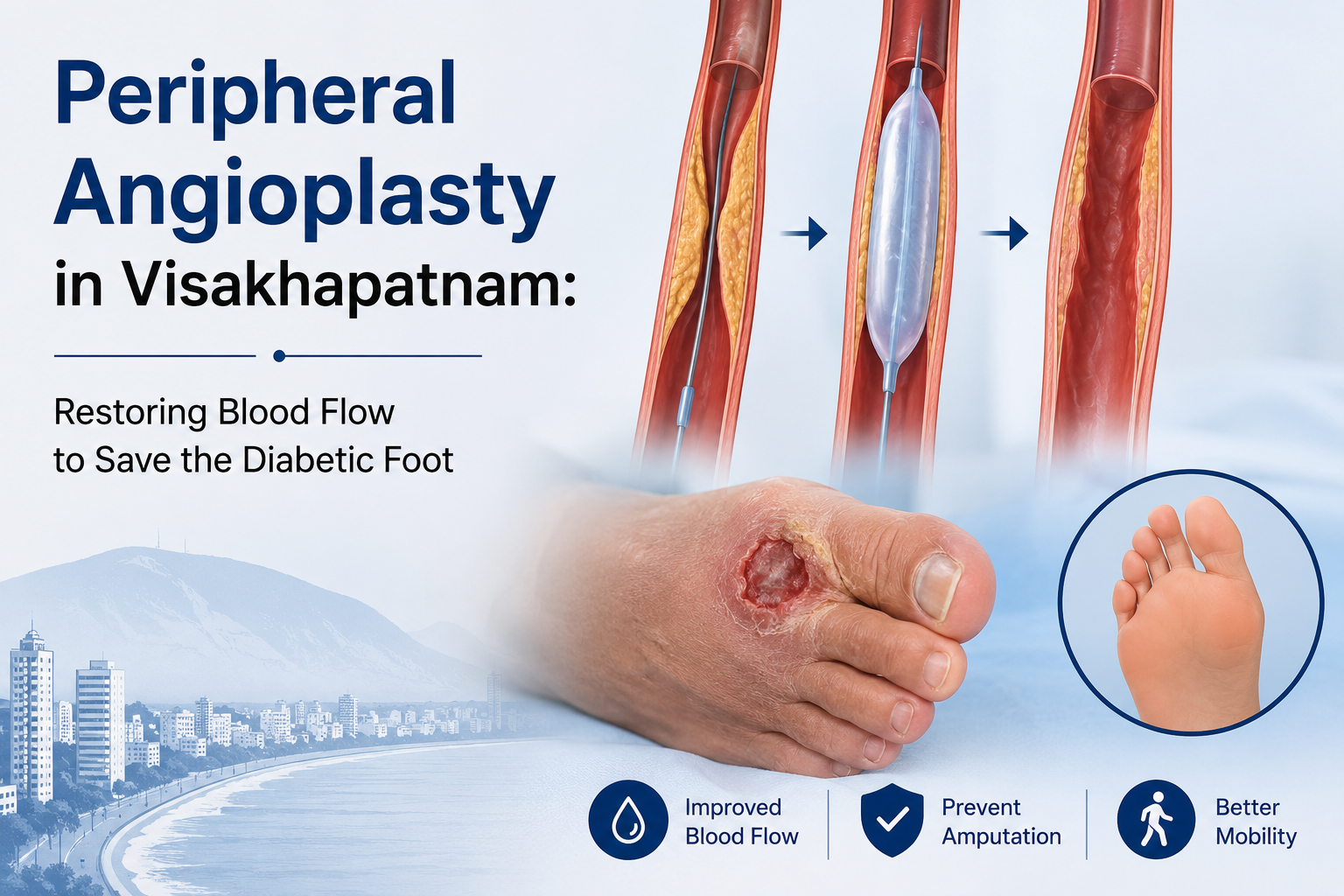
Peripheral angioplasty in Visakhapatnam is a minimally invasive procedure that reopens narrowed or blocked leg arteries using a tiny balloon, restoring blood flow to the foot. For people with diabetes and poor circulation, it speeds ulcer healing and helps prevent amputation, usually done through a small puncture under local anaesthesia.
When diabetes silently narrows the arteries in your legs, even a small foot wound can refuse to heal. This guide explains what peripheral angioplasty does, who needs it, how recovery works, and the warning signs that mean you should not wait.
What is peripheral angioplasty?
Peripheral angioplasty is a minimally invasive procedure that reopens narrowed or blocked arteries in the legs to restore blood flow. A vascular specialist threads a thin tube (catheter) with a small balloon to the blockage, inflates it to widen the artery, and sometimes places a stent to keep it open.
Because it works from inside the artery through a small puncture, it avoids the large incision of open bypass surgery. The medical term for restoring blood supply this way is endovascular revascularisation.
Why do people with diabetes need it?
People with diabetes need peripheral angioplasty because long-standing high blood sugar damages and narrows the leg arteries, a condition called peripheral artery disease (PAD). In diabetes, the blockages often sit in the small arteries below the knee, exactly the vessels that feed the foot.
Without enough blood flow, oxygen and antibiotics cannot reach a wound, so diabetic foot ulcers stagnate and infections spread. International IWGDF, ESVS and SVS guidelines treat restoring blood flow as a priority once a foot ulcer is linked to poor circulation. In our diabetic foot practice we commonly see ulcers that had been treated for months as "just an infection" when the real problem was a blocked artery starving the foot.
What are the warning signs of poor leg circulation?
The warning signs of poor leg circulation include a foot wound that will not heal, rest pain, and colour or temperature changes in the foot. These signal that the tissue is not getting enough blood and that you should be assessed urgently.
- A foot ulcer or sore that has not healed in two to four weeks.
- Pain in the foot or toes at rest, often worse at night or when lying flat.
- Cold, pale, or bluish foot, sometimes with shiny skin or hair loss on the leg.
- Cramping calf or thigh pain when walking that eases with rest (claudication).
- Blackened tissue (gangrene) or a spreading infection - this is an emergency.
Diabetic nerve damage can mute pain, so circulation problems are easy to miss. Peripheral artery disease is one of the conditions we treat, and you can read more about it on the NHS peripheral arterial disease page.
How is the blockage diagnosed?
The blockage is diagnosed using a foot pulse check, an ankle-brachial index (ABI), and Doppler ultrasound, followed by an angiogram if intervention is likely. These tests map exactly where and how severely the arteries are narrowed.
The ankle-brachial index compares blood pressure at the ankle with the arm; a low value suggests reduced flow. A CT or catheter angiogram then provides a detailed road map so the specialist can plan the angioplasty precisely.
How is peripheral angioplasty performed?
Peripheral angioplasty is performed through a small puncture in the groin or arm, usually under local anaesthesia, while you stay awake. The procedure typically takes one to two hours and is often done as day-care or with a short hospital stay.
- The skin is numbed and a thin catheter is guided to the narrowed artery using live X-ray.
- A balloon at the catheter tip is inflated to flatten the blockage and widen the vessel.
- A stent or drug-coated balloon may be used to help the artery stay open.
- The catheter is removed and the small puncture is sealed - no large surgical cut.
Angioplasty vs bypass surgery: which is better?
Angioplasty is usually the first choice for diabetic leg blockages because it is minimally invasive and easily repeated, while bypass surgery may suit long or complex blockages. The right option depends on the location, length, and pattern of the blockage and your overall health.
| Factor | Peripheral angioplasty | Bypass surgery |
|---|---|---|
| Approach | Minimally invasive (small puncture) | Open surgery with an incision |
| Anaesthesia | Usually local | General or regional |
| Recovery | Faster, often day-care | Longer hospital stay |
| Repeatability | Easy to repeat if it re-narrows | More complex to redo |
| Best suited to | Many below-knee diabetic blockages | Long or heavily calcified blockages |
Angioplasty has a higher chance of the artery re-narrowing (restenosis) than bypass, but because it can be repeated through a small puncture, it remains the preferred starting point for most diabetic foot cases. Your specialist will recommend the safest option for your specific arteries.
What is recovery like after the procedure?
Recovery after peripheral angioplasty is usually quick - most people walk within a day and resume light activity within a few days. You may feel mild soreness at the puncture site, and your team will guide wound care, medication, and follow-up.
Restoring blood flow is only half the job. Diabetic foot ulcers still need proper wound care, pressure offloading, infection control, and tight blood-sugar management to heal fully. See our diabetic foot & limb-salvage services for the full healing pathway after revascularisation.
How can you protect your circulation and avoid amputation?
You can protect your circulation by controlling blood sugar, stopping smoking, checking your feet daily, and seeking care early for any wound. Early treatment of poor blood flow is the single most effective way to avoid amputation.
- Keep blood sugar, blood pressure, and cholesterol within target ranges.
- Stop smoking - tobacco dramatically worsens artery narrowing.
- Inspect your feet every day for cuts, blisters, or colour changes.
- Wear well-fitting footwear and never walk barefoot.
- Get any non-healing wound checked within days, not weeks.
Peripheral angioplasty for patients in the Visakhapatnam region
Elegance Diabetic Foot & Ulcer Clinic (EDFC) cares for patients across India from its centre in Surat, and a new Centre of Excellence for diabetic foot care and limb salvage is opening soon in Vizianagaram, close to Visakhapatnam. As part of a structured limb-salvage pathway, our team assesses leg circulation and arranges timely revascularisation - including peripheral angioplasty - alongside wound care, offloading, and diabetes management, so restored blood flow actually translates into healed wounds and saved limbs. To check whether you need a circulation assessment, book a consultation with our team.
You can also follow EDFC on Facebook, Instagram, and YouTube for diabetic foot care tips and real limb-salvage stories.
Book your assessment
If you have diabetes and a wound that will not heal or signs of poor leg circulation, don't wait. Book an appointment at Elegance Diabetic Foot Clinic in Visakhapatnam for a circulation assessment and personalised advice.
Medical disclaimer: This article is for educational purposes only and is not a substitute for professional medical diagnosis or treatment. Please consult Dr. Ashutosh Shah or a qualified vascular specialist about your individual condition. For authoritative guidance, see the IWGDF peripheral artery disease guideline and the NHS overview of peripheral arterial disease.
quiz Frequently Asked Questions
This article is general education, not a diagnosis. If you have a diabetic foot wound, please have it assessed in person. Send a photo on WhatsApp or book a consultation.
About the Author

Dr. Ashutosh Shah, Plastic, Reconstructive & Diabetic Foot Surgeon, Elegance Diabetic Foot & Ulcer Clinic, Surat
Dr. Ashutosh Shah is a board certified plastic and reconstructive surgeon with over 22 years of experience and more than 10,000 limbs and feet saved. He founded Elegance Diabetic Foot & Ulcer Clinic, India's first chain of clinics dedicated to foot care, with centres in Surat and OPD partners across South Gujarat. He is known for a limb first approach, safe wound care and ethical, natural results.