Written by Dr. Ashutosh Shah, Plastic & Microvascular Surgeon - Diabetic Foot & Limb Salvage Specialist, Elegance Diabetic Foot & Ulcer Clinic (EDFC). Practising since 2004 (22+ years). Read full bio.
Medically reviewed by Dr. Ashutosh Shah
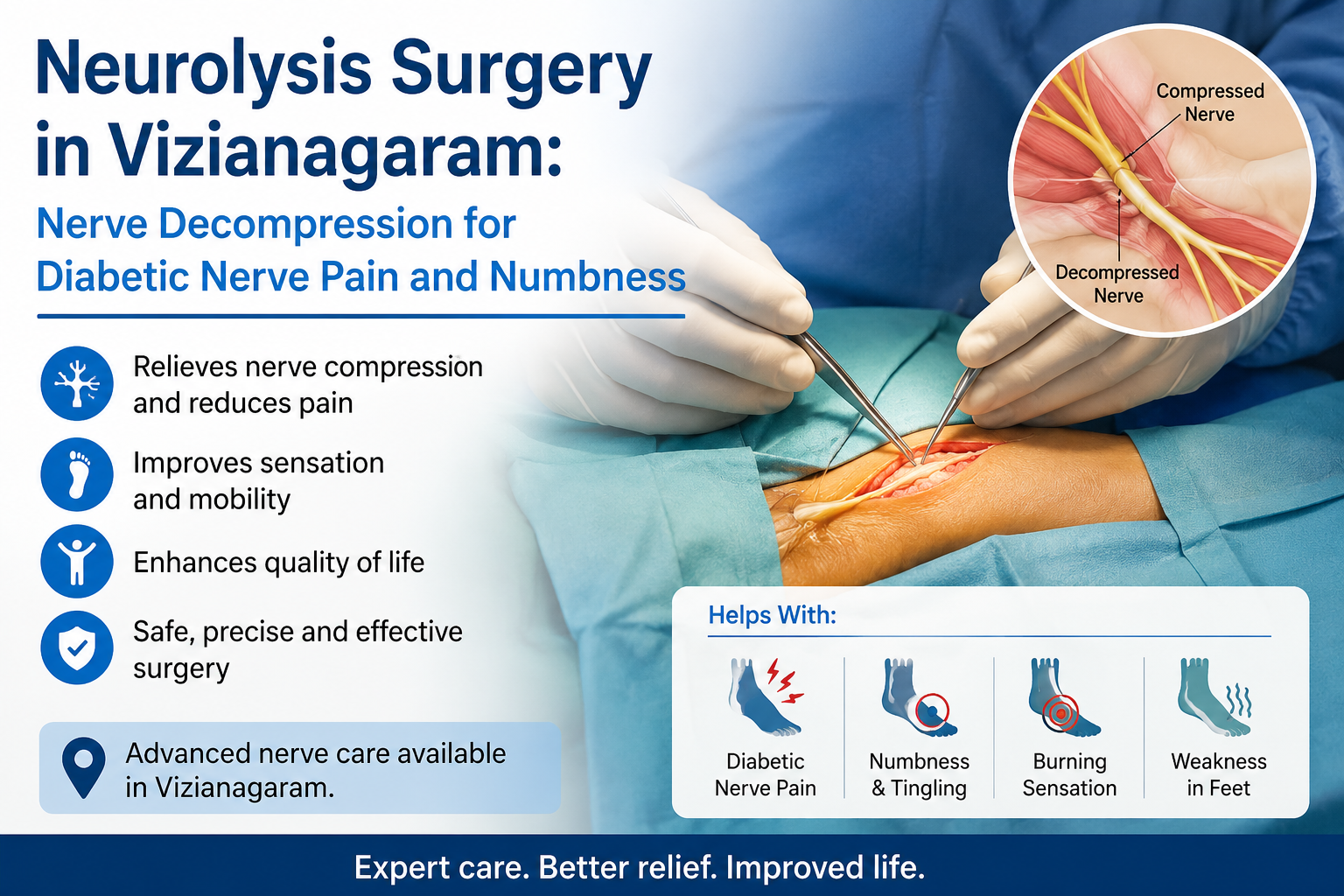
Neurolysis surgery in Vizianagaram is a nerve-decompression procedure that frees a trapped or scarred nerve to relieve pain and restore sensation. In selected people with diabetic neuropathy who also have nerve compression, it can ease pain and improve feeling - but it suits specific patients, not everyone, and needs careful assessment first.
Not all foot nerve pain is permanent. When a nerve is being squeezed at a tight tunnel, releasing it can make a real difference. This guide explains what neurolysis surgery is, who it helps, how effective it is, and its honest limits.
What is neurolysis surgery?
Neurolysis surgery is a procedure that frees a nerve from the tissue compressing or scarring it, also called nerve decompression. In the foot and ankle, it most often releases the tibial nerve and its branches at the tarsal tunnel - the narrow passage on the inner ankle.
"Neurolysis" means freeing the nerve: dividing the tight band over it and, where needed, gently releasing scar tissue around it (internal neurolysis). The aim is to restore normal room and blood flow to a squeezed nerve. Nerve problems in the foot relate to several of the conditions we treat.
How does neurolysis help in diabetic neuropathy?
Neurolysis helps in diabetic neuropathy when a nerve already irritated by diabetes is also being physically compressed at a tight tunnel. Diabetic nerves swell and become more vulnerable to pressure, so releasing that pressure can reduce pain and improve sensation in suitable patients.
It is important to be clear: neurolysis does not cure diabetes or reverse all nerve damage. It targets the added "compression" component on top of diabetic neuropathy. That is why careful selection matters so much.
Who is a good candidate for neurolysis surgery?
A good candidate for neurolysis is someone with diabetic neuropathy who also shows signs of nerve compression - most importantly a positive Tinel's sign, where tapping over the nerve at the ankle sends tingling into the foot. This points to a trapped nerve that may respond to release.
| May benefit | Less likely to benefit |
|---|---|
| Positive Tinel's sign over the tibial nerve | No signs of nerve compression |
| Nerve pain or numbness with compression points | Very advanced, long-standing nerve loss |
| Reasonable circulation to the foot | Severe untreated poor circulation |
| Symptoms affecting daily life despite medication | Symptoms well controlled without surgery |
A specialist assessment - including the Tinel's test and a check of circulation and sensation - decides whether surgery is likely to help. Neurolysis is a targeted option, not a routine treatment for everyone with neuropathy.
How effective is neurolysis surgery?
In carefully selected patients with nerve compression, neurolysis can be very effective - published studies report significant, lasting pain relief and recovery of sensation in a high proportion of suitable patients. A positive Tinel's sign is a strong predictor of a good result.
Results are best when the right patients are chosen. In those without genuine nerve compression, the benefit is much less certain, and the wider use of the surgery for all diabetic neuropathy remains debated. Honest assessment is the key to a good outcome.
How is neurolysis surgery performed?
Neurolysis surgery is performed through a small incision over the affected nerve - commonly at the inner ankle for the tarsal tunnel - releasing the tight band and any compression points along the nerve. It is usually done under anaesthesia as a day-case or short-stay procedure.
- The surgeon opens the tight tunnel (such as the flexor retinaculum at the ankle).
- The nerve and its branches are followed and released at each compression point.
- Scar tissue around the nerve is gently freed if it is constricting the nerve.
- The wound is closed and protected while it heals.
What is recovery like, and what are the risks?
Recovery after neurolysis usually involves protecting the foot and limiting weight-bearing for a short period, with gradual return to activity. As with any surgery, risks include infection, bleeding, scarring, and the chance that symptoms do not improve as hoped.
In a diabetic foot, healing can be slower, so good blood-sugar control and careful wound care matter. Some people notice improvement over weeks to months as the nerve recovers. Your surgeon will explain the realistic outlook for your specific case.
Neurolysis assessment at EDFC for Vizianagaram
Elegance Diabetic Foot & Ulcer Clinic (EDFC), led by plastic and microvascular surgeon Dr. Ashutosh Shah, assesses nerve and foot problems from its centre in Surat, and is opening a new Centre of Excellence for diabetic foot care and limb salvage in Vizianagaram. If you have diabetic nerve pain or numbness and want to know whether nerve decompression could help, our team can assess suitability - including the Tinel's test - and explain your options. Book a consultation to discuss your case.
You can also follow EDFC on Facebook, Instagram, and YouTube for diabetic foot care tips and real limb-salvage stories.
Discuss your options
If diabetic nerve pain or numbness is affecting your life, it is worth finding out whether a trapped nerve is part of the problem. Book a consultation with Elegance Diabetic Foot & Ulcer Clinic for an honest assessment of whether neurolysis could help you.
Medical disclaimer: This article is for educational purposes only and is not a substitute for professional medical diagnosis or treatment. Neurolysis is suitable only for selected patients, and outcomes vary. Please consult Dr. Ashutosh Shah or a qualified specialist about your individual condition. For background reading, see this structured review of decompression surgery for diabetic neuropathy and the NHS guide to peripheral neuropathy.
quiz Frequently Asked Questions
This article is general education, not a diagnosis. If you have a diabetic foot wound, please have it assessed in person. Send a photo on WhatsApp or book a consultation.
About the Author

Dr. Ashutosh Shah, Plastic, Reconstructive & Diabetic Foot Surgeon, Elegance Diabetic Foot & Ulcer Clinic, Surat
Dr. Ashutosh Shah is a board certified plastic and reconstructive surgeon with over 22 years of experience and more than 10,000 limbs and feet saved. He founded Elegance Diabetic Foot & Ulcer Clinic, India's first chain of clinics dedicated to foot care, with centres in Surat and OPD partners across South Gujarat. He is known for a limb first approach, safe wound care and ethical, natural results.