Written by Dr. Ashutosh Shah, Plastic & Microvascular Surgeon - Diabetic Foot & Limb Salvage Specialist, Elegance Diabetic Foot & Ulcer Clinic (EDFC). Practising since 2004 (22+ years). Read full bio.
Medically reviewed by Dr. Ashutosh Shah
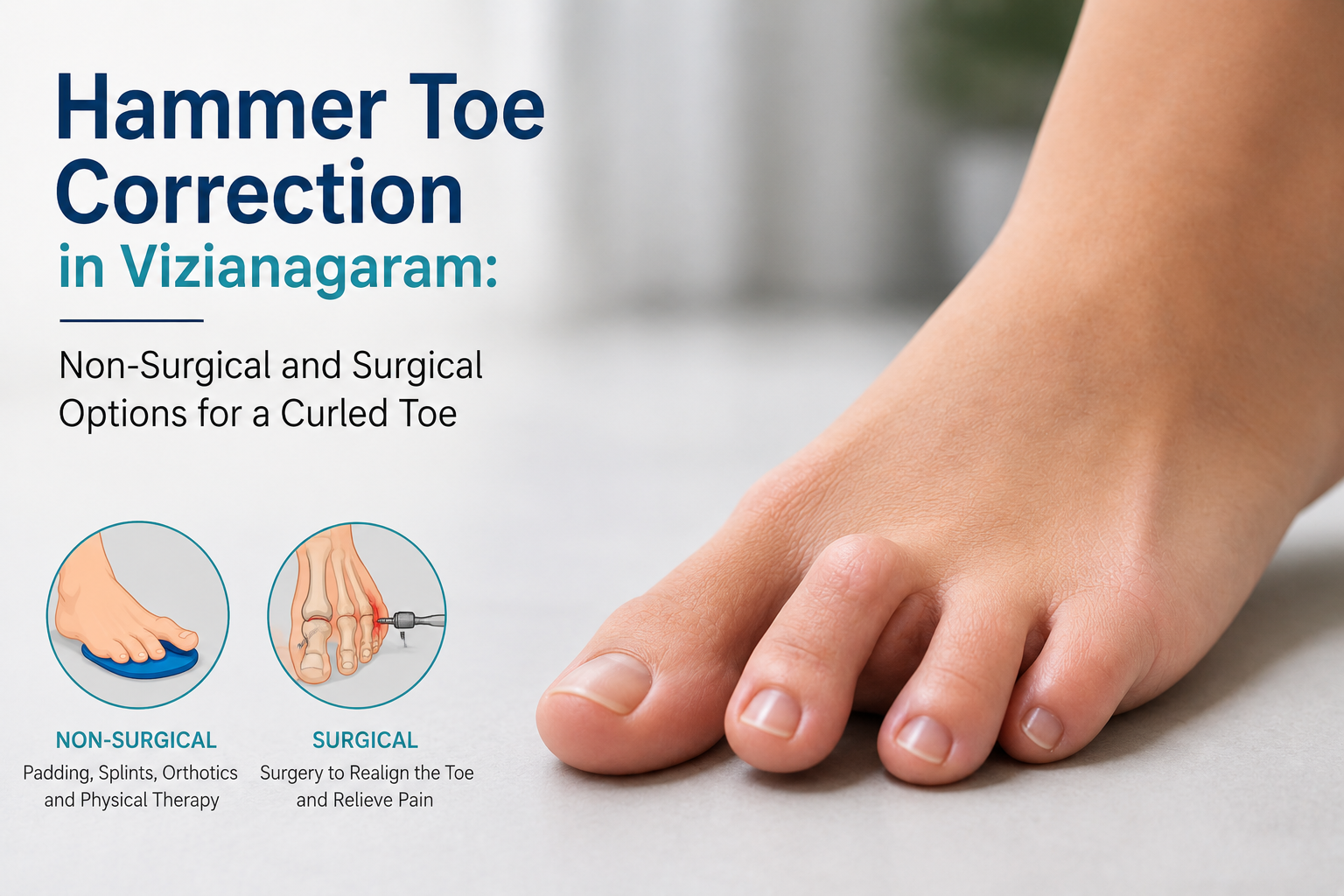
Hammer toe correction in Vizianagaram ranges from non-surgical steps like roomy footwear and padding to minor surgery such as flexor tenotomy or tendon procedures for stiffer toes. For people with diabetes, correcting a hammer toe is important because the raised knuckle and pressed-down tip can cause ulcers on a numb foot.
A hammer toe is more than a cosmetic bend - it changes where pressure falls on the foot. This guide explains what causes hammer toes, the non-surgical and surgical ways to correct them, and why it matters more if you have diabetes.
What is a hammer toe?
A hammer toe is a toe that bends downward at the middle joint instead of lying flat, giving it a hammer-like shape. Related deformities include claw toe (bent at two joints) and mallet toe (bent at the tip), and all create pressure points where the toe rubs or presses.
Hammer toes can be flexible (still bend straight by hand) or rigid (fixed in position), and this difference decides the treatment. Toe deformities like these are among the conditions we treat.
What causes hammer toes?
Hammer toes are caused by an imbalance in the muscles and tendons that straighten and bend the toe, often worsened by tight or pointed footwear. In diabetes, nerve damage can unbalance the small toe muscles, making hammer and claw toes more common.
- Muscle and tendon imbalance pulling the toe into a bent position.
- Tight, pointed, or high-heeled footwear that crowds the toes.
- Nerve damage (neuropathy) in diabetes affecting the small foot muscles.
- Previous injury or a longer toe that buckles.
- Other foot problems such as bunions that shift toe position.
Why correct a hammer toe if you have diabetes?
Correcting a hammer toe matters in diabetes because the bent toe creates high-pressure spots - on the knuckle and the toe tip - that can break down into ulcers on a foot with reduced sensation. Straightening the toe relieves that pressure and protects the skin.
In our diabetic foot practice we often see toe-tip and knuckle ulcers driven by an uncorrected hammer toe. Fixing the toe shape treats the cause, which is why correction can succeed where dressings alone keep failing.
Can a hammer toe be corrected without surgery?
A flexible hammer toe can often be managed without surgery using roomy footwear, toe padding or splints, and offloading to relieve pressure. These steps do not straighten a fixed toe, but they reduce pressure and can prevent ulcers and slow the deformity.
- Footwear changes: wide, deep, soft shoes that do not crowd the toes.
- Padding and splints: to cushion and reposition a flexible toe.
- Offloading: insoles or devices to take pressure off the toe.
- Callus care: safe, professional reduction of pressure callus.
- Daily foot checks: to catch any skin damage early.
What are the surgical options for hammer toe correction?
Surgical hammer toe correction depends on whether the toe is flexible or rigid. A flexible toe may be corrected with a minor tendon release such as flexor tenotomy, while a rigid toe usually needs a procedure on the joint to straighten it.
| Toe type | Typical approach | Goal |
|---|---|---|
| Flexible hammer toe | Flexor tenotomy or tendon transfer | Release the tight tendon so the toe straightens |
| Rigid hammer toe | Joint procedure (arthroplasty/fusion) | Straighten a fixed toe at the joint |
| Toe with an ulcer | Correction plus wound care and offloading | Heal the ulcer and prevent recurrence |
For a flexible toe causing a tip ulcer, a minimally invasive flexor tenotomy is often enough. A specialist examines whether your toe still bends to choose the safest, most effective option.
How is the surgery performed, and what is recovery like?
Minor hammer toe procedures are often done under local anaesthesia, sometimes through tiny cuts, with most people walking soon after. Joint procedures for rigid toes are more involved and may need a longer recovery and protected footwear.
Recovery depends on the procedure: a simple tendon release heals quickly, while joint surgery takes longer and may use a pin or splint. In diabetes, good blood-sugar control and careful wound care support healing.
How can you stop hammer toes from getting worse?
You can slow hammer toes by wearing roomy, supportive footwear, avoiding tight or pointed shoes, and treating pressure callus and curled toes early. Daily foot checks help catch problems before they ulcerate, especially with diabetes.
Early action keeps a flexible toe flexible and easier to manage. Once a toe becomes rigid, the options narrow, so addressing it sooner is usually simpler and safer.
Hammer toe correction at EDFC for Vizianagaram
Elegance Diabetic Foot & Ulcer Clinic (EDFC), led by plastic and microvascular surgeon Dr. Ashutosh Shah, assesses and corrects toe deformities from its centre in Surat, and is opening a new Centre of Excellence for diabetic foot care and limb salvage in Vizianagaram. If you have a hammer toe - especially with diabetes, callus, or a toe-tip wound - you can send a clear photo of the foot to our team on WhatsApp for guidance, and book an assessment to discuss correction options.
You can also follow EDFC on Facebook, Instagram, and YouTube for diabetic foot care tips and real limb-salvage stories.
Discuss correction options
A curled toe is easier to manage early - and correcting it protects a diabetic foot from ulcers. If you have a hammer toe, book an assessment with Elegance Diabetic Foot & Ulcer Clinic or send a photo for advice on the right correction for you.
Medical disclaimer: This article is for educational purposes only and is not a substitute for professional medical diagnosis or treatment. If you have diabetes and a toe with callus or a wound, seek prompt care. Please consult Dr. Ashutosh Shah or a qualified specialist about your condition. For authoritative guidance, see the NHS guide to diabetes and foot problems and the IWGDF diabetic foot guidelines.
quiz Frequently Asked Questions
This article is general education, not a diagnosis. If you have a diabetic foot wound, please have it assessed in person. Send a photo on WhatsApp or book a consultation.
About the Author

Dr. Ashutosh Shah, Plastic, Reconstructive & Diabetic Foot Surgeon, Elegance Diabetic Foot & Ulcer Clinic, Surat
Dr. Ashutosh Shah is a board certified plastic and reconstructive surgeon with over 22 years of experience and more than 10,000 limbs and feet saved. He founded Elegance Diabetic Foot & Ulcer Clinic, India's first chain of clinics dedicated to foot care, with centres in Surat and OPD partners across South Gujarat. He is known for a limb first approach, safe wound care and ethical, natural results.