
Looking for a diabetic foot doctor in bardoli? A doctor experienced in diabetic foot care can assess ulcers, infections, numbness, swelling and poor circulation. Treatment may involve wound cleaning, dressings, pressure offloading, infection management or specialist referral. Early examination is important because diabetes-related foot problems can worsen even when there is little or no pain.
Diabetes can damage nerves and blood vessels over time. Nerve damage makes it difficult to notice injuries, while reduced blood flow may delay wound healing. A small blister, crack or callus can therefore develop into a more serious problem.
People with diabetes should know when to seek medical attention, what happens during an outpatient consultation and when advanced treatment may be necessary.
This guide explains how to choose an appropriate doctor, which tests and treatments may be recommended and when patients may consider specialist consultation in Surat.
What Does a Diabetic Foot Doctor Treat?
A diabetic foot doctor evaluates complications affecting the feet of people with diabetes.
These conditions may involve nerve damage, poor circulation, repeated pressure, infection or a combination of these factors.
Common conditions include:
-
Diabetic foot ulcers
-
Non-healing foot wounds
-
Diabetic foot infections
-
Peripheral neuropathy
-
Peripheral artery disease
-
Foot swelling and redness
-
Recurrent blisters and calluses
-
Deep tissue infections
-
Suspected bone infections
-
Gangrene
-
Foot deformities
-
Charcot neuroarthropathy
The goal is to identify the underlying problem, support healing and preserve healthy tissue and foot function.
Not every patient requires surgery. Many diabetic foot conditions can be managed with appropriate wound care, pressure reduction, diabetes management and regular monitoring.
However, complicated wounds may need additional investigations or specialist treatment.
Who Should Consult a Diabetic Foot Doctor?
People with diabetes should arrange medical assessment whenever they notice a new foot wound or an unexplained change in their feet.
Certain patients have a higher risk of complications.
Patients With Non-Healing Foot Ulcers
A wound that does not improve may have an underlying problem such as infection, repeated pressure or inadequate circulation.
Patients With Foot Numbness
Diabetic peripheral neuropathy reduces protective sensation.
Patients may not notice injuries caused by tight footwear, hot surfaces or sharp objects.
Patients With Recurrent Foot Infections
Repeated redness, swelling or discharge may indicate an underlying ulcer or unresolved infection.
Patients With Poor Blood Circulation
Peripheral artery disease can delay wound healing and increase the risk of tissue loss.
Patients With Foot Deformities
Changes in foot shape can create pressure points that damage the skin.
Patients With Previous Foot Ulcers or Amputation
A history of ulceration or amputation increases the importance of regular preventive foot examinations.
A diabetic foot wound may be serious even when it does not cause pain.
When to See a Diabetic Foot Doctor in Bardoli
Patients searching for a diabetic foot doctor in bardoli should arrange prompt assessment when a foot wound appears, infection is suspected or circulation problems develop.
Symptoms That Need Prompt Medical Attention
-
A new open wound
-
Redness around an ulcer
-
Persistent foot swelling
-
Discharge from a wound
-
Increasing warmth
-
Reduced foot sensation
-
A wound becoming deeper
-
Repeated blisters
-
Changes in foot shape
-
Darkening of the skin
A patient with neuropathy may have a significant wound without noticing pain.
For this reason, wound severity should not be judged by discomfort alone.
Emergency Warning Signs
Seek immediate hospital care if there is:
-
Rapidly spreading infection
-
Fever with a worsening foot wound
-
Blackened tissue or suspected wet gangrene
-
Sudden severe foot pain
-
A suddenly cold or pale foot
-
Confusion or extreme weakness
-
Rapid tissue deterioration
These symptoms may indicate severe infection, sepsis or an acute circulation emergency.
Patients should visit the nearest appropriate hospital immediately rather than delaying treatment for a distant specialist appointment.
Which Specialists Treat Diabetic Foot Problems?
Diabetic foot treatment may require coordination between several healthcare professionals.
Diabetologist or Endocrinologist
These doctors help manage diabetes and associated metabolic conditions.
They may review medications and blood glucose management during wound treatment.
Diabetic Foot Surgeon
A surgeon experienced in diabetic foot complications may assess deep infections, damaged tissue and the need for surgical intervention.
Vascular Surgeon
A vascular surgeon evaluates blood circulation problems.
Patients with significant peripheral artery disease may require vascular imaging or revascularisation.
Plastic and Reconstructive Surgeon
Reconstructive procedures may be considered for selected wounds after infection and circulation problems have been addressed.
Orthopaedic Surgeon
Orthopaedic specialists may assist with bone, joint or structural complications.
Wound Care Professionals
Trained wound care professionals assist with dressings, pressure management, patient education and wound monitoring.
The appropriate specialist depends on the patient's condition.
What Happens During a Diabetic Foot OPD Consultation?
An outpatient consultation usually begins with a detailed medical history and examination of both feet.
Step 1: Reviewing Medical History
The clinician may ask about:
-
Duration of diabetes
-
Blood glucose management
-
Previous foot ulcers
-
Previous surgeries
-
Current medications
-
Smoking history
-
Kidney disease
-
Footwear habits
-
Recent injuries
-
Previous infection treatment
These details help identify factors that may affect wound healing.
Step 2: Examining Both Feet
The doctor checks for:
-
Open wounds
-
Skin cracks
-
Swelling
-
Redness
-
Calluses
-
Foot deformities
-
Pressure points
-
Infection signs
Both feet should be examined even when symptoms affect only one side.
Step 3: Checking Foot Sensation
A 10 g monofilament or another sensory examination may be used to assess protective sensation.
Reduced sensation increases the risk of unnoticed injuries.
Step 4: Assessing Blood Circulation
The clinician may check foot pulses and look for signs of reduced blood flow.
Further vascular investigations may be recommended.
Step 5: Evaluating the Wound
If an ulcer is present, the doctor evaluates its location, size, depth and surrounding tissue.
The clinician also checks for infection and pressure-related factors.
Step 6: Planning Treatment
Recommendations may include:
-
Wound dressings
-
Pressure offloading
-
Infection management
-
Diabetes management
-
Further investigations
-
Surgical assessment
-
Specialist referral
The exact consultation process depends on the patient's condition.
Tests Used to Diagnose Diabetic Foot Problems
Investigations help identify underlying causes and guide treatment.
Not every patient requires every test.
| Investigation | Purpose |
|---|---|
| Blood glucose and HbA1c | Assess diabetes management |
| Monofilament testing | Check protective sensation |
| Doppler assessment | Evaluate blood circulation |
| Ankle-brachial index | Screen for arterial disease |
| Toe pressure testing | Further assess circulation |
| Foot X-ray | Look for bone changes, deformity or gas |
| MRI | Evaluate suspected deep infection or osteomyelitis |
| Appropriate tissue culture | Guide treatment of selected infected wounds |
| Inflammatory markers | Support assessment of suspected infection |
In people with diabetes, arterial calcification can make ankle-brachial index results less reliable.
Additional vascular investigations may be necessary.
Treatment Options for Diabetic Foot Ulcers and Infections
Treatment depends on wound depth, infection status, blood circulation and pressure-related factors.
1. Wound Cleaning and Dressings
Appropriate wound cleaning helps remove contamination.
Dressings are selected according to wound characteristics, drainage and surrounding skin condition.
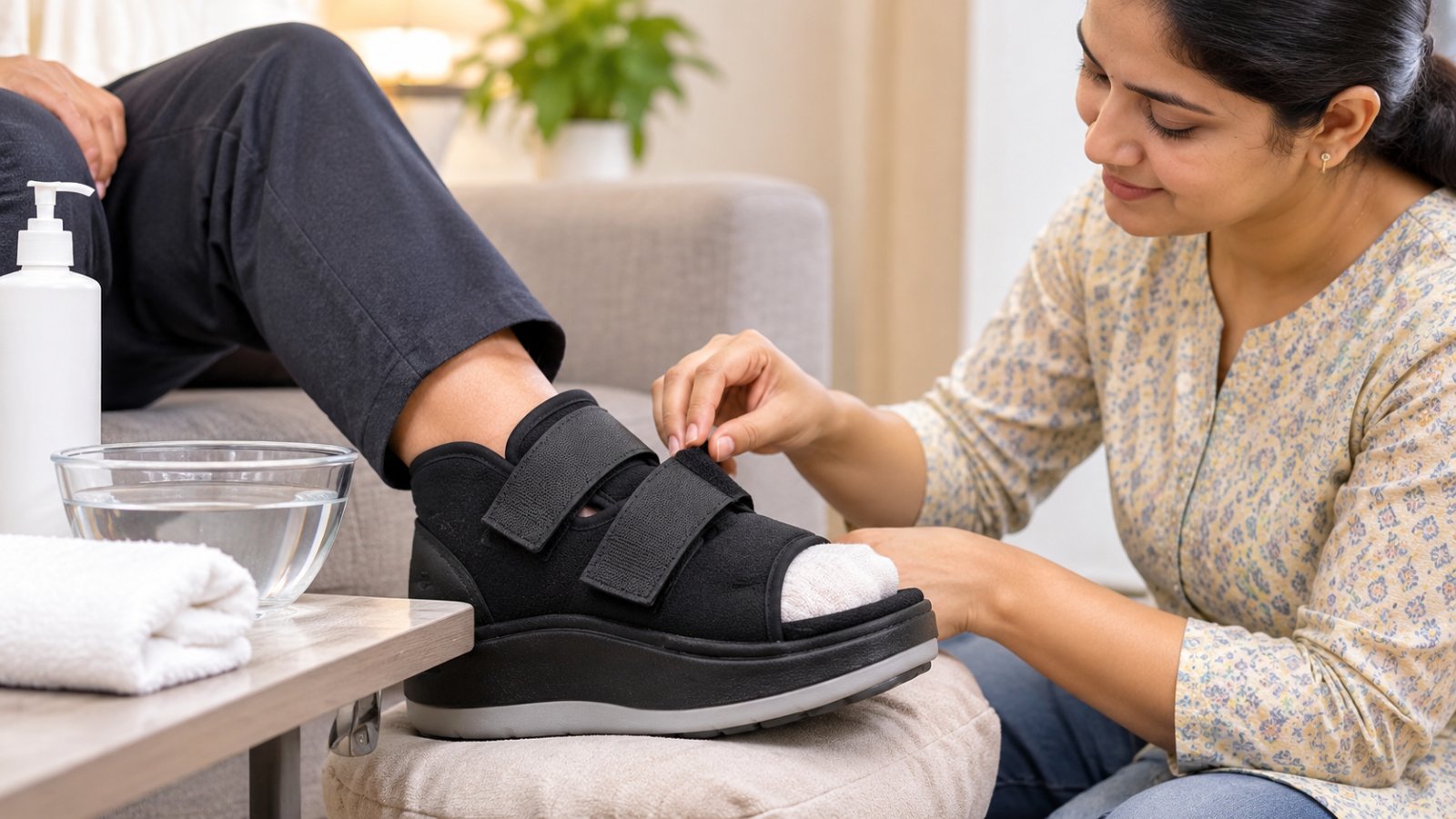
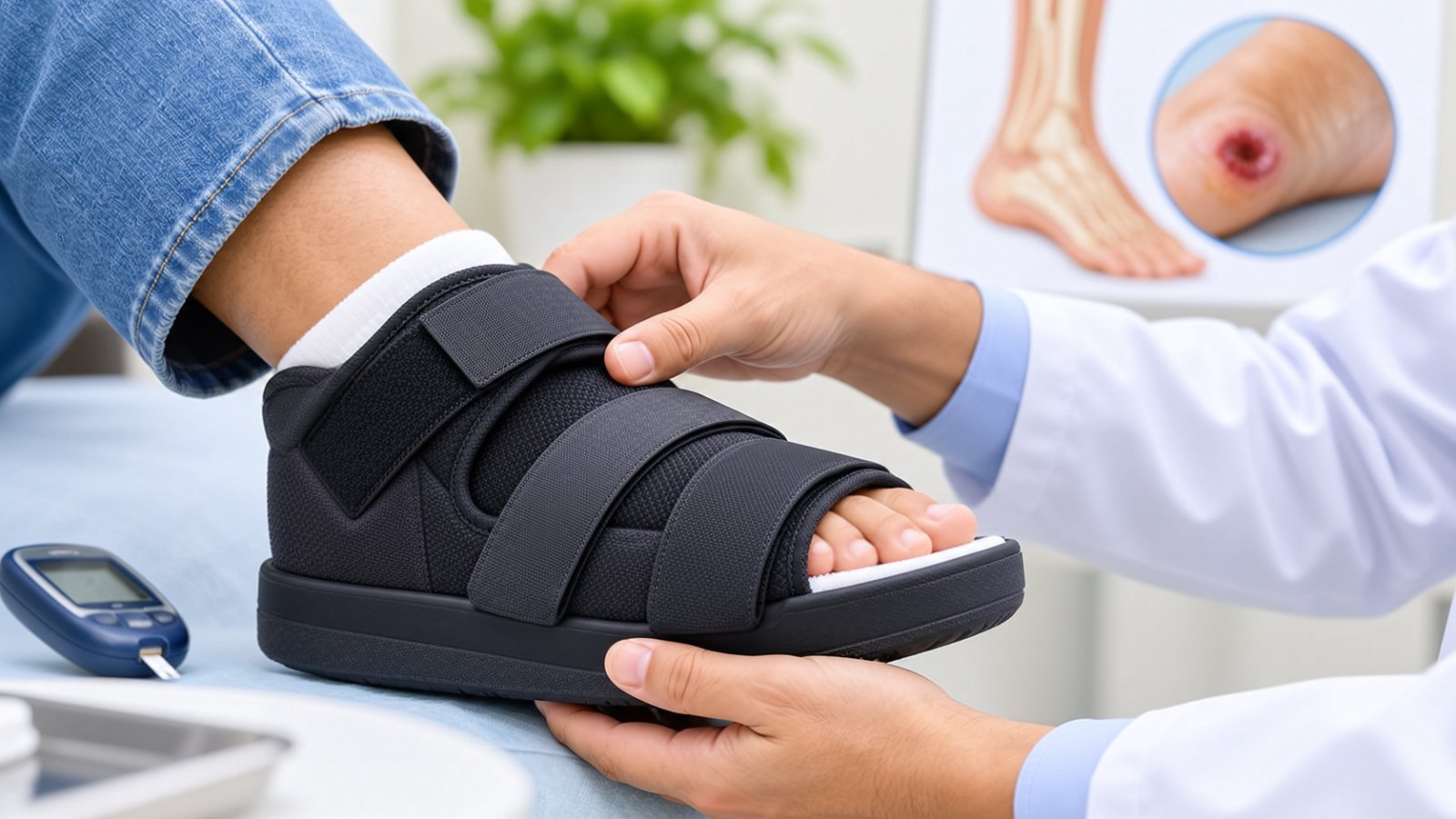
2. Pressure Offloading
Offloading reduces pressure on an ulcer.
Depending on the wound, doctors may recommend specialised footwear, removable devices or other suitable methods.
Pressure reduction is particularly important for ulcers on weight-bearing areas.
3. Infection Management
Clinically infected wounds may require antibiotics and, in some cases, drainage or surgery.
Antibiotics are not routinely recommended for uninfected ulcers.
Read more about diabetic foot infection management.
4. Debridement
Debridement removes dead or infected tissue when clinically appropriate.
The decision depends on wound condition, infection and blood supply.
5. Vascular Treatment
Patients with inadequate circulation may need further vascular evaluation.
Selected patients may benefit from revascularisation procedures.
6. Surgical Treatment
Deep infections, extensive tissue damage or selected structural problems may require surgery.
Treatment should be individualised.
Why Is Blood Circulation Important for Diabetic Foot Healing?
Adequate blood flow supplies oxygen and nutrients to living tissue.
Peripheral artery disease can reduce blood supply to the foot, increasing the risk of delayed healing and tissue loss.
Possible signs include:
-
Cold feet
-
Reduced pulses
-
Pain while walking
-
Pain at rest
-
Slow-healing wounds
-
Darkened tissue
-
Skin colour changes
Some patients with diabetes may have significant arterial disease without typical pain.
Doctors may recommend vascular assessment when circulation problems are suspected.
Restoring blood flow may improve healing potential in selected patients.
When Is Diabetic Foot Surgery Necessary?
Not every diabetic foot condition requires an operation.
Surgery may be necessary when there is:
-
A deep abscess
-
Extensive dead tissue
-
Severe infection
-
Certain bone infections
-
Gangrene
-
Complex tissue loss
-
Selected structural problems
Procedures may include drainage, debridement or other surgical treatment.
Can a Diabetic Foot Be Saved From Amputation?
Many diabetic foot complications can be managed without major amputation.
However, severe infection, extensive tissue death or irreversible circulation problems may make amputation necessary.
In suitable cases, limb salvage treatment may combine infection control, vascular treatment and reconstruction.
Limb preservation cannot be guaranteed in every case.
What Is Charcot Foot and Why Does It Need Early Assessment?
Charcot neuroarthropathy affects bones and joints, usually in people with significant neuropathy.
Early signs may include:
-
One warm, swollen foot
-
Redness
-
Mild discomfort or no pain
-
Changes in foot shape
-
Difficulty walking
The condition may resemble cellulitis or another inflammatory problem.
Continuing to walk on an affected foot can worsen bone and joint damage.
A patient with diabetes, neuropathy and an unexplained warm, swollen foot should receive urgent assessment.
If Charcot foot is suspected, appropriate immobilisation and offloading are important while the diagnosis is evaluated.
How to Choose the Right Diabetic Foot Doctor
Choosing an appropriate doctor involves more than finding the nearest clinic.
Experience With Diabetic Foot Conditions
Ask whether the doctor regularly evaluates diabetic foot ulcers, infections and neuropathy.
Access to Wound Assessment
The doctor should be able to assess wounds and arrange appropriate investigations.
Vascular Evaluation
Blood circulation assessment is important when ulcers are slow to heal.
Infection Management
The doctor should recognise serious infections and arrange urgent hospital care when necessary.
Pressure Offloading Support
Appropriate offloading can be essential for healing certain diabetic foot ulcers.
Multidisciplinary Referrals
Complex cases may require vascular, surgical or diabetes specialist involvement.
Follow-Up Arrangements
Regular monitoring helps determine whether treatment is working.
Patients should confirm appointment availability, costs and referral arrangements directly.
When Should Patients Consider Travelling to Surat?
Patients with stable but complicated diabetic foot problems may consider an additional specialist opinion.
Possible reasons include:
-
A foot ulcer that is not improving
-
Recurrent diabetic foot wounds
-
Complex wound reconstruction needs
-
Questions about surgical treatment
-
Limb salvage assessment
-
Circulation problems complicating healing
-
A second opinion on a proposed treatment plan
Before travelling, patients should confirm appointment availability and whether their condition is suitable for outpatient consultation.
When Should Patients Avoid Delaying Local Care?
Patients with rapidly spreading infection, suspected wet gangrene, severe systemic illness or sudden circulation loss should seek emergency treatment locally.
Urgent care should not be postponed to arrange travel.
Once medically stable, referral or transfer may be considered when appropriate.
Diabetic Foot Care at Elegance Diabetic Foot & Ulcer Clinic
At Elegance Diabetic Foot & Ulcer Clinic in Surat, Dr. Ashutosh A Shah, MBBS, MS, MCh, DNB, is a Plastic and Reconstructive Surgeon with experience in complex wound and reconstructive care. His surgical practice dates back to 2004. Patients seeking assessment for diabetic foot ulcers, difficult wounds and limb-preservation concerns may enquire about consultation and the appropriate treatment pathway.
Patients may require evaluation of:
-
Wound depth
-
Infection
-
Nerve damage
-
Blood circulation
-
Pressure-related injuries
-
Previous treatment response
Depending on clinical findings, treatment planning may involve wound care, infection management, offloading, vascular investigations or surgical assessment.
The clinic is based in Surat and should not be confused with a branch in Bardoli.
Patients considering consultation should contact the clinic to confirm current OPD timings, appointment availability and referral requirements.
For clinic information, visit Elegance Diabetic Foot & Ulcer Clinic.
How to Prepare for Your First Consultation
Patients should bring relevant medical records when available.
Useful documents include:
-
Recent blood glucose reports
-
HbA1c results
-
Previous wound treatment records
-
Doppler or angiography reports
-
X-rays or MRI reports
-
Current medication list
-
Previous antibiotic details
-
Hospital discharge summaries
-
Recent wound photographs
Patients may also bring their regular footwear for assessment of pressure points and fit.
Do not delay emergency care while collecting documents.
How Can Diabetic Foot Complications Be Prevented?
Prevention is an important part of long-term diabetic foot care.
Inspect Both Feet Daily
Check the soles, heels, toes and spaces between the toes.
Avoid Walking Barefoot
Protect the feet from sharp objects, hot surfaces and unnoticed injuries.
Wear Properly Fitting Footwear
Shoes should not cause excessive pressure or friction.
Maintain Diabetes Management
Follow prescribed medicines and monitoring recommendations.
Keep Skin Healthy
Use appropriate moisturiser for dry skin, avoiding application between the toes unless advised.
Avoid Self-Treatment of Calluses
Patients with neuropathy or poor circulation should not cut calluses themselves.
Attend Regular Foot Examinations
The recommended frequency depends on individual risk.
Seek Early Medical Care
Do not ignore a blister, crack or open wound.
The Centers for Disease Control and Prevention (CDC) recommends daily foot checks and regular medical examinations to help prevent diabetes-related foot complications.
The International Working Group on the Diabetic Foot (IWGDF) guidelines also provide evidence-based recommendations for diabetic foot prevention and management.
Conclusion
Finding an experienced diabetic foot doctor in bardoli is important for timely assessment of foot ulcers, infections, neuropathy and circulation problems.
Effective diabetic foot care involves identifying the underlying cause, providing appropriate treatment and monitoring wound healing.
Patients with stable but complicated foot conditions may consider specialist consultation at Elegance Diabetic Foot & Ulcer Clinic for further evaluation.
quiz Frequently Asked Questions
This article is general education, not a diagnosis. If you have a diabetic foot wound, please have it assessed in person. Send a photo on WhatsApp or book a consultation.
About the Author

Dr. Ashutosh Shah, Plastic, Reconstructive & Diabetic Foot Surgeon, Elegance Diabetic Foot & Ulcer Clinic, Surat
Dr. Ashutosh Shah is a board certified plastic and reconstructive surgeon with over 22 years of experience and more than 10,000 limbs and feet saved. He founded Elegance Diabetic Foot & Ulcer Clinic, India's first chain of clinics dedicated to foot care, with centres in Surat and OPD partners across South Gujarat. He is known for a limb first approach, safe wound care and ethical, natural results.