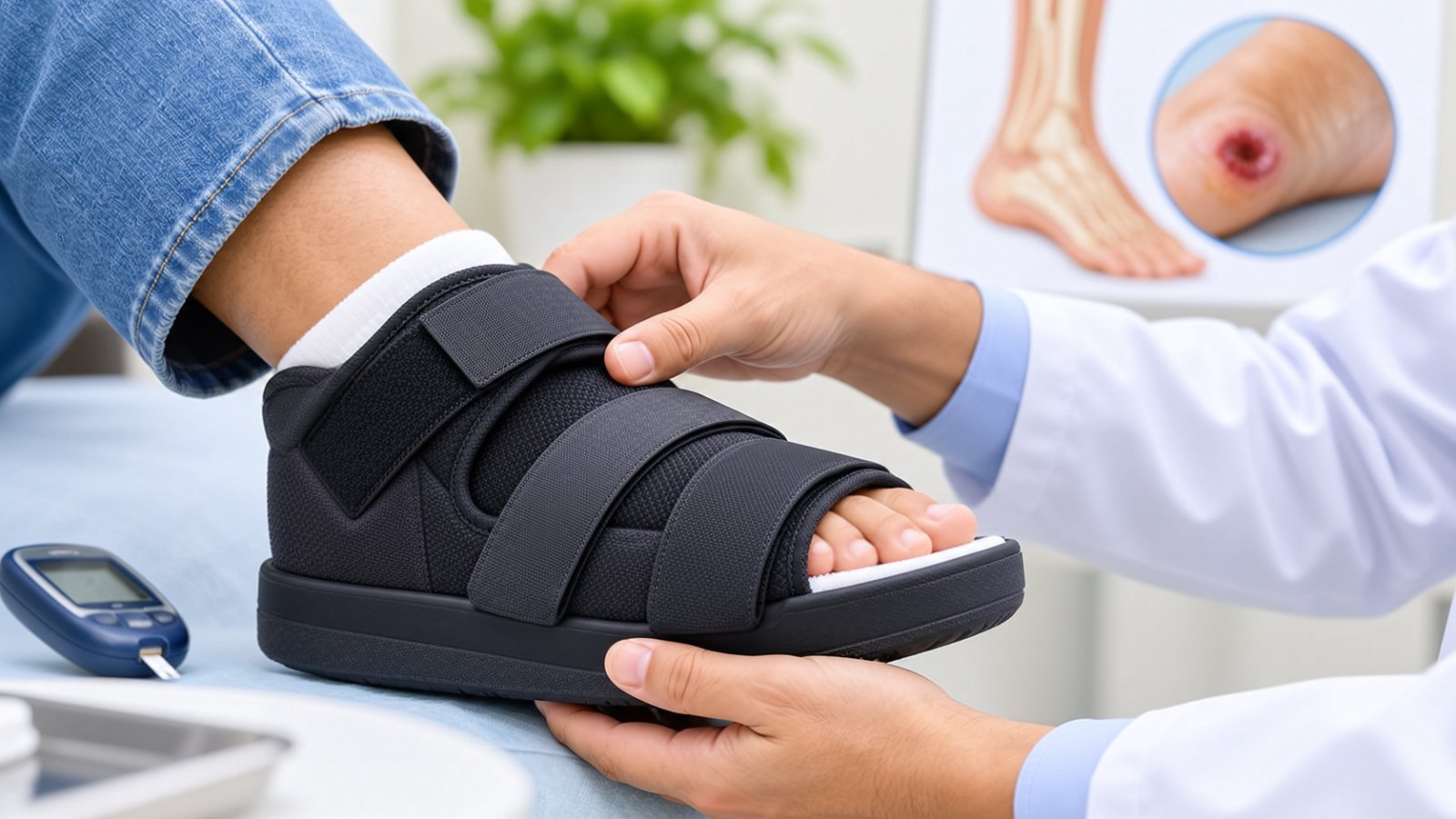
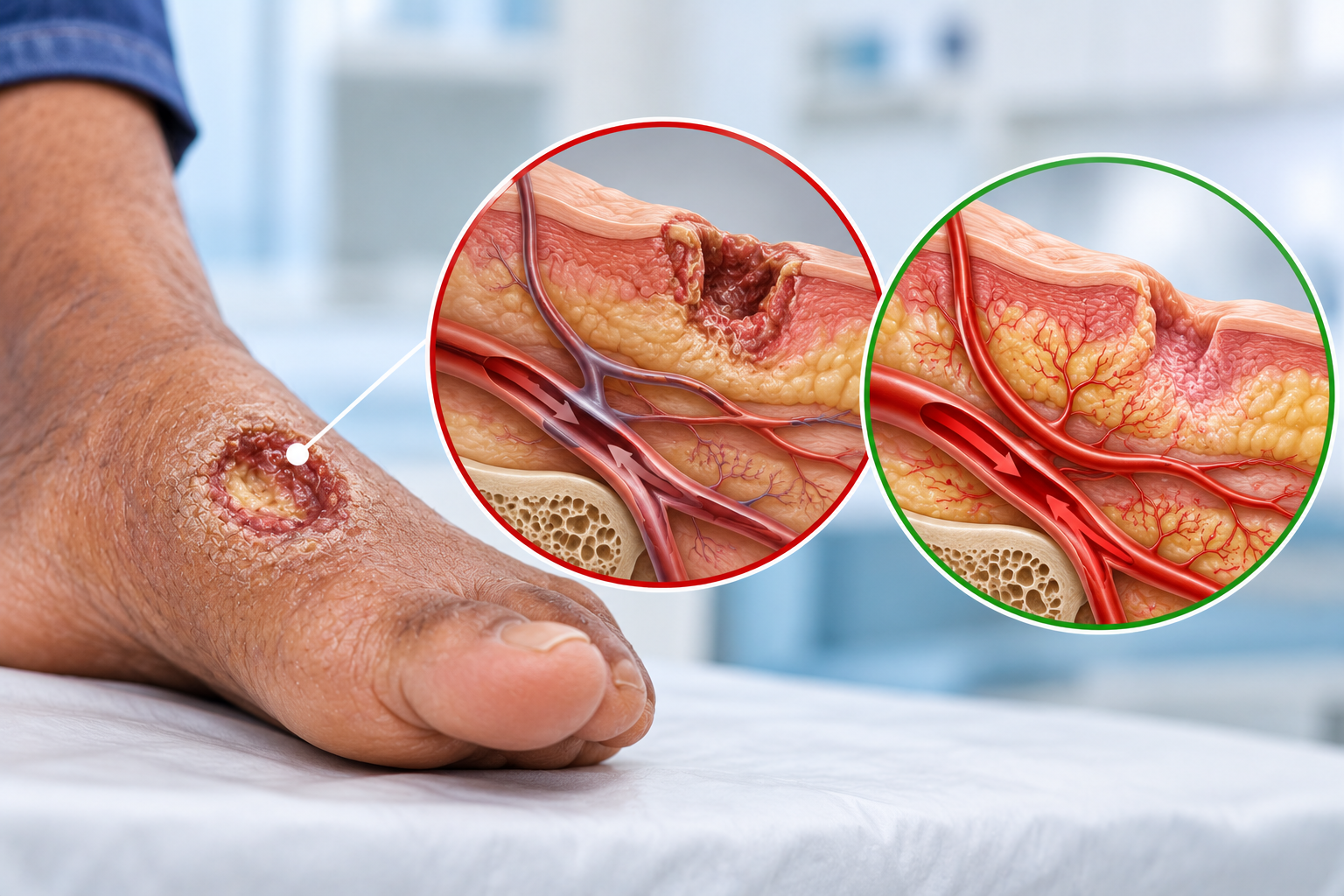
Blood supply in diabetic foot ulcer healing is essential because wounds need oxygen, nutrients and functioning immune cells to repair damaged tissue. When circulation is reduced, an ulcer may heal slowly, remain open or develop serious complications. Checking blood flow helps doctors identify circulation problems and decide whether additional treatment is needed.
People with diabetes have an increased risk of peripheral artery disease (PAD), a condition in which narrowed arteries reduce blood flow to the legs and feet. Diabetes-related nerve damage can also make it difficult to notice early wounds.
Understanding how circulation affects healing is an important part of diabetic foot ulcer care.
Why Is Blood Supply Important for Diabetic Foot Ulcer Healing?
Every wound requires adequate circulation to heal. Blood delivers oxygen and nutrients to damaged tissues and supports the body's response to infection.
The importance of blood supply in diabetic foot ulcer healing can be understood through four main functions.
1. Delivers Oxygen to Damaged Tissue
Oxygen supports cellular activity and the formation of new tissue. When blood flow is inadequate, oxygen delivery decreases and the wound may struggle to heal.
2. Supplies Nutrients for Tissue Repair
Wound healing requires energy, proteins, vitamins and other nutrients. Blood circulation helps transport these substances to the affected area.
3. Supports the Immune Response
Blood carries immune cells that help the body respond to infection. Reduced circulation can impair local immune defence and make infected wounds more difficult to manage.
4. Supports New Tissue Formation
Healing involves the formation of new blood vessels, connective tissue and skin. Poor circulation can interfere with these processes.
Key point: Even appropriate dressings may not be enough when a wound has severely reduced blood supply. The underlying circulation problem must also be evaluated.
What Causes Poor Circulation in People With Diabetes?
Diabetes can contribute to vascular disease through several mechanisms.
Peripheral Artery Disease
Peripheral artery disease occurs when fatty deposits build up inside arteries, narrowing the channels through which blood flows.
People with diabetes have an increased risk of PAD, particularly when other risk factors are present.
Long-Term High Blood Sugar
Persistently elevated blood glucose can contribute to blood vessel damage and inflammation.
Over time, these changes increase the risk of cardiovascular and peripheral vascular complications.
Smoking and Tobacco Use
Smoking damages blood vessels and increases the risk of arterial narrowing. It also interferes with wound healing.
High Blood Pressure and Cholesterol
Hypertension and abnormal cholesterol levels can accelerate atherosclerosis, further reducing blood flow to the lower limbs.
Kidney Disease
Chronic kidney disease is associated with increased vascular risk and can complicate diabetic foot ulcer management.
A patient may have several of these factors at the same time.
What Are the Signs of Poor Circulation and Foot Ulcers?
A poor circulation and foot ulcer combination may produce several warning signs.
Common findings include:
-
A wound that is not progressing towards healing
-
Feet that feel unusually cold
-
Weak or absent foot pulses
-
Pale or bluish skin
-
Pain in the calf while walking that improves with rest
-
Pain in the foot while resting, particularly at night
-
Darkening or blackening of the toes
-
Tissue loss around the toes or heels
However, people with diabetic neuropathy may not experience typical pain symptoms.
Some patients with significant arterial disease have few obvious warning signs until a wound develops.
Important: A diabetic foot ulcer that is not healing should prompt assessment of circulation, even when the patient reports little or no pain.
How Does Poor Blood Supply Delay Diabetic Foot Ulcer Healing?
Wound healing normally progresses through several overlapping stages.
These include inflammation, tissue formation and remodelling.
When blood flow is inadequate, these processes can be disrupted.
Reduced Oxygen Delivery
Cells involved in tissue repair require oxygen. Poor circulation reduces oxygen availability and may slow the formation of healthy tissue.
Slower Skin Regeneration
Reduced blood supply can interfere with the development of new tissue and skin over the wound.
Greater Risk of Tissue Damage
Severe arterial insufficiency can lead to tissue death, sometimes resulting in gangrene.
Difficulty Controlling Infection
An infected ulcer with poor circulation may be particularly challenging because the body's immune response and delivery of antibiotics to the affected tissue can be compromised.
Increased Risk of Amputation
Severe peripheral artery disease, particularly when combined with infection and tissue loss, increases the risk of major complications.
Early vascular evaluation and appropriate treatment can improve the chances of limb preservation in suitable patients.
How Is Blood Circulation Checked in a Diabetic Foot Ulcer?
Doctors use clinical examination and, when necessary, specialised investigations to assess blood flow.
A foot circulation test helps identify arterial disease and determine whether further vascular evaluation is required.
1. Foot Pulse Examination
The specialist checks pulses in the arteries on top of the foot and behind the inner ankle.
Weak or absent pulses may suggest reduced arterial circulation.
However, palpable pulses do not completely rule out peripheral artery disease.
2. Ankle-Brachial Index (ABI)
The ankle-brachial index compares blood pressure measured at the ankle with blood pressure measured in the arm.
It is commonly used to investigate peripheral artery disease.
In people with diabetes, calcified arteries may be difficult to compress, producing falsely elevated ABI results.
Therefore, ABI should be interpreted alongside other clinical findings and tests.
3. Toe Pressure and Toe-Brachial Index (TBI)
Toe pressure testing measures circulation at the toes.
It can be especially useful in people with diabetes because toe arteries may be less affected by the arterial stiffness that makes ABI unreliable.
Low toe pressure can indicate impaired healing potential and the need for urgent vascular evaluation, depending on the clinical situation.
4. Doppler Ultrasound
Doppler ultrasound assesses blood flow through the arteries.
It may help identify abnormal blood-flow patterns and arterial narrowing.
5. Vascular Imaging
If significant arterial disease is suspected or revascularisation is being considered, further imaging may be needed.
This can include duplex ultrasound, CT angiography, MR angiography or catheter angiography.
The choice depends on the patient's clinical condition, kidney function and treatment plan.
For further information about circulation investigations, visit the vascular assessment page.
Can a Diabetic Foot Ulcer Heal With Poor Blood Supply?
Some diabetic foot ulcers can heal despite reduced circulation, particularly when the reduction is mild and other causes of delayed healing are addressed.
However, severe arterial disease can prevent adequate wound healing.
The likelihood of healing depends on several factors:
-
Severity of arterial disease
-
Wound depth and location
-
Presence of infection
-
Pressure on the affected area
-
Diabetes management
-
Kidney function and other medical conditions
-
Availability of appropriate wound and vascular treatment
A circulation test does not guarantee whether an individual wound will heal, but it provides important information for treatment planning.
Doctors consider the complete clinical picture rather than relying on one test result.
What Treatments Can Improve Blood Supply in Diabetic Foot Ulcers?
Treatment depends on the severity and location of arterial disease.
1. Management of Vascular Risk Factors
Doctors may recommend treatment for high blood pressure, abnormal cholesterol and diabetes.
Stopping smoking is especially important.
Appropriate medications, including antiplatelet and cholesterol-lowering treatment, may be prescribed according to the patient's vascular condition and overall risk.
2. Angioplasty
Angioplasty is a procedure in which a catheter-mounted balloon is used to widen a narrowed or blocked artery.
A stent may be used in selected cases.
The goal is to improve blood flow to the affected tissues.
3. Vascular Bypass Surgery
Some patients require bypass surgery to create an alternative route for blood around a blocked artery.
The suitability of bypass depends on the location of disease, available blood vessels and the patient's general health.
4. Wound Care and Infection Management
Improving circulation is only one part of treatment.
The wound may also require appropriate dressings, infection management, removal of non-viable tissue and pressure relief.
Patients should not attempt to remove dead tissue or treat deep ulcers themselves.
5. Offloading and Protective Footwear
Pressure reduction is important, particularly for ulcers on the sole.
Specialised offloading devices and suitable therapeutic footwear may form part of the treatment plan.
Important: Not every patient with reduced circulation needs angioplasty or bypass surgery. A vascular specialist determines whether revascularisation is appropriate.
Why Dressing Alone May Not Heal an Ulcer With Poor Circulation
Dressings help protect the wound and maintain an appropriate healing environment.
However, dressings cannot directly correct a blocked artery.
When circulation is severely reduced, repeated dressing changes may not solve the underlying problem.
For example, a patient may receive regular wound dressings but show little improvement because the affected tissues are not receiving adequate blood flow.
In such cases, doctors need to investigate circulation rather than repeatedly changing dressings without reassessing the cause of delayed healing.
A comprehensive diabetic foot assessment can help identify circulation problems, neuropathy, infection and pressure-related factors.
When Should a Diabetic Foot Ulcer Be Reassessed for Poor Circulation?
An ulcer that fails to improve despite appropriate treatment requires reassessment.
International diabetic foot guidance recommends considering vascular imaging and possible revascularisation when an ulcer fails to show meaningful healing after approximately four weeks of good standard care, even when initial vascular test results are not severely abnormal.
This does not mean every patient should wait four weeks.
Urgent vascular assessment may be necessary earlier when there is:
-
Severe reduction in blood flow
-
Gangrene
-
Rapidly worsening tissue damage
-
Significant infection with suspected arterial disease
-
Rest pain suggesting severe ischaemia
-
Sudden loss of circulation
A suddenly cold, pale or severely painful foot requires emergency medical evaluation.
Early investigation is important because delays can reduce treatment options.
How Can Patients Support Better Foot Circulation and Healing?
Patients with diabetes can take several steps to protect their feet and support overall vascular health.
-
Follow the diabetes management plan prescribed by your healthcare professional.
-
Stop smoking and avoid tobacco products.
-
Manage blood pressure and cholesterol.
-
Inspect both feet daily.
-
Wear properly fitting footwear.
-
Avoid walking barefoot.
-
Seek medical advice for wounds that are not healing.
-
Attend regular diabetic foot examinations.
-
Follow wound care and offloading instructions.
-
Ask your doctor whether a vascular assessment is needed.
Physical activity may support cardiovascular health, but patients with active foot ulcers or severe circulation problems should follow individual medical advice about safe exercise and weight-bearing.
For additional guidance, explore preventive diabetic foot care.
Diabetic Foot Ulcer Care at Elegance Diabetic Foot & Ulcer Clinic
At Elegance Diabetic Foot & Ulcer Clinic, evaluating a diabetic foot ulcer involves identifying factors that may interfere with healing, including poor circulation, neuropathy, infection and repeated pressure. Dr. Ashutosh Shah, a plastic and reconstructive surgeon associated with Elegance Clinic, brings a reconstructive surgery perspective to complex wounds and tissue problems. A comprehensive assessment helps guide wound care, pressure relief, further vascular investigations and appropriate specialist referrals according to the patient's condition.
Patients with persistent wounds, recurrent ulcers or suspected circulation problems should seek professional assessment rather than relying only on dressing changes or home remedies.
Key Takeaways
-
Adequate blood circulation is essential for diabetic foot ulcer healing.
-
Peripheral artery disease can reduce oxygen and nutrient delivery to wounds.
-
Poor circulation may delay healing even when regular dressings are performed.
-
ABI, toe pressure measurements and Doppler examinations help assess arterial circulation.
-
Severe arterial disease may require angioplasty or bypass surgery in selected patients.
-
Infection control, pressure relief and appropriate wound care remain essential.
-
Early vascular assessment can help identify potentially treatable causes of delayed healing.
Conclusion
Blood supply in diabetic foot ulcer healing plays a major role in determining whether damaged tissue can recover.
When circulation is reduced, an ulcer may remain open despite regular dressings and wound care.
Identifying peripheral artery disease, assessing the severity of circulation problems and arranging appropriate treatment can improve the chances of wound healing and limb preservation.
If you have a diabetic foot ulcer that is not healing, do not ignore the possibility of poor circulation.
Contact Elegance Diabetic Foot & Ulcer Clinic to arrange a diabetic foot evaluation and discuss the next steps in your care.
quiz Frequently Asked Questions
This article is general education, not a diagnosis. If you have a diabetic foot wound, please have it assessed in person. Send a photo on WhatsApp or book a consultation.
About the Author

Dr. Ashutosh Shah, Plastic, Reconstructive & Diabetic Foot Surgeon, Elegance Diabetic Foot & Ulcer Clinic, Surat
Dr. Ashutosh Shah is a board certified plastic and reconstructive surgeon with over 22 years of experience and more than 10,000 limbs and feet saved. He founded Elegance Diabetic Foot & Ulcer Clinic, India's first chain of clinics dedicated to foot care, with centres in Surat and OPD partners across South Gujarat. He is known for a limb first approach, safe wound care and ethical, natural results.