Advanced dressings for diabetic foot ulcer treatment can help manage wound moisture, drainage and tissue protection, but they do not guarantee healing. Negative pressure wound therapy and specialised dressings may benefit selected wounds. However, successful treatment also depends on adequate blood circulation, infection control, pressure offloading, diabetes management and regular medical assessment.
Do Advanced Dressings Guarantee Diabetic Foot Ulcer Healing?
Myth: Expensive wound dressings or advanced machines can heal every diabetic foot ulcer.
Fact: No dressing or wound therapy device can guarantee complete healing.
Diabetic foot ulcers develop because of several underlying factors, including nerve damage, poor circulation, repeated pressure and infection.
A dressing may create a suitable wound environment, but it cannot independently correct all these problems.
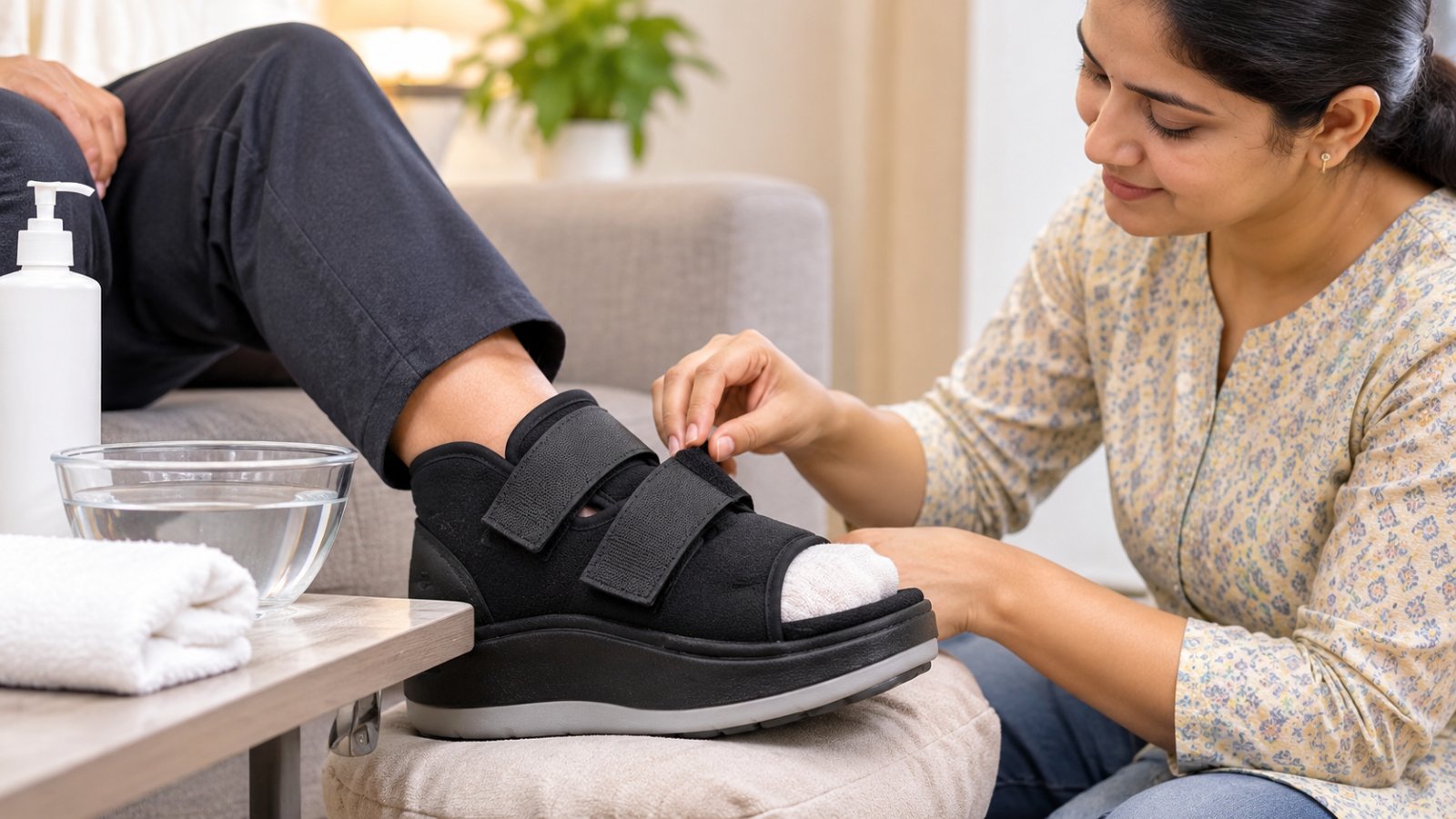
For example, a patient with a plantar ulcer may continue damaging the wound while walking. Even an advanced dressing may not be effective unless the pressure is reduced.
Similarly, a wound with inadequate blood supply may struggle to heal until circulation is assessed and, when appropriate, improved.
Patients with slow-healing wounds may require a comprehensive diabetic foot wound assessment rather than repeated dressing changes alone.
What Are Advanced Dressings for Diabetic Foot Ulcer Treatment?
Advanced dressings for diabetic foot ulcer care are specialised wound products designed to manage specific wound conditions.
Depending on their composition, these dressings may help:
-
Maintain a suitable moisture balance
-
Absorb excess wound fluid
-
Protect surrounding skin
-
Reduce friction during dressing changes
-
Support management of selected wound-bed problems
-
Provide an appropriate environment for tissue repair
The best dressing depends on the wound's depth, drainage, infection status, tissue condition and surrounding skin.
An expensive dressing is not automatically better than a simpler option.
Types of Advanced Diabetic Wound Dressings
Different wound dressings serve different purposes.
1. Foam Dressings
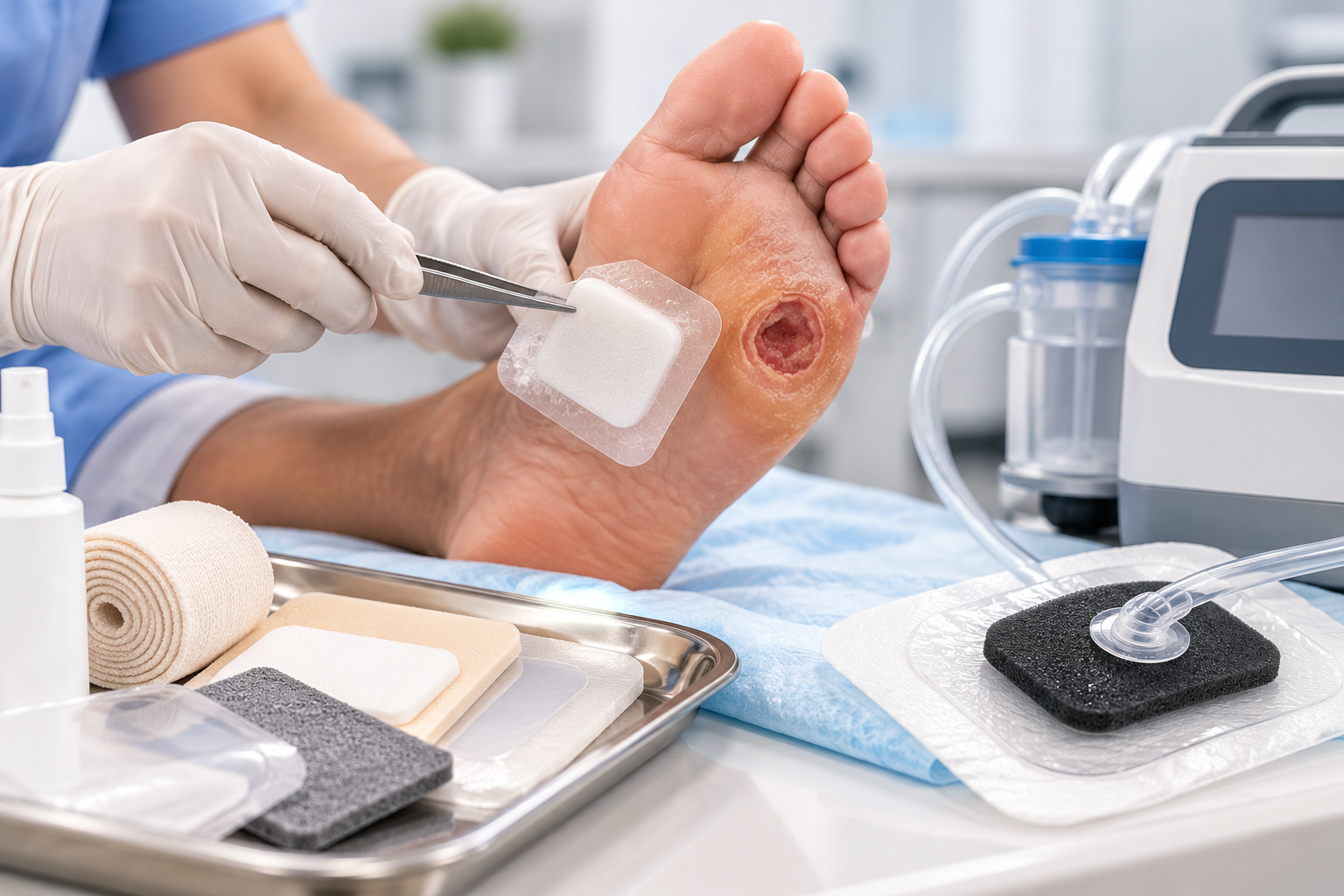
Foam dressings are commonly used for wounds producing moderate or higher amounts of fluid.
They may help absorb drainage while maintaining a suitable wound environment.
Potential benefits:
-
Absorb wound exudate
-
Protect the wound surface
-
Reduce moisture-related skin damage when appropriately selected
-
Provide cushioning
Foam dressings do not replace pressure offloading.
2. Alginate Dressings
Alginate dressings are made from materials derived from seaweed.
They absorb wound fluid and may form a gel when in contact with exudate.
They are often considered for wounds with moderate to heavy drainage.
However, they may not be suitable for dry wounds.
3. Hydrogel Dressings
Hydrogel dressings contain water and may help hydrate selected dry wounds.
They can support autolytic debridement in suitable clinical situations.
They are not appropriate for every wound, particularly when moisture management or infection concerns require another approach.
4. Hydrocolloid Dressings
Hydrocolloid dressings help maintain a moist wound environment.
They may be suitable for selected wounds with limited drainage, but their use requires careful consideration of infection, moisture and surrounding skin.
5. Antimicrobial Dressings
Some dressings contain silver, iodine or other antimicrobial substances.
Although these products may be used for specific wound-management purposes, routine use of antimicrobial dressings solely to accelerate diabetic foot ulcer healing is not supported by strong evidence.
Clinically infected wounds require proper assessment and appropriate treatment rather than reliance on antimicrobial dressings alone.
For more information, explore diabetic foot infection management.
What Is Negative Pressure Wound Therapy?
Negative pressure wound therapy (NPWT), sometimes called vacuum-assisted wound therapy, uses controlled suction through a specialised dressing connected to a pump.
The system removes wound fluid and helps manage the wound environment.
How Does Negative Pressure Wound Therapy Work?
The treatment generally involves:
-
Preparing and assessing the wound
-
Applying a suitable foam or gauze dressing
-
Sealing the dressing with an adhesive film
-
Connecting the dressing to a suction device
-
Applying controlled negative pressure
-
Monitoring the wound and changing the dressing as prescribed
Potential Benefits of NPWT
For appropriately selected wounds, negative pressure wound therapy may:
-
Remove excess wound fluid
-
Help manage wound drainage
-
Support granulation tissue formation
-
Assist wound-bed management
-
Support healing in selected postoperative wounds
However, the evidence is not equally strong for every type of diabetic foot ulcer.
NPWT may be considered for certain postoperative diabetic foot wounds, but it is not routinely recommended solely to improve healing of non-surgical diabetic foot ulcers.
It should not replace infection control, vascular assessment, debridement when indicated or pressure offloading.
Myth vs Fact: Advanced Dressings and Wound Healing
| Myth | Medical fact |
|---|---|
| Expensive dressings always heal wounds faster | Dressing selection should depend on wound needs and clinical evidence |
| A vacuum machine can heal every ulcer | NPWT may help selected wounds but does not guarantee healing |
| Advanced dressings remove the need for surgery | Some wounds still require drainage, debridement or other surgery |
| Antimicrobial dressings replace antibiotics | Clinically infected wounds may require systemic antibiotics and other treatment |
| Daily dressing changes guarantee faster healing | Dressing frequency depends on wound condition and product instructions |
| A dressing can correct poor circulation | Blood flow problems require separate vascular assessment |
When Are Advanced Dressings Recommended?
Doctors may consider advanced wound dressings when the wound has specific management needs.
1. Excess Wound Drainage
Highly absorbent dressings may help manage fluid and protect surrounding skin.
2. Dry Wound Beds
Selected moisture-donating dressings may help maintain an appropriate wound environment.
3. Complex Postoperative Wounds
Some postoperative wounds may benefit from negative pressure wound therapy after clinical assessment.
4. Fragile Surrounding Skin
Certain dressings may help reduce trauma during dressing changes.
5. Wounds Requiring Specialised Moisture Management
The clinician may choose a dressing that balances absorption and moisture retention.
The decision should be based on clinical need, not simply the availability of a newer product.
Why Do Some Diabetic Foot Ulcers Not Heal Despite Advanced Dressings?
A wound may remain open despite repeated dressing changes because the underlying problem has not been addressed.
1. Poor Blood Circulation
Peripheral artery disease can reduce the oxygen and nutrients reaching the wound.
Patients may need vascular assessment and treatment when circulation problems are suspected.
2. Continued Pressure on the Wound
Repeated walking pressure can damage healing tissue.
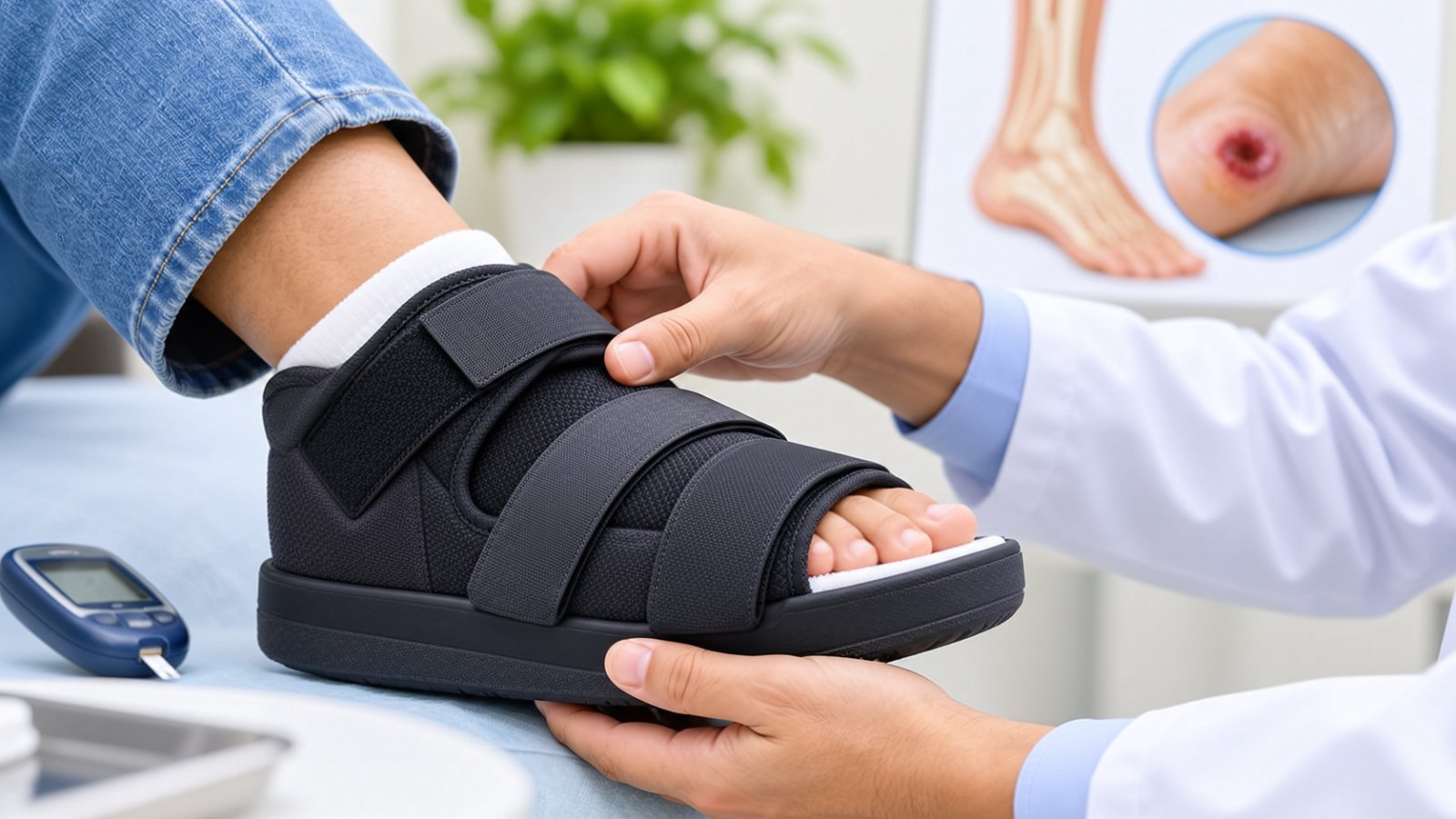
Patients with plantar ulcers may require total contact casting, a non-removable knee-high offloading device or another suitable pressure-relieving intervention.
3. Untreated Infection
An infected ulcer may require antibiotics, drainage or surgery.
Dressings alone cannot reliably control a deep infection.
4. Dead or Damaged Tissue
Non-viable tissue may interfere with wound assessment and treatment.
Appropriate debridement may be necessary, although severely ischaemic wounds require careful evaluation before extensive tissue removal.
5. Poor Diabetes Control
Uncontrolled blood glucose may contribute to impaired healing and infection risk.
6. Inadequate Follow-Up
Diabetic foot ulcers require regular assessment to determine whether the treatment plan is working.
The most advanced dressing cannot compensate for every untreated cause of poor wound healing.
Advanced Dressings vs Standard Wound Care
Standard wound care remains essential for diabetic foot ulcer treatment.
| Treatment aspect | Standard wound care | Advanced dressings or devices |
|---|---|---|
| Wound cleaning | Essential | Still required |
| Moisture management | Achieved with suitable basic dressings | May offer additional options |
| Pressure offloading | Essential for many plantar ulcers | Not replaced |
| Infection treatment | Based on clinical assessment | Cannot replace antibiotics or surgery |
| Circulation assessment | Essential when indicated | Cannot restore blood flow |
| Cost | Often lower | May be higher |
| Healing guarantee | None | None |
Advanced dressings should be selected when their potential benefits justify their use.
Can Advanced Dressings Prevent Amputation?
Advanced dressings may support wound management, but they cannot independently prevent every amputation.
Limb preservation depends on multiple factors:
-
Severity of infection
-
Blood circulation
-
Extent of tissue damage
-
Bone involvement
-
Pressure relief
-
Diabetes management
-
Timely surgical intervention when necessary
Some patients require procedures to restore circulation, remove infected tissue or reconstruct complex wounds.
Patients with severe complications may benefit from an assessment of diabetic foot surgery and limb salvage options.
No dressing or machine can guarantee limb preservation.
How Do Doctors Choose the Right Diabetic Wound Dressing?
The doctor considers several factors before selecting a dressing.
Wound Depth
Superficial wounds and deep cavities may require different materials.
Amount of Drainage
A heavily draining wound generally needs a more absorbent dressing than a dry wound.
Infection Status
Infected wounds require appropriate clinical management.
Blood Circulation
Poor perfusion can change which treatments are safe or effective.
Surrounding Skin
Fragile or moisture-damaged skin may require additional protection.
Treatment Cost
The clinician should consider whether a specialised dressing offers meaningful benefit compared with a simpler alternative.
The treatment plan may change as the wound improves or deteriorates.
Are Advanced Dressings Safe for Every Patient?
No. Different products have different indications and limitations.
Potential problems include:
-
Skin irritation
-
Excessive moisture
-
Drying of the wound
-
Allergic reactions
-
Dressing-related discomfort
-
Trauma during removal
-
Delayed recognition of infection
Negative pressure wound therapy also requires appropriate precautions.
It may be unsuitable for certain wounds involving untreated necrotic tissue, exposed vulnerable structures, uncontrolled bleeding or other contraindications.
Patients should never start vacuum wound therapy without professional assessment.
Advanced Dressings for Diabetic Foot Ulcer Care at Elegance Clinic
At Elegance Diabetic Foot & Ulcer Clinic in Surat, Dr. Ashutosh Shah is associated with the assessment and management of diabetic foot wounds.
The role of advanced dressings for diabetic foot ulcer treatment is considered alongside the patient's circulation, infection status, wound depth and pressure-related problems.
A specialist consultation can help determine whether the patient needs conventional dressings, selected advanced wound-care products, offloading, debridement, vascular assessment or surgical treatment.
The aim is to address the factors preventing healing rather than relying on a particular dressing or machine.
What Should Patients Ask Before Choosing Advanced Wound Therapy?
Before starting an advanced dressing or machine-based treatment, patients should ask:
-
Why is this treatment recommended for my wound?
-
What problem will the dressing or device address?
-
Is my blood circulation adequate for healing?
-
Has the wound been assessed for infection?
-
Do I need pressure offloading?
-
What improvement should be expected?
-
How will progress be measured?
-
When will the treatment be reviewed?
-
What are the risks and alternatives?
-
What is the estimated treatment cost?
These questions can help patients understand the treatment plan and avoid unrealistic expectations.
When Should a Diabetic Foot Wound Be Reassessed?
Patients should seek prompt medical reassessment when:
-
The wound becomes larger or deeper
-
Redness or swelling increases
-
Pus or an unpleasant smell develops
-
New black or discoloured tissue appears
-
The foot becomes unusually cold
-
Fever develops
-
The wound is not progressing despite appropriate treatment
A suddenly cold or pale foot, rapidly spreading infection, black tissue or fever with a serious foot infection requires emergency medical assessment.
If a wound does not show meaningful improvement after approximately four weeks of appropriate care, clinicians should reassess the diagnosis, circulation, infection, offloading and treatment strategy.
Conclusion
Advanced dressings for diabetic foot ulcer treatment can be useful for selected wound-management needs, but no dressing or machine guarantees healing.
Successful diabetic foot care requires a comprehensive approach involving wound assessment, pressure offloading, infection management, circulation evaluation and appropriate medical treatment.
Patients with persistent or complicated diabetic foot ulcers can contact Elegance Diabetic Foot & Ulcer Clinic for specialist assessment and an individualised care plan.
quiz Frequently Asked Questions
This article is general education, not a diagnosis. If you have a diabetic foot wound, please have it assessed in person. Send a photo on WhatsApp or book a consultation.
About the Author

Dr. Ashutosh Shah, Plastic, Reconstructive & Diabetic Foot Surgeon, Elegance Diabetic Foot & Ulcer Clinic, Surat
Dr. Ashutosh Shah is a board certified plastic and reconstructive surgeon with over 22 years of experience and more than 10,000 limbs and feet saved. He founded Elegance Diabetic Foot & Ulcer Clinic, India's first chain of clinics dedicated to foot care, with centres in Surat and OPD partners across South Gujarat. He is known for a limb first approach, safe wound care and ethical, natural results.